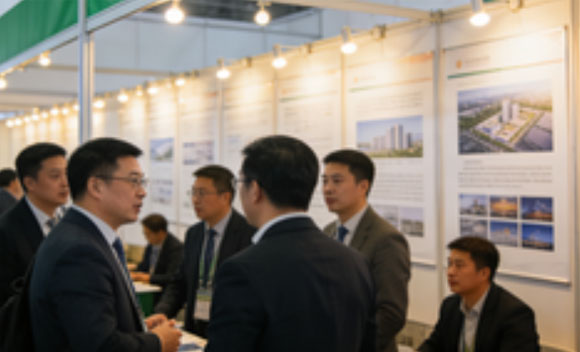
In recent years, with the deepening of global economic interaction, various international expos have become important windows for observing cross-border investment trends. At these expos, government agencies, industry leaders, technology companies, financial institutions, and investment promotion departments from various countries gather to showcase new technologies, industrial models, and cooperation opportunities, gradually transforming expos from their traditional function of product display into new international investment barometers. For investors, the types of projects, cooperation demands, audience structure, corporate layout, and policy orientations presented at expos all contain signals about future capital flows. Cross-border investment is no longer limited to traditional manufacturing, real estate, or resource industries, but extends to multiple fields such as technological innovation, green energy, digital services, healthcare, and cultural tourism. Especially in the current context of global supply chain restructuring, geopolitical economic differentiation, and consumption upgrading, expos have become an important channel for investors to quickly capture market changes, judge industry trends, and establish transnational networks.
Changing Demands for Industrial Upgrading
The most critical change at expos in recent years is that technology, innovative services, and digital capabilities have become the core of corporate displays. More and more countries are promoting industrial restructuring, hoping to attract capital with technology spillover effects, rather than just traditional construction-related investments. This signifies a shift in cross-border investment from “building factories and buildings” to “investing in technology and capabilities,” encompassing areas such as intelligent manufacturing, artificial intelligence applications, digital infrastructure, cross-border e-commerce services, smart tourism, supply chain technology, and agricultural technology. These industries not only reflect national development strategies but also resonate with global businesses’ needs for improved efficiency, reduced costs, and enhanced resilience.
Common Global Issues
Against the backdrop of global efforts to address climate change and energy transition, green development has become a key focus of cross-border investment discussions. Many expos feature dedicated exhibition areas or forums for green energy, new materials, environmental equipment, waste management, sustainable agriculture, and green transportation, reflecting a shared direction for attracting investment from various countries. From a market perspective, green projects not only align with policy guidance but also possess characteristics of stable long-term demand and high levels of global cooperation. Investors can glean insights from expo themes, participating company types, and government cooperation initiatives to determine which countries prioritize green industries and which sectors are poised for acceleration, thereby accurately identifying investment opportunities.
Service Trade Becomes a New Growth Driver
Compared to past trade fairs primarily focused on goods, many expos are now shifting their focus to service trade, including financial services, legal services, vocational education, cultural and creative industries, software development, cloud services, and smart city solutions. The digital economy is particularly attracting attention, with many countries incorporating digital infrastructure into their investment attraction strategies, such as cross-border payment systems, data center construction, digital identity systems, and smart government platforms. The extensive digital displays at expos not only demonstrate technological strength but also showcase the positive attitudes of various countries towards digital economy cooperation. Investors can infer that future cross-border capital will flow more towards “technology-driven service industries” rather than traditional product-based companies.
Emerging Markets Become Investment Hotspots
At various expos, there has been a significant increase in emerging market pavilions from Asia, the Middle East, Africa, and Latin America. This shift sends two key signals: first, these regions are vying for more foreign investment in infrastructure, public services, cross-border trade platforms, and cultural and entertainment sectors; second, local consumer markets are booming, and the attractiveness of cross-border investment in tourism, retail, healthcare, education, and catering is increasing. A young population, an expanding middle class, and urbanization are common drivers of growth in these markets, and the abundant investment opportunities offered at expos reflect these countries’ desire to accelerate development through foreign investment.
International expos have become the most direct, concentrated, and forward-looking window for observing cross-border investment. Through the structure of exhibits, the distribution of participating countries, the focus of thematic forums, the content of policy releases, and the enthusiasm for cooperation and matchmaking activities, it is clear that the investment focus is shifting from traditional industries to innovation-driven, green development, the digital economy, and markets benefiting from demographic dividends. At the same time, expos also reflect the increasingly fierce industrial competition among countries: those who can offer more favorable investment policies, a more mature industrial ecosystem, and more open cooperation mechanisms are more likely to attract global capital.