
In the wave of globalization, studying abroad has become an important choice for many families to enhance their children’s competitiveness and broaden their international horizons. However, the cost of studying abroad varies significantly depending on the country, city, type of school, and major, ranging from tens of thousands to hundreds of thousands of yuan per year. How can families rationally plan their budgets based on their own needs? This article will analyze the cost composition, influencing factors, and cost control strategies of mainstream study abroad destinations to provide scientific references for families.
The cost differences among mainstream study abroad destinations are first reflected in tuition fees. In the United States, a popular study abroad destination, the average annual tuition fee for undergraduate programs at public universities is approximately 150,000-250,000 yuan, while private universities can reach 250,000-500,000 yuan. Popular majors such as business, computer science, and medicine are even more expensive, with top-tier MBA programs exceeding 600,000 yuan. In the UK, master’s programs are mostly one year long. The average annual tuition fee for humanities majors at ordinary universities is approximately 120,000-180,000 yuan, while for business and STEM majors at Russell Group universities it reaches 180,000-300,000 yuan. Specialized majors such as medicine and law require 300,000-450,000 yuan. Tuition fees for master’s programs in Australia vary depending on the major. For general programs, the average annual cost is approximately 150,000-220,000 RMB, while popular business and engineering programs cost 200,000-350,000 RMB, and medical programs can exceed 350,000 RMB. In contrast, some European countries offer significant tuition advantages: German public universities are tuition-free, requiring only a registration fee of approximately 5,000-20,000 RMB; French public universities have an average annual tuition fee of approximately 20,000-50,000 RMB, while private business schools cost 150,000-250,000 RMB; Japanese national and public universities have an average annual tuition fee of approximately 30,000-60,000 RMB, while private universities charge approximately 60,000-100,000 RMB for arts and sciences and approximately 80,000-120,000 RMB for STEM fields.
Living costs are another major expense for international students. The cost of living in a city directly impacts the total budget: accommodation, food, and transportation costs in international metropolises like London, New York, and Sydney are 2-3 times higher than in smaller towns. Taking accommodation as an example, a single room in London costs approximately 12,000-15,000 yuan per month, while in Manchester it’s only 5,000-8,000 yuan; a shared apartment in New York costs approximately 8,000-15,000 yuan per month, while in Midwestern cities it can be kept to 4,000-8,000 yuan. In terms of dining, the average monthly expenditure on eating out in Tokyo is about 4,000 yuan, while in Osaka it can be reduced to less than 2,500 yuan. In addition, hidden expenses such as textbook fees, insurance fees, and communication fees should not be ignored, averaging about 10,000-20,000 yuan per year.
The choice of major and the type of school also affect the total cost. The training cost of medical and art majors is significantly higher than that of humanities and social sciences majors. For example, the tuition fee for international students in Cambridge University’s medical program is 670,000 yuan per year, 50% higher than that of ordinary majors; the average annual tuition fee for art schools in the United States is about 250,000-350,000 yuan, and additional investment is required for materials, equipment, etc. Regarding the type of school, public universities generally have lower tuition fees than private universities, but some prestigious public universities, due to international student quota controls, have seen tuition increases approaching private university levels. For example, tuition fees at US public universities have increased by 170%-211% cumulatively over the past two decades, while annual tuition at prestigious private universities like Harvard and Stanford has exceeded 400,000 yuan.
To reduce the cost of studying abroad, families can optimize their strategies in three areas: school selection, accommodation, and spending habits. When choosing a school, prioritize public universities in the Midwest or institutions in less popular cities. For example, the average annual total cost of Ohio State University is $40,000-$50,000 lower than that of private universities in the New York area. Regarding accommodation, choose on-campus dormitories or shared apartments; in the UK, student accommodation costs are 30% lower than off-campus rentals. In terms of spending habits, saving 10,000-20,000 yuan annually can be achieved through secondhand textbooks, homemade meals, and utilizing student discounts. Furthermore, some countries allow international students to work legally; for example, in Canada, students can work 20 hours per week, earning up to 80,000 yuan annually at minimum wage, which can cover 30%-40% of living expenses.
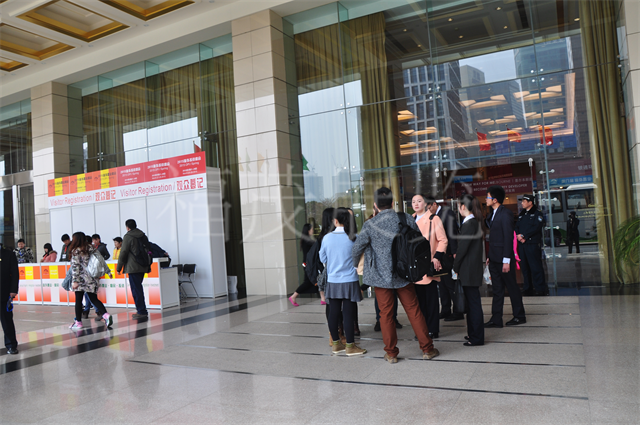
For families planning to send their children abroad, attending study abroad expos is an efficient way to obtain authoritative information and accurately match resources. These exhibitions typically bring together universities, educational institutions, and professional consultants from major study-abroad destinations worldwide, offering comprehensive consultation from school selection and program analysis to visa processing and overseas living. For example, an upcoming international education and study abroad exhibition will invite top universities from over 30 countries and regions, covering all educational levels from K-12 to master’s and doctoral programs. It will include 1-on-1 assessments by admissions officers from prestigious universities and policy briefings, helping families resolve all their questions about higher education in one place. Through direct communication with admissions officers, students can gain a clearer understanding of their target universities’ admission standards, scholarship policies, and employment prospects, avoiding budget overruns or poor choices due to information asymmetry.
While study abroad costs vary due to multiple factors, with scientific planning and resource integration, families can choose the most suitable study abroad path for their children within their budget. From clarifying needs and comparing costs to attending exhibitions and optimizing strategies, every step requires careful consideration. After all, studying abroad is not only an economic investment but also a long-term investment in children’s future; only precise planning ensures that every penny is spent wisely.