
In the investment field, constructing a scientifically sound investment portfolio is a core strategy for mitigating risk and achieving steady asset appreciation. Whether a novice investor or an experienced market participant, everyone needs to diversify across different asset classes and balance risk and return to cope with the uncertainties brought about by market volatility. The Investment Expo, as a platform that gathers cutting-edge industry information, high-quality products, and professional expertise, provides investors with an excellent opportunity to build their ideal investment portfolio. From defining investment goals to selecting high-quality assets, from dynamically adjusting proportions to utilizing professional tools, every step of the Investment Expo contains inspiration and opportunities for optimizing investment portfolios.
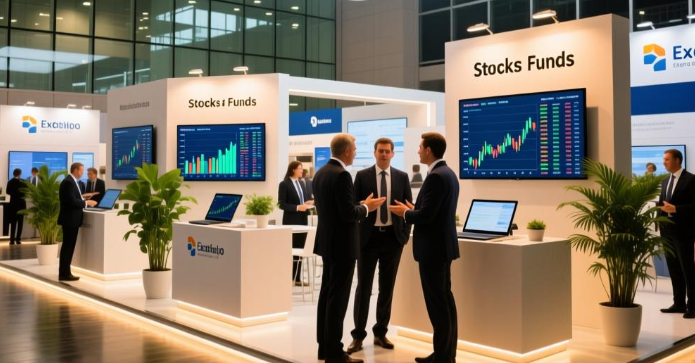
The first step in building an investment portfolio is to clearly define investment goals and risk tolerance. Investment goals determine the direction and timeframe of asset allocation. For example, if the goal is to save money for children’s education within five years, a focus on stable returns is needed, and low-risk products such as bond funds and education insurance can be allocated. If the goal is to accumulate wealth for retirement and the investment period is longer than 20 years, the proportion of equity assets such as stock funds and index funds can be appropriately increased to pursue higher returns. Meanwhile, risk tolerance acts as a “safety cushion” for an investment portfolio. Aggressive investors can accept short-term volatility exceeding 20%, making a 70% stock + 30% bond allocation suitable. Conservative investors, on the other hand, need to control volatility within 10%, opting for a 50% bond + 30% money market fund + 20% stock allocation. At investment expos, financial institutions often offer risk assessment tools to help investors quickly determine their risk appetite, providing a basis for subsequent asset allocation.
The choice of asset classes forms the framework of an investment portfolio. Common assets include stocks, bonds, cash, commodities, real estate, and alternative investments, each with different risk-return characteristics. Stocks offer high long-term returns but are highly volatile; bonds offer stable returns but require attention to interest rate and credit risks; cash offers high liquidity but the lowest returns; commodities (such as gold and crude oil) can hedge against inflation and geopolitical risks; real estate generates income through rental income and capital appreciation but has poor liquidity; alternative investments (such as private equity and hedge funds) have higher entry barriers but may generate excess returns. Investors should choose 2-4 core asset classes for allocation based on their goals and risk appetite. For example, an investor with a moderate risk appetite could allocate 50% to equity funds, 30% to bond funds, 15% to gold ETFs, and 5% to money market funds, creating a well-rounded portfolio. At investment expos, the booths and roadshows for various asset classes provide investors with convenient opportunities to directly compare the characteristics of different assets.
Selecting high-quality products is the “flesh and blood” of an investment portfolio. Even within the same asset class, different products can perform drastically differently. For equity funds, it’s crucial to consider the fund manager’s investment style, historical performance, drawdown control capabilities, and team stability; for bond funds, it’s necessary to analyze the type of bonds (government bonds, corporate bonds, local government financing vehicle bonds), duration, and credit rating; for gold ETFs, choose products with large scale and high liquidity; and for Real Estate Investment Trusts (REITs), examine the quality of the underlying assets and rental yield. At investment expos, leading financial institutions and third-party rating agencies often release product rating reports and historical data, allowing investors to compare and analyze these reports to select products that consistently outperform their peers and offer excellent risk-return ratios. For example, a certain equity fund achieved an annualized return of 12% over the past 5 years with a maximum drawdown of only 18%, significantly outperforming the peer average of 10% return and 25% drawdown. Such a product is more worthy of inclusion in a portfolio.
Dynamic adjustment and rebalancing are the “preservatives” of an investment portfolio. Changes in market conditions, economic cycles, and personal circumstances may cause the initial allocation to deviate from the target proportion. For example, after a significant rise in the stock market, the stock allocation may increase from 50% to 60%. At this time, it is necessary to sell some stocks and buy bonds to restore the proportion to the initial level and avoid excessive risk exposure; conversely, if the stock market falls, the opposite approach is necessary. At investment expos, expert forums and roundtable discussions often share market trends and allocation strategies, allowing investors to obtain forward-looking perspectives and adjust their portfolios in a timely manner. For example, if experts predict a bull market in the bond market over the next 3 years, investors can appropriately increase the proportion of bonds; if they predict that the technology sector will lead the market, they can increase their allocation to technology-themed funds.
Building an investment portfolio through the intellectual exchange at investment expos is a journey that balances rationality and art. It’s neither a simple product aggregation nor a blind pursuit of trends, but rather a deep integration of goals, risks, and the market. From defining objectives to selecting products, from dynamic adjustments to leveraging professional tools, every step of the investment expo helps investors build their own “wealth shield.” Only in this way can they achieve steady asset growth and long-term value accumulation amidst market fluctuations.