
After the National College Entrance Examination (Gaokao), many students and parents begin to look overseas, seeking broader development opportunities and more diverse educational choices. However, facing the complex application process and information gaps, efficient planning becomes crucial. At this time, a study abroad expo that gathers high-quality educational resources from around the world acts as a bridge, providing students with a fast track to world-renowned universities and helping them accurately match suitable study abroad paths.
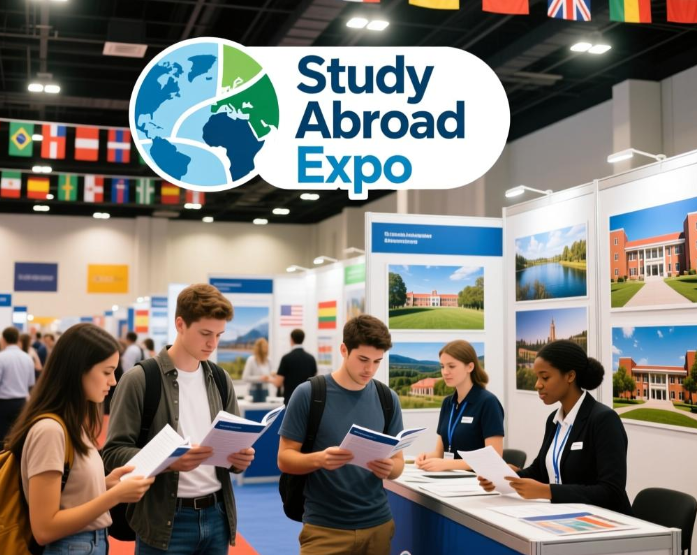
The core value of the study abroad expo lies in its “one-stop” information integration. At the expo, hundreds of institutions from popular study abroad destinations such as the United States, the United Kingdom, Canada, and Australia gather, covering diverse types including comprehensive universities, art schools, and polytechnics. For example, admissions officers from prestigious universities such as the University of Manchester in the UK and the University of Sydney in Australia are present to explain the latest admission policies and program features in detail; representatives from American community colleges showcase the “2+2 transfer” model, providing more cost-effective study options for families with limited budgets. In addition, the exhibition features a special “Scholarship Zone,” where some universities offer exclusive scholarship opportunities to participating students. For example, the “1+3 Undergraduate Direct Entry Program” in partnership with Arizona State University, offered by Maple Leaf Education Group, simplifies the application process and provides tuition fee reductions for outstanding students.
Addressing the urgency of studying abroad after the Gaokao (National College Entrance Examination), the expo has outlined five fast-track pathways to meet the needs of different students. First, direct application to undergraduate programs based on Gaokao scores. Currently, some universities in the UK, Australia, and Canada accept direct applications based on Gaokao scores. For example, the University of Sydney’s business program requires a Gaokao score of 75%-80%, and the University of Birmingham requires scores above the first-tier university cutoff. This pathway is suitable for students with excellent grades and sufficient language proficiency, saving foundation year time and allowing for a quick transition to overseas studies. Second, International Year One/Foundation Courses. For students with weaker language or academic foundations, they can choose to complete a one-year foundation or International Year One course, directly entering the second year of undergraduate studies upon completion. For example, the International Year One course at the University of Auckland in New Zealand covers academic English and foundational courses, helping students make a smooth transition. Third, Dual Admission Models. If a student’s language proficiency does not meet the requirements, they can apply for a “language + undergraduate” dual admission program, completing the language course first before entering the main course, without needing to reapply. Fourth, Sino-foreign cooperative education programs, such as the “2+2” or “3+1” models, allow students to complete part of their credits at a domestic university and then transfer to an overseas partner university, reducing study abroad costs while obtaining dual degree recognition from both China and abroad. Fifth, community college transfer pathways. American community colleges have low tuition fees and transfer agreements with prestigious universities, allowing students to enter top universities through a “2-year community college + 2-year prestigious university” model. For example, UC Berkeley accepts a large number of community college transfer students each year.
The study abroad expo is not only an information hub but also a practical guidance platform. During the expo, professional study abroad consultants provide one-on-one planning services, tailoring study abroad plans based on students’ Gaokao scores, language proficiency, budget, and career goals. For example, for students who did not perform well in the Gaokao but excel in English, consultants recommend prioritizing international first-year programs or dual admission; for families with limited budgets but hoping to attend prestigious universities, community colleges or Sino-foreign cooperative programs are recommended. In addition, the expo offers value-added services such as visa guidance and pre-departure training to help students adapt to overseas life in advance. For example, a study abroad agency simulated a visa interview scenario at the expo, guiding students on how to answer frequently asked questions such as “motivation for studying abroad” and “career planning,” thereby improving their visa approval rate.
In an era of global educational resource sharing, the study abroad expo has become an important link connecting Chinese students with world-renowned universities. It not only breaks down information barriers, making study abroad planning more transparent and efficient, but also allows students from different backgrounds to find suitable development paths through diversified options. Whether pursuing academic advancement or aspiring to career advancement, this educational event illuminates the way for students, helping them set sail and embark on a new chapter in their lives.