-
Whatsapp
+1 689 248 1956 -
Email
joannewong0817@gmail.com

 16/12/2025
In the wave of globalization, the diversification of nationality choices has become a focus of increasing attention. Dual citizenship, which means an individual simultaneously holds legal citizenship in two countries, is explicitly recognized by law in some countries, while it is strictly restricted in others. Globally, a considerable number of countries recognize dual citizenship, and their policy differences are closely linked to cultural backgrounds and historical traditions. The acceptance of dual citizenship in Asia exhibits diverse characteristics. Countries such as the Philippines, Vietnam, and Cambodia explicitly allow citizens to hold dual citizenship, especially for overseas expatriates or talents in specific fields, simplifying the naturalization process through legislation. For example, Vietnam’s revised Nationality Law of 2025 allows foreign experts in the semiconductor and artificial intelligence fields to apply for citizenship in Vietnam without relinquishing their original citizenship, aiming to attract high-end talent to fill technology gaps. South Korea adopts a conditional recognition policy, allowing South Korean citizens born abroad to retain dual citizenship, but naturalized citizens must renounce their original citizenship. Japan allows dual citizenship, but requires citizens to choose one before the age of 22; those who do not actively declare their dual citizenship are assumed to retain Japanese citizenship. In addition, countries such as Turkey and Israel have recognized dual citizenship through legislation or special provisions, facilitating cross-border living and working. European countries generally have a high acceptance of dual citizenship and offer flexible and diverse policies. Traditional immigration countries such as the UK, France, Italy, and the Netherlands explicitly recognize dual citizenship through law, requiring citizens to retain their original citizenship upon acquiring another country’s citizenship. Since the 2024 reform of its Citizenship Act, Germany has, in principle, allowed citizens to hold dual citizenship without having to renounce their original citizenship after naturalization. This policy adjustment has significantly…
 12/12/2025
In the wave of globalization, immigration has become an important choice for many people seeking a better life and realizing their personal value. However, immigration is not a simple “spontaneous trip”; it involves complex policy, economic, and cultural factors. So, what is the key to successful immigration? The cornerstone of successful immigration lies in accurate self-assessment and goal setting. Immigration is not about blindly following trends, but requires an objective and comprehensive evaluation based on one’s educational background, professional skills, financial strength, language proficiency, and other factors. For example, for highly educated and skilled professionals, skilled worker immigration or extraordinary ability visas may be a better choice; while for wealthy investors, investment immigration may be more suitable. At the same time, clearly defining the target country or region and thoroughly understanding its immigration policies, cost of living, and cultural environment are also prerequisites for successful immigration. Only with accurate positioning can one avoid blind applications and increase the success rate. The core of successful immigration lies in a strong will to survive and strategic wisdom. During the immigration process, applicants often face many challenges, such as language barriers, cultural differences, and employment pressure. At this time, a strong will to survive becomes the driving force that supports applicants in overcoming difficulties and moving forward. Strategic wisdom is reflected in an applicant’s keen insight into immigration policies, meticulous preparation of application materials, and thorough planning for their future life. For example, when applying for an EB-1 Extraordinary Ability visa, applicants not only need to demonstrate their professional achievements but also skillfully combine their personal values with the needs of American society to construct a convincing immigration narrative. This strategic wisdom often allows them to stand out among numerous applicants and win the favor of the immigration authorities. Immigration success also relies…
 09/12/2025
Amidst the ongoing global immigration boom, more and more people, yearning for a better life, embark on journeys to explore new homes. Faced with a plethora of immigration options, new immigrants often feel lost, unsure of where to turn. An immigration expo, showcasing high-quality immigration programs and resources from around the world, acts as a beacon, illuminating the path for new immigrants and guiding them to their preferred destinations. At the expo, many European countries became the focus of attention for new immigrants. Portugal, for example, located on the Iberian Peninsula, boasts a warm and pleasant climate with abundant sunshine year-round. Whether it’s the azure seas and skies of the coast or the verdant mountains and fields of the interior, it feels like stepping into a painting. Portugal’s education system is also outstanding, with a solid foundation in basic education and internationally aligned higher education, boasting numerous world-renowned universities, providing high-quality educational resources for the children of new immigrants. Furthermore, Portugal’s healthcare system ranks among the best in Europe, with advanced medical equipment and professional medical teams safeguarding the health of its residents. Furthermore, Portugal’s immigration policy is relatively lenient. Through methods such as real estate investment, new immigrants can easily obtain residency and begin a new life in Europe. Across the ocean, Canada is also a popular choice at the immigration expo. With its vast land, abundant natural resources, and diverse and inclusive culture, Canada attracts countless new immigrants. It boasts a comprehensive social welfare system, from free healthcare to generous unemployment benefits, ensuring residents have no worries about their livelihood. In education, Canada implements a free public education policy, with schools focusing on cultivating students’ comprehensive qualities and innovative abilities, laying a solid foundation for their future development. Canada’s job market is also full of opportunities, especially in…
 08/12/2025
In today’s world where global asset allocation is increasingly popular, more and more families are paying attention to various immigration pathways. Among them, the most frequently compared are “Golden Visas” and “traditional immigration.” Both can lead to residency or ultimately a change of status, but the routes, obligations, financial requirements, and review processes are completely different. Golden Visas are generally considered more flexible and “worry-free” because they are investment-based, offering residency in exchange for lower living requirements; while traditional immigration follows a more classic overseas settlement framework, requiring genuine living, working, and paying taxes, emphasizing long-term ties with the local community. Many people are confused when choosing a path: Which one is more suitable for them? Is a Golden Visa faster? Is traditional immigration more stable? What are the costs of each? Are there any hidden obligations? This article will break down these two paths in a clearer and easier-to-understand way, allowing you to create a “choice map” in minutes: the flexibility, actual residency, review complexity, difficulty of status change, investment amount, and tax impact that you care about will all be explained below. Whether you’re choosing a future path for your child’s education or planning a global mobility backup for your family, understanding the fundamental differences between the two is always the most important first step. Application Requirements The core of a Golden Visa is investment. You only need to meet basic conditions such as the amount of investment, the source of funds, and a clean criminal record. Traditional immigration, on the other hand, focuses more on your personal abilities, such as age, language skills, education, work experience, and genuine intention to reside there. Simply put, a Golden Visa “assesses your money,” while traditional immigration “assesses you as a person.” Residence Obligations The biggest attraction…
 06/12/2025
As global asset allocation awareness matures, more and more investors are considering whether it’s possible to apply for investment immigration programs in multiple countries at the same time to increase the success rate or leave more options for future family planning. This question reflects a shift in identity thinking in the era of globalization: people no longer pursue a single identity but expect greater freedom, more flexible travel conditions, safer asset arrangements, and broader educational pathways for their children. Since immigration policies vary from country to country, processing times differ, and requirements for applicants’ backgrounds also differ, applying to multiple countries seems to increase the “probability of success.” Can apply simultaneously? From a policy perspective, there is no “you can only choose one” restriction for multi-country investment immigration. Most countries will not reject your application simply because you are applying for another status. The key is whether the authenticity of the materials, the logic of the source of funds, and the legitimacy of the application purpose are consistent. As long as you can meet the requirements of each country individually, it is technically feasible. Different countries do not conflict Immigration systems between countries are independent, with no cross-checking mechanisms or shared application records. In other words, submitting materials to country A does not affect the review result in country B. What truly matters is that all your submitted materials must be logically consistent, such as income sources, asset structure, and tax declarations. Otherwise, different countries may issue completely different review conclusions, leading to accumulated risks. Time and effort costs must be considered simultaneously While simultaneous applications are possible, each immigration program involves multiple processes: material collection, lawyer communication, due diligence, financial arrangements, interviews, or requests for supplementary documents. Applying to multiple countries simultaneously means handling multiple application lines…
 06/12/2025
In recent years, investment immigration has become an important option for many families planning their future. Many hope to enhance their family’s global competitiveness through asset allocation, residency planning, educational choices, and freedom of residence. Faced with numerous policy changes, exhibition information, and institutional introductions from various countries, investors often find the information complex and difficult to judge. Because investment immigration involves law, taxation, residency, and long-term planning, it is not a project that can be easily followed simply because “someone said it’s good” or “a friend succeeded.” Many failures are not due to the policies themselves, but rather to misunderstandings about investment immigration, leading to premature decisions, blind choices, or neglecting compliance details. To safely obtain residency, the most crucial factor is not speed, but judgment; not choosing “popular projects,” but choosing a path that suits one’s goals. To help investors avoid pitfalls and repeated setbacks, I have summarized the most common misconceptions in the investment immigration process. They think the higher the investment, the more stable it will be Many people mistakenly believe that “high-amount projects are safer,” but the investment amount and success rate are not directly linked. What truly determines stability is whether the policy is stable, the regulations are clear, and whether the project itself belongs to an officially recognized path. High-value projects, especially those with unclear policies, actually carry greater risks. Focusing solely on speed, ignoring compliance Many people use “the fastest approval time” as their sole criterion, neglecting compliance. Insufficient documentation, unclear sources of funds, and unreasonable tax relationships can all lead to delays or even visa refusal. Speed can be a reference, but not the sole objective. Blindly following popular countries A new popular country may emerge each year, but every family’s background, financial structure, educational needs, and tax situation…
 06/12/2025
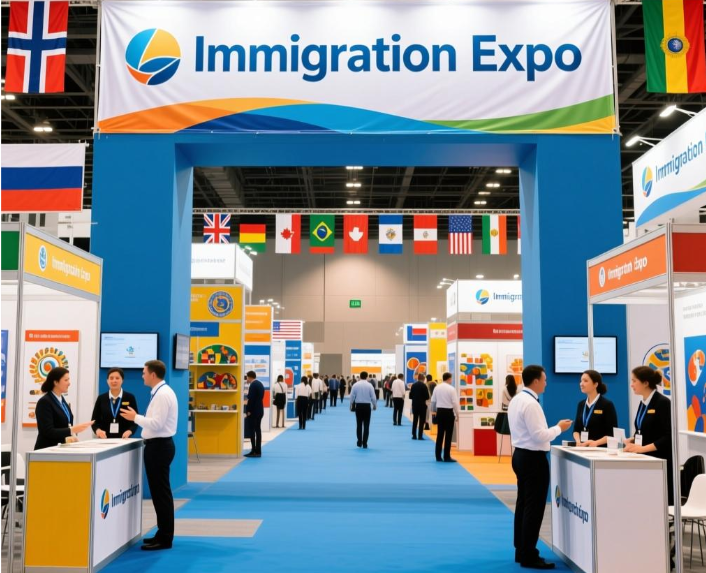
In the wave of globalization, overseas property investment and immigration have become important choices for many people seeking a new life and expanding new opportunities. However, upon arriving in a foreign country, facing an unfamiliar environment and complex procedures, many often feel lost and helpless. At this time, an immigration expo, gathering global real estate wisdom and immigration experience, acts like a lighthouse, illuminating the path forward and guiding new immigrants. This article will focus on “Ten Things You Must Do After Arrival,” combining the features of the immigration expo to provide you with a detailed guide for embarking on a new journey. Upon arriving in a foreign country, the first task is to complete identity registration and document processing. Whether studying, working, or immigrating, passports, visas, residence cards, or green cards are your “passports” in your new country. At the immigration expo, you can find professional immigration consultants who can not only explain the application process for various documents in detail but also provide personalized advice based on your specific circumstances, ensuring a smooth identity registration process. At the same time, don’t forget to complete the address registration within the specified time; this is the first step in establishing yourself in your new country. Following this, opening a bank account and financial planning become crucial issues for new immigrants. Financial systems and payment habits vary across countries, making efficient financial management a key concern for many. Immigration expos bring together numerous internationally renowned banks and financial institutions, offering not only account opening guidance but also customized cross-border financial planning solutions based on your financial situation and needs, enabling your assets to grow steadily globally. The convenience of communication and transportation directly impacts the quality of daily life for new immigrants. At immigration expos, you can learn about major local…
 04/12/2025
Many people considering investment immigration ask a crucial question: “After obtaining residency, will I be able to enjoy local social welfare benefits?” This is not surprising After all, changing residency and moving to a different country involves more than just obtaining residency; people want to know if their lives will be more stable, their children will have access to better educational resources, their healthcare will be more reliable, and their retirement will be more secure. However, the reality is that different countries have vastly different levels of welfare accessibility: some places allow children to attend public schools simply by having legal residency, some require actual residence to use local health insurance, and some core benefits are only available to citizens Without understanding this beforehand, it’s easy to experience a gap between expectations and reality Therefore, before planning investment immigration, the most important thing is not to fantasize about how many benefits you can get, but to understand “which benefits you can enjoy, which you cannot, and which take time to become available” This will prevent you from making mistakes when planning your family’s education, healthcare, and asset allocation What benefits do you enjoy based on your status Status type determines how many benefits you can enjoy Investment immigration programs may offer completely different statuses, such as permanent residency, long-term residency permits, or citizenship in one step The “friendliness” of welfare policies varies greatly depending on the status Generally, the rule is simple: the more stable your status, the clearer the residency requirements, and the clearer your tax obligations, the more benefits you receive Temporary residency offers the fewest benefits, permanent residency offers more, and citizenship offers the most Actual residency is crucial Most countries share a common feature: if you don’t reside there, the benefits you…
 04/12/2025
In today’s world where global asset allocation is becoming the norm, investment immigration is no longer just about obtaining residency; it has become a more proactive strategy for many families in terms of education planning, global liquidity, tax planning, and asset security. As policy differences between countries intensify, the processing speed of investment immigration has become one of the most pressing concerns for investors: How many months or years does it take from application submission to final approval? Is an interview required? How long will the fund verification process take? Will background checks affect the progress? What are the differences between different projects? In fact, there is no single answer to the approval cycle for investment immigration. It is determined by multiple factors, including project type, government processing speed, the quality of prepared documents, the number of applicants, and the compliance of the investment structure. For those preparing to embark on a global investment journey, understanding the logic of the approval cycle, why there are time differences between countries, and which steps require advance planning can make the entire application process smoother and avoid increased time costs due to policy changes or backlogs. What affects the processing speed? Policy rigor The processing speed of each country primarily depends on the rigor of its immigration policies. Countries with stringent background checks, multi-tiered approval structures, and requirements for on-site interviews or additional financial verification often have longer processing times. Conversely, projects with simpler policy structures and standardized processes typically see faster approvals. Different Project Types Investment immigration is not a single category. Real estate investment projects usually have the most straightforward processes; fund investment projects require multiple layers of review; business investment or entrepreneurial projects often involve business plans and feasibility assessments, thus taking longer. The more complex the project,…
 04/12/2025
In today’s increasingly globalized world, immigration is no longer an exclusive choice for a select few. More and more people are embarking on journeys to explore new homes, driven by diverse needs such as education, work, and improved quality of life. However, the immigration application process is complex and rigorous, involving numerous stages and details; a slight misstep can lead to failure. The upcoming Immigration Expo will serve as a treasure trove of immigration wisdom and experience, comprehensively presenting the entire immigration application process to those intending to immigrate, helping them smoothly begin a new chapter in their overseas lives. The starting point for an immigration application lies in accurately assessing one’s own qualifications. Different countries and different immigration programs have vastly different requirements for applicants. For example, skilled worker immigration typically requires applicants to possess specific professional skills, educational backgrounds, and a certain number of years of work experience. Canada’s Federal Skilled Worker Program, for instance, uses a comprehensive scoring system based on factors such as age, language proficiency, education level, and work experience; only those who achieve a certain score are eligible to enter the candidate pool. Investment immigration, on the other hand, places greater emphasis on the applicant’s asset situation and investment capabilities. For example, the US EB-5 investment immigration program requires applicants to invest a certain amount in a designated business project and create a certain number of jobs. At immigration expos, professional immigration consultants provide in-depth one-on-one assessments based on each applicant’s specific circumstances, helping them identify their strengths and weaknesses to accurately pinpoint suitable immigration programs. After determining the immigration program, the next step is document preparation. This stage is crucial, as the completeness and accuracy of the documents directly impact the success of the application. Applicants need to prepare a series of documents,…
 Number
Call Now:
139 1723 4508
 WeChat
 Form
FormBook Your Booth
Complete your information immediately and provide you with exclusive services!
Back to Top

