-
Whatsapp
+1 689 248 1956 -
Email
joannewong0817@gmail.com

 28/11/2025
Immigration is not simply “moving to a different place,” but a psychological journey from the “familiar” to the “unknown.” Many people believe that after immigrating, all that’s needed is to solve basic living problems, but the real challenges often come from within—how to cope with loneliness, how to integrate into a new environment, and how to maintain self-identity? These mental issues are more complex than “finding a house” or “handling formalities,” and require more patience and wisdom. Understanding cultural differences Every country has its own cultural customs, such as greetings, table manners, and holiday traditions. Upon arriving in a new environment, you might feel, “This is different from what I expected,” or even think, “Why are they so strange?” At this time, the worst thing you can do is judge others by your own standards. The correct approach is: observe first, then understand. For example, people in some countries like to hug when they meet, while in others they shake hands; in some places, speaking loudly while eating is considered warm, while in others, quietness is considered polite. These differences are not right or wrong, just “different.” Accepting these differences is the first step to integrating into a new environment. Building a New Social Circle: Take the Initiative to “Go Out,” Don’t Wait for “Others to Come to You” Build a new social circle The most lonely moments after immigrating are often when “no one is around to talk to.” Many people wonder, “Why doesn’t anyone reach out to me?” But in most countries, socializing requires initiative. Start with a “small circle”: participate in community activities, join interest groups, chat with neighbors while walking your dog in the park. Even if you don’t speak the language at first, you can convey friendliness through smiles and gestures….
 28/11/2025
Many people think immigration simply means “living in a new place,” but in reality, it’s like a “life-changing test” that requires meeting a series of fundamental conditions. These conditions aren’t meant to create obstacles, but to ensure immigrants can settle smoothly, integrate into society, and maintain local social order and public interests. In short, the “entry ticket” for immigration typically includes four key aspects: financial stability, adaptability, health status, and moral integrity. Immigrants must have a solid financial foundation The primary concern for immigration authorities is whether you can “support yourself” in the destination country. While this may sound practical, the logic is straightforward: if a family relies on social welfare after relocation, it would place additional strain on local resources. Therefore, most countries require applicants to provide financial documentation, such as bank statements, asset appraisals, or stable income sources. This economic threshold isn’t about’ money can solve everything, ‘but rather proving your ability to cover daily expenses like rent, education, and healthcare in a new country. For instance, some nations require immigrants to purchase health insurance or invest in local businesses to create jobs. Ultimately, financial stability serves as both a’ lifeline ‘and the’ first line of defense’ for immigration. Basic language, culture and skills Immigration is not merely about “moving to a new home,” but requires full integration into a completely new social environment. Therefore, the host country will assess your “adaptability” through three key aspects: Language proficiency (e.g., English, Spanish, French, etc.), with requirements varying by country. While fluency isn’t mandatory, you should at least be able to communicate daily—such as for shopping, medical visits, or neighborhood interactions. Cultural identity: the host country expects immigrants to respect local culture, laws and social norms. For example, some countries require immigrants to take cultural…
 28/11/2025
In today’s rapidly globalizing world, expos are no longer simply “product exhibitions,” but rather “super platforms” integrating cutting-edge trends, cross-cultural exchange, and global resource integration. Their core value lies not only in showcasing current achievements but also in anticipating the future and connecting the world. This dual characteristic of “foresight” and “internationalism” makes expos an important vehicle for promoting social progress and fostering international cooperation. What does “foresight” mean in the context of expos? “Foresight” refers to the expos’ ability to keenly capture current trends and showcase innovative directions that may change lives in advance. For example, technology expos focus on cutting-edge fields such as artificial intelligence, new energy, and biotechnology, allowing visitors to glimpse the prototype of “future life”; cultural expos, on the other hand, convey the possibilities of future aesthetics and lifestyles by showcasing the art and design concepts of different countries. This ability to “see the future in advance” stems from the expos’ integration and distillation of global information. Like a “mirror,” it reflects both current technological and cultural achievements and humanity’s collective imagination of the future. Through expos, ordinary people can intuitively feel that “the future is already here”—for example, intelligent robots, virtual reality devices, and sustainable living solutions. These are no longer scenes from science fiction movies, but tangible realities. The international nature of expos makes them a “global living room” that breaks down boundaries. If “foresight” is the “time dimension” of an expo, then “internationality” is its “spatial dimension.” A truly internationally influential expo is not limited to a single country or region, but invites global participants. This “internationality” is reflected in three levels: The diversity of participants: From exhibitors to visitors, from businesses to government agencies, expos bring together “voices” from different countries. For example, a previous…
 28/11/2025
At immigration expos, a dazzling array of immigration programs from various countries attracts many people dreaming of living abroad. However, immigration is far more than a simple change of status; it involves complex tax issues. Ignoring tax planning can lead to a reduction in wealth after immigration. Therefore, understanding and implementing effective tax planning after immigration is crucial at immigration expos. The determination of tax residency status after immigration is the first hurdle in tax planning. Different countries have vastly different definitions of tax residency and tax obligations. For example, the definition of residency in the United States differs from its immigration law. Even without a green card, if you have stayed in the U.S. for more than 183 days in the previous year, or more than 183 days in the weighted average of the previous three years, you may be considered a U.S. tax resident and required to file taxes with the IRS. Once deemed a tax resident before obtaining a green card, the scope for tax planning will be significantly limited. Therefore, it is essential to plan your residency time before immigrating to avoid becoming a tax resident prematurely. For instance, non-U.S. citizens should ideally not stay in the U.S. for more than 120 days per year to avoid incurring excessive tax obligations due to residency issues. Asset disposal is a crucial aspect of post-immigration tax planning. For assets with appreciation potential, such as stocks and real estate, proper disposal before immigration can reduce the tax burden. For example, if stocks invested in domestically have appreciated significantly, they can be sold before immigration and quickly repurchased afterward, thereby increasing the book cost of the assets and significantly reducing capital gains tax upon future sale. For loss-making investments, disposal can be delayed until after becoming a tax resident, using…
 27/11/2025
In the wave of globalization, immigration has evolved from a single lifestyle choice to a diversified life plan. Whether for children’s education, asset allocation, or the pursuit of broader development opportunities, precise time planning and efficient process management have become key to successful immigration. The Immigration Expo, as a core platform connecting global immigration resources, provides applicants with a full-cycle solution by integrating policy interpretation, project demonstrations, and one-stop services. Immigration Time Planning: A Precise Logic from Goal Setting to Milestone Control Immigration projects typically span years. For example, the US EB-1A Extraordinary Ability immigration program takes 12-18 months from document preparation to green card approval, while the processing time for the Canadian Federal Skilled Worker immigration program can be as short as 6 months. This difference stems from the underlying logic of immigration policies in different countries: skilled worker immigration focuses on a points-based system and occupation lists, investment immigration emphasizes the source of funds and project compliance, and family-based immigration requires proof of genuine family relationships. The Immigration Expo brings together immigration officials, licensed lawyers, and senior consultants from over 20 countries worldwide to provide applicants with a three-dimensional matching service of “policy-project-personal conditions.” For example, one exhibiting organization customized a solution for a researcher, using a dual-track application process of EB-1A and NIW, reducing the original 3-year cycle to 10 months. The key was accurately grasping the policy window and the document submission process. The core of process management lies in risk prediction and dynamic adjustment. Taking the Australian 188A Business Innovation Visa as an example, applicants need to complete three hurdles: writing a business plan, applying for state government sponsorship, and submitting federal documents. Delays in any step can lead to a reset of the priority date. The digital management system introduced at the Immigration Expo…
 24/11/2025
In the wave of globalization, immigration has become a crucial choice for many seeking a better life and expanding their careers. However, faced with a dazzling array of immigration programs on the market, selecting truly reliable options has become a major challenge for many immigration applicants. At this juncture, an immigration expo, gathering global immigration information, undoubtedly serves as a guiding light for confused applicants, illuminating the path to their ideal life. As an information feast for the immigration industry, the Immigration Expo not only brings together immigration service agencies, overseas real estate developers, and educational institutions from around the world, but also serves as a comprehensive platform integrating policy interpretation, program demonstrations, and experience sharing. Here, applicants can gain a one-stop understanding of the latest developments in immigration policies of various countries, directly compare the advantages and disadvantages of different programs, and even engage in face-to-face exchanges with successful immigrants, learning valuable lessons and experiences. So, how can one discern the best and most reliable immigration program at an immigration expo? The key lies in comprehensively considering multiple dimensions to form a holistic and in-depth understanding. First and foremost, clearly defining one’s personal immigration needs is fundamental. People choose to immigrate for various reasons. Some do it for their children’s education, seeking an international learning environment; others for asset allocation, aiming for a global wealth distribution; and still others for job opportunities, seeking broader career development prospects. Clearly defining your core needs helps you quickly identify your target among numerous projects, avoiding blindly following trends or missing out on opportunities. Secondly, thoroughly understanding the project details is crucial. At immigration expos, each participating project showcases its unique advantages and highlights, but applicants must remain rational and not be easily misled by superficial appearances. Carefully inquire about key information such…
 24/11/2025
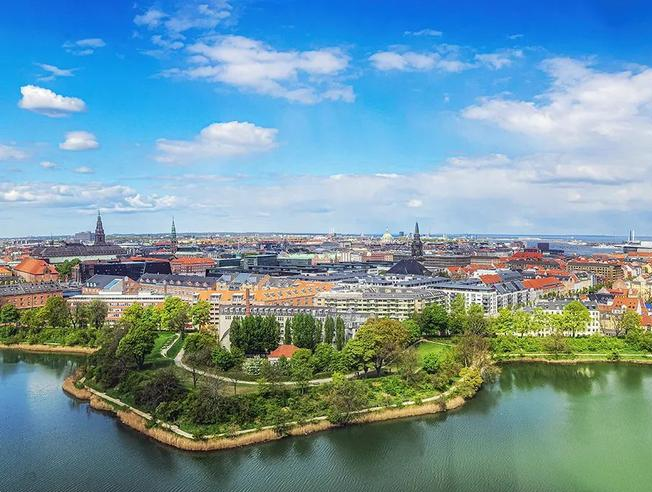
When the United Nations Sustainable Development Organization incorporated “climate change resilience” into its livability assessment system, and when digital transformation and community engagement became new benchmarks for measuring urban vitality, the 2025 global livability rankings saw a historic turning point—Copenhagen, the capital of Denmark, ended Vienna’s three-year reign with a comprehensive score of 98, becoming the first Nordic city to top the list due to its “carbon neutrality practices” and “technological innovation ecosystem.” This transformation not only redefined the definition of a livable city but also resonated deeply with the concurrently held Global Migration Expo: as livability becomes a core driver of global talent mobility, how to build bridges to ideal lives for immigrants through policy innovation, resource integration, and service upgrades became the most prominent topic at this year’s expo. Copenhagen: A Global Model for Carbon Neutrality Experiments Copenhagen’s rise to the top was no accident. This city of just 1.4 million people has built the world’s most comprehensive green transportation network in a decade: 54% of residents commute by bicycle, the density of bike lanes reaches 3.2 kilometers per 1,000 people, public transportation is entirely powered by hydrogen and electricity, and air quality has ranked among the top three globally for five consecutive years. Even more astonishing is its “cradle-to-grave” welfare system—universal free healthcare covers 98% of diseases, childcare subsidies cover 60% of family childcare costs, and the “15-minute living circle” plan ensures that every community has a kindergarten, clinic, and community center within walking distance. “Copenhagen’s charm lies in its demonstration that sustainable development and a high quality of life can coexist perfectly,” a UN-Habitat expert pointed out at the expo forum. The city boasts the world’s densest cluster of green technology companies, from Novo Nordisk’s biopharmaceuticals to the Danish National Energy Laboratory’s wind power technology,…
 21/11/2025
In the wave of globalization, immigration has become an important choice for many people planning a new chapter in their lives. However, the interview stage of the immigration application process often puts applicants under immense pressure—language barriers, cultural differences, policy changes… any detail can affect the final outcome. How to overcome these bottlenecks? The answer may lie in the annual Immigration Expo. As an industry event that brings together global immigration programs, policy interpretations, and professional services, the Immigration Expo is not only a “one-stop platform” for obtaining information but also a “secret weapon” for enhancing interview competitiveness. Precise Matching: From “Casting a Wide Net” to “Customized” Screening Logic The core of immigration applications lies in “suitability.” Immigration policies vary significantly between countries: some focus on skilled workers, some favor investment capabilities, and some prioritize family reunification. Traditional applicants often fall into the trap of “casting a wide net” due to information asymmetry, wasting energy and reducing their success rate. The Immigration Expo, by integrating high-quality global programs, provides applicants with a “menu-style” selection. For example, a “European Skilled Migrant Visa Zone” at an expo showcased in-demand occupation lists from multiple countries for fields such as IT, healthcare, and engineering. Applicants could quickly identify their target countries based on their professional background. Professional consultants were also on-site to assess the match between applicants’ education, work experience, and target programs, preventing rejection due to “unmet requirements.” This precise screening logic shifted applicants from “playing the lottery” to “targeted efforts,” laying the foundation for a successful interview. Policy Foresight: Understanding Immigration Officers’ “Key Assessment Points” Immigration policies are not static; economic conditions, social needs, and even international relations can trigger policy adjustments. For example, one country temporarily relaxed immigration requirements for nurses due to increased pressure on its healthcare system; another tightened…
 21/11/2025
In the wave of globalization, immigration has become a crucial choice for many to plan a new chapter in their lives. However, the welfare systems and tax policies of different countries vary significantly, directly impacting the quality of life and wealth accumulation after immigration. This article will provide an in-depth analysis of the welfare and tax policies of popular immigration destinations such as the United States, Canada, Australia, New Zealand, and Portugal, offering decision-making references for applicants. The United States: High Welfare and High Taxes Coexist As the world’s largest economy, the United States’ welfare system is centered on “equal opportunity.” Children of green card holders can attend public primary and secondary schools for free, and university tuition is only one-third to one-half of that for international students; low-income families can apply for Medicaid, covering costs such as prenatal checkups and vaccinations; those who have paid taxes for 10 years can receive a monthly pension of $1,000-$3,000 after retirement. However, the US tax policy is equally stringent: the federal personal income tax rate can reach as high as 37%, and the global tax system requires immigrants to declare overseas assets, with compliance costs exceeding $10,000 annually. Despite this, its top-tier educational resources and multicultural environment continue to attract a large number of high-net-worth individuals. Canada: Universal Welfare and Complex Tax System Canada is known for its “cradle-to-grave” welfare system. Universal free healthcare covers basic medical services, but medication costs are the responsibility of the individual. The unemployed can receive a benefit of 55% of their previous salary (for up to 45 weeks) and receive free vocational training. The Canada Child Benefit (CCB) provides a maximum monthly subsidy of CAD 6,833 per child. Regarding taxes, Canada uses a global tax system; with federal and provincial taxes combined, high-income earners can face…
 21/11/2025
In today’s deeply integrated globalized economy, “doing business overseas” is no longer the sole domain of large corporations. An increasing number of small and medium-sized entrepreneurs are using entrepreneurial immigration to open up new markets, acquire new resources, and even achieve a double leap in their lives and careers. However, overseas entrepreneurship is not simply a matter of “copying the domestic model.” From market research to legal compliance, from cultural adaptation to resource integration, every step presents its own challenges. How to break through these barriers? This article will provide entrepreneurs with a practical guide to overseas expansion from three dimensions: strategic planning, resource integration, and risk management. Precise Positioning: From “Following the Trend” to “Demand-Driven” Market Selection The allure of overseas markets lies in their diversity, but blindly entering unfamiliar territory often leads to “culture shock.” Successful overseas entrepreneurial immigration requires answering two core questions: What are the “real needs” of the target market? Can your product or service solve local pain points? For example, a domestic home furnishing brand discovered through research that the Southeast Asian market, due to its humid climate, has a strong demand for mold- and moisture-proof furniture, while local products are mostly low-end, lacking high-quality options. The brand quickly adjusted its product line, launched an anti-mildew coating technology targeting the Southeast Asian market, and established a warehousing and logistics system in conjunction with local distributors, capturing 12% of the market share within three years. The lesson from this case is that overseas entrepreneurship needs to be driven by demand rather than simply replicating experience, uncovering hidden opportunities through localized research. Furthermore, policy incentives are also an important factor in market selection. Many countries have introduced dedicated immigration pathways for entrepreneurs to attract foreign investment, such as tax breaks, startup subsidies, and even permanent residency…
 Number
Call Now:
139 1723 4508
 WeChat
 Form
FormBook Your Booth
Complete your information immediately and provide you with exclusive services!
Back to Top

