
-
Whatsapp
+1 689 248 1956 -
Email
joannewong0817@gmail.com

 31/01/2026
In the wave of globalization, more and more people are turning their attention overseas, seeking better living environments, educational resources, or business opportunities. Investment immigration, as an efficient pathway, is attracting numerous high-net-worth families. However, immigration policies vary significantly across countries, with different processing speeds, financial thresholds, and additional conditions. Which countries offer the fastest investment immigration routes? This article will reveal five popular destinations to help you accurately match your needs and start a new chapter in your life. Vanuatu: A South Pacific Pearl with a Passport in 30 Days If you’re looking for lightning speed, Vanuatu is undoubtedly the top choice. This South Pacific island nation’s investment citizenship program is considered one of the fastest passport programs in the world. Applicants only need to donate US$130,000 to the government’s development fund, with no language, education, or residency requirements, and citizenship can be granted in as little as 30 days. A Vanuatu passport offers visa-free access to over 130 countries, including the Schengen Area, the UK, and Singapore, greatly facilitating business travel and global asset allocation. Furthermore, the local tax policy is favorable, with no personal income tax or capital gains tax, attracting many entrepreneurs and investors. Turkey: A Eurasian Hub Approved in 4 Months Turkey’s Citizenship by Investment Program has become a dark horse in the global immigration market due to its “fast and practical” advantages. Applicants only need to purchase real estate worth US$400,000 or invest an equivalent amount in government bonds to obtain a Turkish passport within 4 months. This passport offers visa-free access to 128 countries, including developed Asian countries such as Japan, South Korea, and Singapore, and also allows for the application of a US E-2 visa, enabling indirect access to the US. Turkey’s strategic location at the crossroads of Europe and Asia,…
 29/01/2026
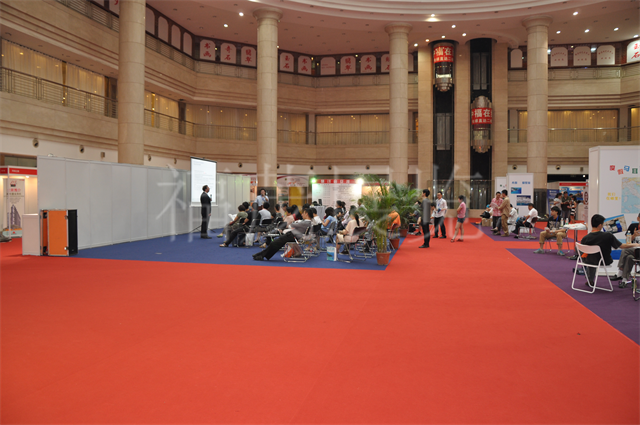
In the context of increasingly interconnected global economies, expos have become more than just platforms for showcasing products and services; they have become vital bridges connecting different countries, cultures, and markets. Whether you are a business, an industry professional, or a general visitor, participating in expos allows you to access information and perspectives from around the world in a short period, effectively expanding your international perspective. Compared to acquiring information through single channels, expos, with their concentrated and interactive nature, provide participants with a more intuitive and comprehensive international learning experience. Many people have a rather abstract understanding of “international perspective,” believing that it can only be truly formed by living or working abroad for an extended period. However, expos are actually a low-cost, high-efficiency way to help participants quickly understand the international market landscape, industry development trends, and different national ways of thinking. Through face-to-face exchanges, physical displays, and on-site activities, participants can transform previously scattered and abstract international information into concrete and tangible experiences—this is the key value of expos in expanding international perspectives. Concentrated Understanding of the Global Market One of the biggest features of expos is that they bring together companies, institutions, and projects from different countries and regions in a single space. Participants can access products, technologies, and services from multiple countries in a short time, thus gaining a holistic understanding of the global market. This centralized exhibition helps break down information barriers, allowing participants to transcend the limitations of their local markets. By comparing product positioning, price levels, and market strategies across different countries, participants can gain a clearer understanding of the differences between countries within the same industry. This horizontal comparison helps establish a global perspective, avoiding the use of local standards to judge international markets. Understanding Different Cultural Backgrounds The…
 28/01/2026
As globalization reshapes the wealth landscape, the asset allocation of high-net-worth individuals has long transcended geographical boundaries. Investment immigration, once considered an option exclusively for the wealthy, is becoming a “golden springboard” for an increasing number of families to achieve educational advancement, wealth preservation, and business expansion. From children gaining admission to world-renowned universities to companies establishing offshore structures, investment immigration offers more than just a change in status; it provides a complete resource integration solution. Educational Advancement: Paving the Way for the Next Generation’s International Track In the fiercely competitive education sector, investment immigration provides children with a shortcut to success. Taking the US EB-5 investment immigration program as an example, green card holders enjoy the same admission pathway as local students, significantly increasing their chances of entering top universities like Harvard and Stanford. More importantly, they do not need to compete with global applicants for limited spots, and their choice of major is no longer restricted by international student quotas. This advantage is equally significant in Europe. Children of Portuguese Golden Visa holders can not only apply to prestigious universities like Oxford and Cambridge as EU students but also gain admission to top domestic universities with lower scores through the Joint Entrance Examination for Overseas Chinese Students. This flexible “offensive and defensive” approach is precisely the educational safety net that investment immigration provides to families. Wealth Preservation: Building a Global Asset Firewall Amidst intertwined unilateralism and geopolitical conflicts, diversified asset allocation has become a consensus among high-net-worth individuals. Investment immigration, through a dual allocation of “residency + assets,” adds double insurance to wealth security. For example, through the Greek real estate investment immigration program, investors can not only obtain EU residency but also generate stable cash flow through property rentals, while mitigating the risk of single-currency…
27/01/2026
As global talent mobility enters a multipolar era, a phenomenon that overturns traditional perceptions is emerging: more and more high-net-worth individuals are no longer satisfied with a single nationality, but are instead building a “safety net” of identity by simultaneously applying for multiple immigration programs. From Silicon Valley entrepreneurs to multinational corporate executives, from financial elites to tech moguls, this wise choice of “not putting all your eggs in one basket” is becoming a new survival rule in the era of globalization. The Underlying Logic of Parallel Applications: Diversifying Risk and Seizing Opportunities Immigration policies are essentially the product of dynamic game theory. The sudden increase in language requirements for Canada’s Federal Skilled Worker Program, the abrupt tightening of industry restrictions for Australia’s investor immigration program, and the extension of the US EB-5 waiting list to over eight years—these policy shifts have caught countless applicants off guard. Simultaneously pursuing multiple programs is equivalent to purchasing “insurance” for one’s immigration plan: when country A’s policies tighten, country B’s program may be entering a window of opportunity; when country C’s approval process slows down, a green card in country D may have already been quietly obtained. This strategy is particularly prevalent among entrepreneurs. The founder of a new energy company simultaneously pursued both the Portuguese Golden Visa and the Malta permanent residency program. The former was used to expand into the European market, while the latter served as a stepping stone for tax planning. When Portugal announced the closure of its real estate investment immigration program in 2025, his Maltese residency had already been approved, successfully mitigating policy risks. Data shows that entrepreneurs holding 2-3 overseas residency statuses have a 47% higher success rate in international business expansion than those with only one residency. The Art of Resource Integration: Balancing…
 26/01/2026
In the wave of globalization, more and more people aspire to expand their lives through immigration. For freelancers, lacking both the substantial capital of traditional business owners and the convenience of stable employer sponsorship, immigration seems fraught with challenges. However, investment immigration is becoming a golden channel for this group to overcome residency restrictions. From Hong Kong to Canada, from Europe to the United States, many countries have tailored flexible solutions for freelancers, making “earning money while obtaining residency” a reality. Hong Kong: HK$30 Million to Leverage International Financial Center Status Hong Kong’s new investment immigration policy is known for its “high threshold and high flexibility,” making it particularly suitable for high-net-worth freelancers. Applicants need to prove they have HK$30 million in net assets, of which HK$27 million can be invested in financial assets such as stocks, bonds, and limited partnership funds, and the remaining HK$3 million must be invested in innovative technology sectors. This design ensures both liquidity and promotes Hong Kong’s industrial upgrading. A key highlight of the policy is its extremely low residency requirement—no need to work or reside in Hong Kong; renewal is only required to maintain the investment. For freelancers, this means maintaining a global business presence while simultaneously planning their children’s education in Hong Kong. Even more enticing is the inclusion of property purchases in the investment scope: up to HK$10 million of residential property purchases exceeding HK$50 million can be counted towards the total investment, achieving a dual allocation of “residency + assets.” Canada: Quebec Self-Employed Program Designed for Self-Employed Individuals The Quebec Self-Employed Immigration Program is considered a “green channel” for freelancers. This program targets self-employed individuals, online shop owners, and freelancers, requiring applicants to have two years of self-employment experience within the past five years and possess CAD$100,000 in…
 24/01/2026
IELTS vs. TOEFL: Cracking the “Choice Code” of Language Tests for Studying Abroad During the application season for studying abroad, language tests are an unavoidable “first hurdle.” IELTS and TOEFL, as the two most globally recognized English tests, often leave test takers struggling with the choice: IELTS or TOEFL? Should they believe the rumor that “IELTS is easier,” or blindly follow the claim that “TOEFL is more favored by American universities”? In fact, the two differ significantly in terms of test content, applicable scenarios, and scoring standards. The choice should be based on personal goals, strengths, and application needs. This article will compare them from three dimensions: test format, applicable scope, and preparation difficulty, to help you find the language test that best suits you. Test Format: Scenario-Based Communication vs. Academic Output – Personality Determines the Choice IELTS is designed to be closer to everyday life scenarios, emphasizing “practical English” skills. The listening section covers real-life contexts such as conversations, lectures, and discussions, including renting an apartment, traveling, and academic discussions. The speaking test uses a one-on-one live conversation where test takers need to communicate with the examiner about life and study topics, such as describing a travel experience or discussing future career plans. This “face-to-face” interactive mode is suitable for extroverted test takers who excel at impromptu expression and are more familiar with everyday topics. For example, a student planning to apply for undergraduate studies in the UK, accustomed to daily interactions with foreign teachers, easily achieved a 7 in the speaking section after choosing IELTS. TOEFL, on the other hand, focuses on academic scenarios, emphasizing “academic English” skills. The listening materials are all from university lectures and academic discussions, covering subjects such as biology, history, and art; the speaking test requires test takers to first listen to…
 24/01/2026
For those aspiring to immigrate to the United States, the EB-5 immigrant investor visa and the E-2 treaty investor visa are like two “keys,” unlocking different immigration paths. The former focuses on “investment for a green card,” while the latter emphasizes “flexible residency.” They differ significantly in application requirements, status attributes, and investment thresholds. Which “key” is right for you? This article will analyze these differences from three dimensions: core distinctions, applicable groups, and risks and returns, helping you find the most suitable immigration option. Status Attributes: Green Card vs. Long-Term Visa – Your Goals Determine Your Choice The essence of the EB-5 is an “immigrant visa,” granting direct permanent resident status (green card) upon successful application. This means holders can live, work, and study freely in the United States, enjoying the same benefits as local residents, and have the opportunity to apply for citizenship in the future. This “one-step” characteristic makes it the first choice for high-net-worth families seeking stable residency. For example, families planning for their children’s education in the US and hoping to diversify their assets globally can obtain a green card through the EB-5 program. Their children can enjoy public education benefits, and there are no restrictions on further education or employment. The family’s assets can also be diversified through the US financial market. The E-2 visa, a “nonimmigrant work visa,” allows holders to reside and work in the US long-term, but it is essentially a temporary status. Its validity is generally 3 months to 5 years (depending on the original nationality), with an initial stay of 2 years. As long as the business is operating normally and profitable, the visa can be extended indefinitely. The “flexibility” of the E-2 visa lies in its freedom of residence: holders do not need to meet the “visit…
 22/01/2026
In the wave of globalization, real estate investment immigration has become an important path for high-net-worth individuals to optimize asset allocation and expand their lifestyles. By purchasing overseas real estate, investors can not only obtain asset appreciation potential but also unlock diverse benefits for their families, such as education, healthcare, and travel. However, the policies, market environments, and immigration thresholds of different countries vary significantly. How can one accurately choose a target country? The following analysis examines popular global real estate investment immigration destinations from three dimensions: market potential, immigration policies, and lifestyle suitability. Europe: The Dual Benefits of Livability and Status Europe, with its stable social environment and high-quality education and healthcare resources, has become a popular region for real estate investment immigration. Among them, Portugal stands out with its “Golden Residence Permit Program”: investors can obtain residency by purchasing real estate worth €500,000, and apply for citizenship after five years if they meet the residency requirements. This path not only has clear thresholds but also allows three generations of a family to immigrate simultaneously, with children enjoying top-tier EU education and parents receiving comprehensive retirement security. Furthermore, the Portuguese real estate market has a long-term stable performance, with rental yields in core cities such as Lisbon and Porto consistently above 5%, providing investors with a continuous cash flow. Greece also attracts global attention with its “ultra-low threshold”: a property purchase of just €250,000 grants permanent residency to three generations of a family, with no residency requirements. This policy is particularly suitable for families seeking “immigration without relocation,” allowing investors to retain their businesses and lives in their home countries while planning educational pathways for their children, such as the Joint Entrance Examination for Overseas Chinese Students. Driven by tourism, the Greek real estate market continues to heat…
 21/01/2026
When considering Singapore immigration, many people’s first reaction is “it’s easier to find an agency.” Indeed, Singapore’s immigration, visa, work permit, and PR applications involve many policies and detailed procedures, making them seem complex. As a result, the agency market is very active. However, in reality, many people spend money only to find that the results are far from what was promised, or even miss the best application opportunity. The problem isn’t that “agencies are necessarily unreliable,” but rather that the market is uneven, with some agencies taking advantage of information asymmetry and applicants’ anxiety to set up traps. For many ordinary families, Singapore immigration is often linked to children’s education, career development, and asset planning, leading to high expectations. When agencies repeatedly emphasize “limited quotas,” “policy closures,” and “it’ll be too late if you don’t apply now,” it’s easy to be swayed by emotions. Only after entering the process do they discover that the so-called “insider channels” and “guaranteed success plans” don’t exist, and even the most basic services are severely reduced. Promise Tricks “100% success,” “guaranteed PR”—these are the most common and dangerous claims made by Singapore immigration agencies. Singapore’s immigration policy is essentially a government-approved system. Whether it’s an EP, S Pass, or PR, the final decision rests with the official departments, and agencies cannot interfere with the approval results. However, some unscrupulous agencies exploit clients’ lack of policy knowledge, using slogans like “guaranteed success,” “full refund if unsuccessful,” and “insider connections guarantee success,” creating a false sense of security. The problem is that such promises are baseless. Once an application is rejected, agencies often use excuses like “temporary policy tightening,” “changes in client qualifications,” or “inadequate cooperation” to shirk responsibility, and their refund policies are extremely stringent, resulting in very little money actually being returned. Be…
 21/01/2026
In recent years, “immigrating to Singapore” has no longer been a niche option. Many people are concerned about whether there have been significant changes to Singapore’s permanent residency (PR), work visas, and entrepreneur immigration policies. This is because Singapore is a developed economy, with high-quality education and a stable lifestyle, but at the same time, it is a city-state with scarce human resources and a tight labor market. Therefore, when formulating immigration policies, the local government must attract international talent while balancing domestic employment and population structure. This has led to a phenomenon: in just a few years, Singapore’s immigration and work visa policies have undergone many adjustments, making many people planning to immigrate feel that the policy pace is “accelerating, tightening, or repositioning.” These adjustments are not arbitrary but closely related to the current needs of Singapore’s social, economic, and demographic development. For example, with changes in the global economic environment, the rise of the technology industry, and increasing pressure from an aging population, the Singapore government’s strategies for attracting foreign talent and families are also changing. Stricter Requirements for Talent Introduction In the past few years, Singapore has introduced many new policies to attract high-end talent, while raising the bar in some areas. First, the ONE Pass (Overseas Network and Professional Visa) for highly skilled professionals has been a highlight in recent years. This visa targets high-salary professionals (e.g., starting at approximately S$30,000 per month), allowing holders to work for multiple companies or start their own businesses simultaneously. This is a very convenient entry and residency option for highly skilled individuals. Introduced in 2023, the visa aims to attract long-term contributing talent such as senior managers and high-tech industry experts from around the world. On the other hand, to prioritize local employment, Singapore has also raised the bar…
 Number
Call Now:
139 1723 4508
 WeChat
 Form
FormBook Your Booth
Complete your information immediately and provide you with exclusive services!
Back to Top

