
-
Whatsapp
+1 689 248 1956 -
Email
joannewong0817@gmail.com

 12/11/2025
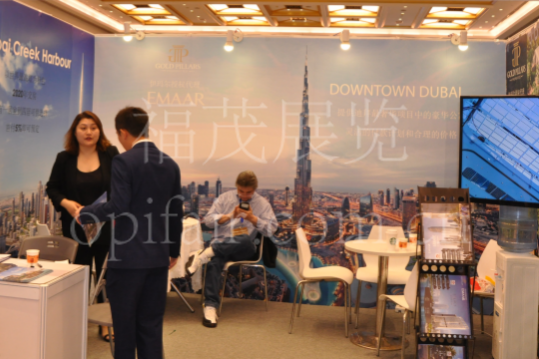
In the wave of globalization, immigration expos have become an important platform for obtaining authoritative immigration information and connecting with professional agencies. To efficiently acquire valuable information at the expo, a systematic approach is needed, from pre-event preparation and on-site execution to follow-up. I. Pre-event Document Preparation: Building a Professional Image and Information Database Documents should be prepared in advance with both electronic and paper copies. Passports, ID cards, educational certificates, and proof of assets must be valid for more than 6 months. Some national booths may require double-certified documents. It is recommended to use waterproof transparent document bags for categorized storage and prepare multiple copies for on-site submission. Cultivating a professional image requires attention to detail. Business attire should be dark-colored formal wear. Women can accessorize with simple pearl jewelry, and men should ensure their shoes and belts are the same color. A leather-bound notebook is recommended, as it reflects professionalism and facilitates recording key information. For electronic devices, in addition to a mobile phone, bring a power bank, voice recorder, and tablet for recording key policy interpretations in real time. II. On-site Execution Strategy: Efficient Communication and Information Screening Exhibition maps and time management are key elements. Upon entry, immediately obtain an exhibition floor plan and highlight key national booths and forum areas with a highlighter. It is recommended to use the “30-15” time allocation method: 30 minutes for communication at each booth, leaving 15 minutes for note-taking and route adjustments. If encountering long queues, conduct initial contact and schedule a later detailed discussion. Questioning techniques should follow the “pyramid principle.” Start with macro policies, such as “Has the country’s latest immigration quota policy been adjusted?” Then refine to specific questions, such as “How are language points calculated in the skilled migration points system?” Finally, inquire about operational…
 11/11/2025
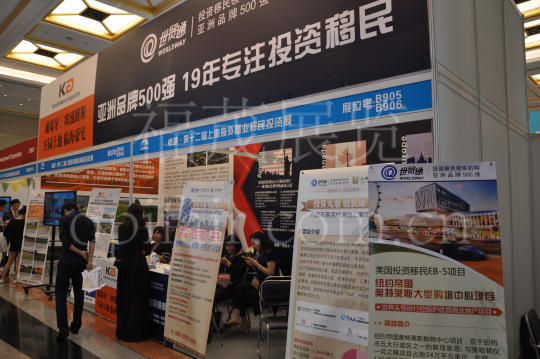
In the globalized education landscape, immigrant children demonstrate significant competitiveness in international school admissions and university applications due to their immigration status. I. Strategic Advantages of International School Educational Resources Immigration children have priority access to international school admissions. These schools typically employ international curricula such as IB and A-Level, with curriculum systems directly aligned with prestigious overseas universities. The bilingual environment of international schools effectively enhances language proficiency while cultivating cross-cultural communication skills. More importantly, graduates of international schools hold internationally recognized diplomas, which can exempt them from language proficiency requirements when applying to overseas universities, creating a natural competitive advantage. Furthermore, the faculty, teaching facilities, and extracurricular activities of international schools are aligned with international standards, supporting immigrant children in building a global perspective and innovative abilities. II. Quantitative Advantages and Policy Benefits in University Admissions At the university admissions level, immigrant children gain dual advantages through their immigration status. Taking major immigration countries as an example, children of Canadian citizens and permanent residents enjoy local student tuition rates when applying to local universities, which are only 1/3 to 1/2 of those for international students, and their admission rate is as high as 80% or more. US green card holders can circumvent international student quota restrictions in undergraduate applications, increasing their chances of admission by 3-5 times. European Golden Visa programs are directly linked to children’s educational benefits; for example, children of Portuguese immigrants can apply to EU universities based on their immigration status, enjoying exclusive EU student scholarships and lower entry requirements. III. The Long-Term Value of Educational Path Planning Immigration status provides a strategic buffer for children’s education. In the K-12 stage, immigrant children can accumulate credits through international schools, adapting to overseas education systems in advance. In higher education, this immigration advantage translates into a…
 11/11/2025
In the wave of global immigration, immigration programs are rife with fraudulent schemes. Accurately identifying legitimate programs from potential scams is crucial. This guide will help you distinguish immigration scams and avoid false traps such as “high-return promises.” I. Policy Basis: Verifying Legitimate Programs with “Official Endorsement” The core characteristic of legitimate immigration programs is their clear policy basis. Immigration bureaus of various countries publish official immigration laws on their websites. For example, the US EB-5 investor immigration program and the Canadian Federal Skilled Worker immigration program require matching specific legal clause numbers. Searching official websites using keywords such as “immigration policy + country name” can quickly verify the legitimacy of a program. If the program organizer uses vague terms like “internal channels” or “special quotas” to evade policy tracing, be wary of scams. Legitimate programs typically require applicants to meet hard standards such as age, language proficiency, funds, and residency obligations. Promises like “zero threshold” and “100% approval rate” often contradict policy logic and are typical tactics used in high-return scams. II. Process Transparency: Traceability from Application to Approval Legitimate immigration programs offer full-chain transparency. From document preparation, background checks, and application progress tracking to final landing, each step must be completed through official systems or authorized agencies. For example, the Canadian Federal Immigration Department provides real-time online account tracking, and the Australian Department of Home Affairs website allows visa status tracking. In contrast, fraudulent programs often use “confidential processes” and “fast tracks” as bait, refusing to provide official tracking methods and even fabricating false progress notifications. Furthermore, legitimate programs require clear funding channels, using legal methods such as bank transfers and notarization, while scams promising “high returns” often induce cash payments or third-party holding, concealing the risk of fund misdirection. III. Funding Logic: Non-Return-Based Investment and Immigration Immigration…
11/11/2025
How Free Consultations and Discounted Programs Aid Immigration Decisions In the wave of global immigration, immigration expos, as a core platform connecting those seeking immigration with professional resources, not only gather updates on immigration policies from various countries but also offer numerous hidden benefits. These benefits are often presented in the form of free consultations and discounted programs, becoming an indispensable value-added resource in immigration decision-making. Free Consultation Services: The Invisible Gateway to Professional Guidance One of the core values of immigration expos lies in providing free professional consultation services. Exhibitors typically include immigration lawyers, tax planners, education consultants, and project developers. Through on-site Q&A sessions and one-on-one consultations, they provide attendees with free legal assessments, tax optimization solutions, and educational pathway planning. For example, regarding the frequently asked question of “how to avoid double taxation in countries with global taxation,” professional tax consultants can provide customized solutions; while education consultants can analyze the details of the “Joint Entrance Examination for Overseas Chinese Students” policy, helping families plan their children’s educational paths. Such free services not only reduce decision-making costs but also reveal policy blind spots from a professional perspective, avoiding decision-making errors caused by “information asymmetry.” Special Offers: The Hidden Value of Limited-Time Benefits Special offers at immigration expos often take the form of “limited-time specials” and “exclusive packages,” covering multiple dimensions such as investment immigration, skilled worker immigration, and entrepreneur immigration. For example, some countries’ programs may offer benefits such as “investment amount reduction” or “application fee discount” during the expo, or provide a “approval first, investment later” risk protection mechanism. In addition, partner institutions such as banks and immigration agencies may offer “one-stop service packages,” including value-added services such as language training, asset allocation, and settlement services. These special offers indirectly improve the cost-effectiveness of immigration programs…
 10/11/2025
Driven by both the construction of “Double First-Class” universities and the reform of vocational education, the pathways to higher education for Chinese students are undergoing profound changes. This transformation is not only reshaping the domestic education ecosystem but also subtly reshaping the future landscape of global overseas study. Through the lens of domestic higher education trends, three core logics driving the evolution of overseas study scale can be observed. I. The Two-Way Adjustment of Demand for Overseas Study Due to Improved Domestic Higher Education Quality With the rise in international rankings of “Double First-Class” universities and the strengthening of domestic scientific research capabilities, the supply of high-quality higher education resources has significantly expanded. Top universities, represented by Tsinghua University and Peking University, have achieved the strength to compete with world-renowned universities in cutting-edge disciplines such as engineering, computer science, and artificial intelligence. This “top-tier education at home” is gradually weakening the “academic catch-up” demand in the traditional motivation for studying abroad, prompting some outstanding students to choose domestic further education. However, at the same time, the fierce competition for higher education in China—such as the structural imbalance in college entrance examination admission rates and the intensified “involution” in postgraduate entrance examinations—has conversely spurred the emergence of “indirect” overseas study pathways. Especially for students with average grades, studying abroad often helps them avoid the fierce competition in China, creating a two-way adjustment mechanism: “improved domestic college entrance examination quality → decreased willingness to study abroad for some groups” and “intensified college entrance examination competition → some groups turning to studying abroad.” II. The Profound Reshaping of the Study Abroad Structure by Vocational Education Reform The newly revised Vocational Education Law promotes the implementation of the “Vocational College Entrance Examination” system, constructing a complete vocational education pathway from “secondary vocational school to…
 10/11/2025
In the race to study abroad, well-prepared application materials are the “ticket” to success. From Harvard to the University of Tokyo, admissions officers at top universities worldwide assess students’ academic potential, language skills, personal qualities, and financial resources through application materials. I. Academic Transcripts: The “Hard Currency” of Academic Ability Academic transcripts are the cornerstone of study abroad applications and must include grades for all undergraduate/high school courses and GPA (Grade Point Average). Important Notes: 1. Transcripts must be officially issued by the school, stamped with the official seal, and sealed. 2. Some universities require third-party certification (such as WES, ECE); the certification period needs to be planned in advance. 3. Transcripts must be translated into English and certified by a professional agency to ensure international acceptance. II. Language Proficiency Certificates: The “Passport” to Overcome Language Barriers TOEFL, IELTS, PTE, and other language proficiency scores are essential materials for applying to English-speaking countries. Important Notes: Different universities have different language proficiency requirements (e.g., Harvard requires TOEFL 100+/IELTS 7.0+); Some programs (such as business and law) require higher scores; Scores can be improved through language training courses and mock test software, but sufficient preparation time must be allocated. III. Personal Statement (PS): A “Self-Portrait” Showcasing Your Personal Qualities The personal statement should highlight your personal experiences, academic interests, career plans, and motivation for applying. Important Notes: Avoid templates and highlight your unique experiences; Relate to the specific program characteristics of your target universities to demonstrate a good fit; Revise multiple times to ensure clear logic and fluent language. IV. Letters of Recommendation: “Credit Endorsement” from Third-Party Evaluation Letters of recommendation should be issued by professors, mentors, or employers, evaluating the student’s academic ability, work ethic, and personal qualities. Important Notes: Choose recommenders who know you well and have authority; Letters of…
10/11/2025
In the wave of globalized education, the Study Abroad Expo, as a core hub connecting students, institutions, and educational services, has become an indispensable “resource treasure trove” for study abroad planning. It not only provides a wealth of information but also, through systematic and scenario-based resource integration, builds a complete support system for families planning to send their children abroad, from understanding to practice. At the information acquisition level, the Study Abroad Expo breaks through traditional information barriers, achieving “one-stop” knowledge acquisition. The expo gathers the latest admission policies, majors, scholarship programs, and admission standards from hundreds of institutions in over 20 countries worldwide, forming a dynamically updated “global education map.” Students can intuitively compare the curriculum systems, faculty strength, and employment prospects of different countries and institutions, avoiding decision-making biases caused by fragmented information. Simultaneously, the expo’s specially designed lectures and forums, where education experts and school representatives interpret study abroad trends, new visa regulations, and career planning, help families establish a systematic cognitive framework. At the resource matching level, the Study Abroad Expo builds a “face-to-face” communication bridge, promoting precise matching. Admissions officers are on-site to answer questions and provide personalized application strategies based on students’ backgrounds. Third-party service providers such as language training institutions and art portfolio tutoring agencies can customize learning plans according to students’ needs. Furthermore, the “Alumni Sharing Area” and “Parent Exchange Area” within the expo share real-life experiences, helping families build emotional resonance and confidence in their decisions, forming a closed-loop support system of “information-emotion-decision.” In terms of policy interpretation, the study abroad expo serves as the “first window” for policy updates. Education departments and embassies/consulates from various countries have permanent booths, releasing authoritative information in real time on visa policies, protection of international students’ rights, and new regulations on employment and immigration….
08/11/2025
For beginners, investment expos can be a sea of opportunities, but also an information maze. Want to quickly integrate and grasp the value points? Master these four steps to transform from a novice to an “exhibition expert” and easily navigate the expo! Step 1: “Pre-exhibition Preparation” – Define Your Goals and Avoid Getting Lost Don’t rush in before the expo! Spend two hours doing your “homework”: Log in to the expo’s official website or mini-program to view the exhibitor directory, exhibition area map, and concurrent event schedule. Use a highlighter to mark exhibition areas relevant to your industry (such as new energy, intelligent manufacturing), and highlight core functional areas such as the “Investment and Financing Matching Area” and “Project Roadshow Hall.” At the same time, list 3-5 goals you want to achieve—is it to find investment, seek technological cooperation, or expand customer resources? Defining your goals will help you filter out irrelevant information and get straight to the point. Step 2: Utilize the “Toolkit” for Efficient Navigation Get an exhibition guidebook or download an electronic map on-site; these are “living maps” for quick navigation. Make good use of the smart navigation screens in the exhibition hall or the “booth search” function of the mobile app. Enter keywords (such as “artificial intelligence” or “supply chain finance”), and the system will directly plan the optimal route. Don’t try to squeeze into crowded booths; first observe the booth numbering pattern (usually sorted by industry or letter) and quickly jump to your target area. If you get lost, simply ask a staff member in uniform for directions—it’ll save you half the time compared to wandering around aimlessly! Step 3: Master the “Social Code” for Effortless Icebreakers When interacting with exhibitors, use the “three-sentence rule” to quickly break the ice: First, introduce yourself (“I’m a…
 08/11/2025
Language barriers are a common obstacle for many when attending trade shows. How can you break down communication barriers and efficiently convey information when facing foreign exhibitors or visitors? Mastering the following practical strategies will help you easily handle language issues and achieve smooth communication at trade shows. Prepare a “Language Toolkit” in Advance: Before departure, prepare multilingual versions of your company materials based on your target country or region. For example, translate key documents such as product brochures and letters of intent into common languages like English, Spanish, and Japanese, ensuring accuracy. Simultaneously, download offline translation tools such as Google Translate and Microsoft Translate apps. These tools support photo translation and real-time voice translation, usable even without an internet connection. Furthermore, prepare visual aids such as universal icons and diagrams. For example, use arrows to indicate product usage processes and smiley faces to represent excellent service. Convey information through images to reduce reliance on text. Leverage Official Trade Show Resources: Trade show organizers usually provide language support services. For example, setting up multilingual information desks with professional translators or volunteers can help exhibitors and visitors overcome language barriers. At the exhibition, pay attention to the signage system; many international exhibitions use bilingual (Chinese and English) signs and even provide multilingual guidebooks. In addition, some exhibitions offer rental services for smart translation devices, such as portable voice translators that support real-time conversational translation and are easy to use. Mastering nonverbal communication skills: Silence speaks louder than words. When language is a barrier, body language and facial expressions play a crucial role. For example, smiling, nodding, and gestures are universally applicable and can quickly convey friendliness and acceptance. When introducing products, demonstrate their operation or show physical samples to allow the other party to intuitively experience their functions. Furthermore, use digital…
 08/11/2025
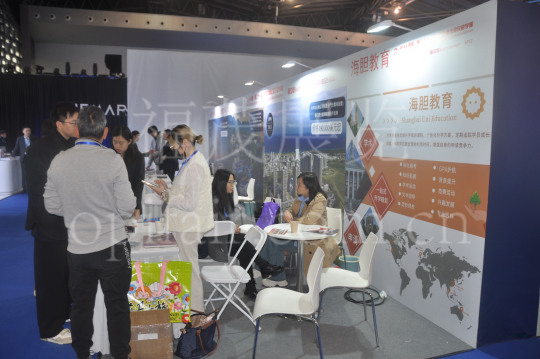
Finding excellent partners quickly is one of the core goals of exhibitors at various trade shows. Faced with a dazzling array of booths and exhibitors, how can you efficiently filter and accurately connect with potential partners? Master the following four-step strategy to quickly find your ideal partners at trade shows and avoid the “needle in a haystack” dilemma. Step 1: Define Your Needs and Do Your Homework in Advance Before exhibiting, clearly define your cooperation needs—are you looking for upstream and downstream companies in the supply chain, technology partners, or market expansion partners? Through official websites, industry reports, or information from previous trade shows, pre-analyze the business scope, product characteristics, and cooperation cases of target companies. For example, if focusing on the new energy field, prioritize companies labeled “green energy” or “technological innovation” in the exhibition area. At the same time, prepare basic materials such as company profiles and letters of intent for quick information exchange on-site. Step 2: Utilize Trade Show Tools to Precisely Target Your Goals Trade shows usually provide intelligent matching systems or resource matching platforms, which are “shortcuts” for quickly screening partners. Through keyword search and industry category filtering functions, you can quickly narrow down the list of companies that meet your needs. In addition, pay attention to the official “Key Enterprises Directory” and “Popular Event Schedule” released by the exhibition, and prioritize participation in exclusive events such as industry forums and supply-demand matchmaking meetings. These occasions often gather highly compatible potential partners. For example, manufacturing companies can focus on special events such as the “Yangtze River Delta Supply Chain Special Session” and the “Intelligent Equipment Technology Salon.” Step 3: Proactive Approach and Efficient Communication Skills On-site communication should adhere to the principle of “short, efficient, and effective.” First, use a brief opening to introduce your…
 08/11/2025
In today’s fiercely competitive business environment, how can companies quickly break through development bottlenecks? The answer may lie hidden among the booths at the Investment Expo. This grand event, which gathers global resources, policy dividends, and innovative opportunities, is becoming an “accelerator” for countless companies to achieve leapfrog growth. Taking the 2025 expo as an example, two vivid cases vividly illustrate its irreplaceable value: The first case is the “approval miracle” of a European new energy company. Under the traditional model, the approval process for new energy projects often takes more than a year, involving cumbersome procedures such as coordination with multiple departments and repeated submission of materials. However, at this expo, through the “one-stop approval service” provided by the expo, the company completed all approval procedures in just 6 months, improving efficiency by 40%. Behind this is the “green channel” built through deep cooperation between the expo and government departments, allowing companies to directly access the core approval process and avoid the predicament of “running around endlessly.” For companies eager to seize market opportunities, this reduction in time costs is equivalent to directly gaining a “first-mover advantage,” securing a leading position in the new energy sector. The second example comes from a Southeast Asian manufacturing group’s “supply chain revolution.” During the resource matching session of the 2025 exhibition, this company reached in-depth cooperation with three supply chain companies in the Yangtze River Delta region, with annual procurement exceeding 200 million yuan. This achievement is attributed to the exhibition’s precise “industry chain matching” mechanism—using big data analysis of enterprise needs to match high-quality suppliers, enabling previously scattered resources to be efficiently connected. For manufacturing enterprises, the stability and cost optimization of the supply chain are directly related to their survival, and the platform provided by the exhibition is equivalent to…
 03/11/2025
During the home buying process, the cost-effectiveness of a property is one of the most important indicators for buyers. It involves not only the current price and quality of the property, but also the future appreciation potential of the area, the completeness of supporting facilities, and the comfort of living. Real estate planning maps, as the core basis for project development, contain key information such as unit layouts, distribution of public facilities, and surrounding planning, making them an important tool for judging the cost-effectiveness of a property. Types of Planning Maps and How to Obtain Them Master Plan: The “Master Blueprint” of the Overall Project Layout The master plan is a core document submitted by the developer to the planning department. It details the location, number of floors, spacing, road system, green areas, and distribution of public facilities (such as kindergartens, garbage stations, and power distribution rooms). Buyers can obtain it through the following channels: Sales Office Display: According to the “Regulations on the Administration of the Sale of Commercial Housing,” developers are required to display the master plan, unit floor plans, and other planning documents at the sales office. Government planning website: Log in to the official website of the local natural resources and planning bureau to check the project’s planning permit announcement, which usually includes a high-resolution site plan and technical specifications (such as plot ratio and green space ratio). Third-party platforms: Some real estate websites or apps integrate project planning information, but you should verify the authenticity of the source. Floor Plan: A “Microscopic Guide” to Space Utilization The floor plan directly reflects the internal structure of the house, including room dimensions, door and window locations, and load-bearing wall distribution. When obtaining a floor plan, pay attention to the following: Request the developer to provide a floor…
 Number
Call Now:
139 1723 4508
 WeChat
 Form
FormBook Your Booth
Complete your information immediately and provide you with exclusive services!
Back to Top

