-
Whatsapp
+1 689 248 1956 -
Email
joannewong0817@gmail.com

 19/11/2025
From March 29th to 31st, 2026, the 2026 Wise Shanghai Overseas Property, Immigration and Study Abroad Exhibition will be held. This exhibition brings together high-quality resources from around the world and is an excellent platform to understand overseas investment procedures and obtain professional advice. It’s well worth the attention and participation of interested individuals. Overseas investment sounds glamorous, but before actually doing it, you need to understand “how to get started.” First, how to transfer money out of the country is the first step. China has strict foreign exchange controls, with each person having a convenience quota of $50,000 per year. Exceeding this amount requires providing supporting documents, such as contracts and invoices, to prove the legal purpose, such as buying property, studying abroad, or medical treatment. This step cannot be ambiguous; you must understand the policies in advance and prepare all the necessary materials, otherwise, it will be awkward if your money is stuck in the bank. Next is choosing the type of investment. There are many ways to invest overseas, such as real estate, stocks, funds, and trusts, each with different procedures. For example, when buying overseas real estate, you need to find a reliable agent or developer first. Before signing the contract, you must check whether the property title is clear and whether there are any mortgages or disputes. If you’re buying stocks or funds, you need to open an account through legal channels, such as QDII funds or a Hong Kong account. You also need to consider exchange rate risks and tax issues. Different countries have different regulations for different types of investments. For example, some countries restrict the areas where foreigners can buy property, or they tax rental income. You need to find out all of this beforehand. Then there are legal and tax issues….
 19/11/2025
From March 29th to 31st, 2026, Shanghai will host the Wise Overseas Property, Immigration, and Study Abroad Exhibition. Those interested in exploring overseas investment are encouraged to attend and learn about the latest trends and opportunities. There’s no standard answer to the question of whether to choose developed or developing countries for overseas investment; it depends on individual needs and risk tolerance. Some prioritize stability, while others crave adventure. The key is to clearly understand your own needs. Developed countries are like established department stores: comprehensive offerings, transparent regulations, and peace of mind when making purchases. For example, buying a house offers clear property rights, robust legal protection, and stable rental income—even if prices don’t rise, they won’t plummet. However, the downsides are also obvious—high prices and slow returns make making big money unrealistic. Developed countries have slower economic growth and limited asset appreciation potential, making them more suitable for those seeking stability, such as those wanting a fixed income after retirement or a reliable asset for their children. Developing countries are like newly opened night markets: bustling and full of opportunities, but caution is advised to avoid pitfalls. For instance, some countries are rapidly developing, with large populations and high demand; buying land or opening a shop in one of these countries could potentially double in value within a few years. However, the risks are also significant. Policies can change suddenly, exchange rates can fluctuate wildly, and economic turmoil could even wipe out investments overnight. Therefore, choosing developing countries requires a strong heart; one must be able to withstand volatility and be willing to invest time in researching local conditions. The choice of location also depends on the investment objective. If the goal is passive income, developed countries are less stressful; if the aim is high returns, developing countries…
 19/11/2025
The 2026 Wise Shanghai Overseas Property, Immigration & Study Abroad Exhibition will be held from March 29th to 31st, 2026. This exhibition brings together high-quality resources from around the world and is an excellent opportunity to meet potential investors and understand investment trends. It’s definitely worth the attention and participation of interested individuals. To find investors, you first need to clearly understand what makes your project unique. Investors review countless projects daily; if your project is similar to others, it’s unlikely to be remembered. Therefore, you must first clarify your project’s advantages—is it more advanced technology, lower costs, or solving a problem that others haven’t solved? Once you understand this, you can effectively present your project to others. Next, leverage your network. Friends, colleagues, and acquaintances in the industry can all help introduce you to investors. Don’t be shy about asking; many investment opportunities are introduced through acquaintances. Attending industry gatherings, startup seminars, and exhibitions can also help you meet many people, and you might even encounter investors who are interested in your project. The Shanghai Overseas Property, Immigration, and Study Abroad Exhibition, mentioned earlier, is a great place to meet investors from different fields; it’s worth paying attention to in advance. Once you have target investors, you need to prepare a simple and clear plan. It doesn’t need to be overly complicated; just clearly state what the project will do, why it can succeed, how much money it requires, and how much profit it can generate. The key is to make the project’s value quickly understandable to investors, avoiding jargon or roundabout language. If you’re not good at writing, you can ask an experienced friend for help or refer to some simple templates, but don’t copy others directly. There are many online platforms available now, such as startup forums,…
 19/11/2025
From March 29th to 31st, 2026, Shanghai will host the Wise Shanghai Overseas Property, Immigration and Study Abroad Exhibition. This is an excellent opportunity to understand global investment trends and broaden your international perspective. Consider planning your trip in advance and visiting the event to explore more possibilities. Choosing between a red ocean market and a blue ocean product when investing is like opening a shop on a familiar street versus starting a business in an undeveloped town. A red ocean market is a place where everyone is scrambling to get business, like the ubiquitous milk tea shops, supermarkets, and clothing stores. Competition is fierce, but the advantage is a large customer base and clear demand. For example, everyone knows milk tea is delicious; as long as the location is good and the taste is consistent, business will be good. However, the problem is also obvious—profit margins are low because all the surrounding shops are similar; if you offer discounts, I offer discounts too, and in the end, everyone is just making a meager living. A blue ocean product, on the other hand, is like discovering a previously unexplored area, such as starting a shared bicycle business ten years ago or a live-streaming e-commerce business five years ago. Initially, people didn’t quite understand what this was all about, but once accepted, it could quickly capture the market and generate huge profits. However, the risks were also high. For example, when shared bikes first appeared, many wondered, “Who would ride these?” They ended up everywhere. On the other hand, some blue ocean products, such as certain high-tech products, might fail because the technology was too advanced or user habits hadn’t caught up, ultimately resulting in huge losses. So how should investors choose? There’s no fixed answer; it depends on your financial…
 18/11/2025
Before investing in a company, you need to “look, examine, and listen” like choosing a watermelon—first, see if the company is doing something that “makes money”; second, examine whether the management team is reliable; and finally, listen to whether the market sentiment is positive. From March 29th to 31st, 2026, the 2026 Wise·Shanghai Overseas Property, Immigration, and Study Abroad Exhibition will be held in Shanghai, providing investors with diversified information channels. To judge whether a company is worth investing in, you must first look at “what it does.” Just like opening a restaurant requires choosing a location with high customer traffic, a company needs a clear “path to making money.” If a company’s business is something people need daily, such as selling daily necessities, providing educational services, or solving people’s practical needs for housing, immigration, or studying abroad, then its existence has a foundation. Conversely, if the business is so niche that even those around it don’t understand it, or if it’s like a “castle in the air” detached from real needs, you should be wary—after all, making money requires people to first “understand and use” it. The management team is the “operator,” and their ability directly determines whether the company can go far. Just as choosing experienced farmers is crucial for farming, investing requires assessing the reliability of the team. A reliable team typically possesses several characteristics: clear goals and plans, such as “how many branches to open in the next three years”; practical capabilities, such as producing high-quality products and providing excellent service; and a good reputation, with past clients and employees recommending them. If a team is always making grand promises but failing to deliver, or if there is internal chaos and frequent personnel changes, then such a company should be approached with caution. The market environment…
 18/11/2025
The investment market is like a big stage; some perform, some watch. To quickly integrate, you must first learn to “see the ropes.” Attending the Wise Overseas Property, Immigration, and Study Abroad Exhibition held in Shanghai from March 29th to 31st, 2026, is a great opportunity to directly experience the pulse of the investment world. It will give you access to “live information” related to global real estate, immigration policies, and study abroad resources over three days. The first step to quickly integrating into the investment market is to “observe and listen more.” Just like learning to ride a bicycle by watching others ride, investing also requires observing market movements. Pay attention to financial news and price changes in daily life. For example, rising supermarket vegetable prices may be related to inflation, and stock market fluctuations may be linked to corporate profits. These everyday pieces of information are “barometers” of the investment market. You don’t need to understand professional jargon; just maintain sensitivity to numbers and trends, and you’ll gradually grasp the ropes. The second step is to “test the waters small.” Investing is not gambling; don’t bet a large sum of money right away. You can start with areas you’re familiar with. For example, set aside a portion of your monthly allowance for low-risk financial products or try investing in mutual funds through regular fixed-amount investments—like saving a little spare change each month, which can eventually grow into a considerable “little nest egg.” This “small steps” approach allows you to accumulate experience without being crippled by a single failure, serving as a “safety ladder” for quick integration. The third step is “finding the right circle.” There are many people in the investment market, but those who can truly help you are likely right next door. For example, attending the…
 18/11/2025
Investing, simply put, is a way to make money work for you. It’s like planting a seed and hoping to reap a greater harvest in the future. But investing is not gambling; it requires rational analysis and long-term planning. The core of investing is “using your current money to earn more money in the future.” For example, you can deposit your money in a bank to earn interest, buy funds to have professionals manage it for you, or buy stocks to share in the profits of a company’s growth—these are all different forms of investing. It’s different from simply locking money away in a cabinet, because money can appreciate in value or depreciate due to inflation—so investing is essentially a means of combating the devaluation of money. Many people think that investing requires a large sum of money, but that’s not the case. Even if you save a few hundred dollars a month, as long as you persist in investing and choose the right methods, time can turn small amounts of money into large sums. For example, the habit of saving money regularly is like saving a “reserve fund” for the future, so you won’t panic in case of emergencies; while buying funds or stocks is like hitching a ride on someone else’s success—if the company makes money, your investment may also appreciate. However, it’s important to note that investing is not a “sure thing.” All returns come with risk; just as farming can encounter drought or pests, investments can suffer losses due to market fluctuations. The key to investing is “balance” and “patience.” Some prefer low risk, choosing government bonds or fixed deposits, which offer stable but slow returns; others are willing to take on higher risk, pursuing higher returns from stocks or funds, but must bear the psychological…
 18/11/2025
Against the backdrop of escalating global inflationary pressures and rising demand for asset preservation, retirement planning is no longer limited to savings and domestic investment. More and more people are turning their attention overseas, aiming to achieve the dual goals of “wealth appreciation + quality retirement” through overseas real estate investments. Overseas real estate exhibitions, as core platforms connecting global high-quality resources and investors, are becoming a starting point for exploring new retirement lifestyles. This article will combine industry trends and exhibition value to analyze the unique charm of the world’s top ten retirement destinations, providing inspiration and direction for retirement planning. Pleasant Climate: A Naturally Gifted Retirement Paradise A warm climate is a primary consideration for retirement destinations. A certain Mediterranean coastal region is renowned for its mild climate, with sunshine year-round. Average winter temperatures are above 15°C, and summer temperatures remain around 25°C, making it ideal for seniors. It boasts a long coastline and clear waters, where walking, swimming, and sunbathing are common activities. The low humidity environment can also alleviate common age-related problems such as joint pain. Another tropical coastal area is known for its year-round summer climate, with an average annual temperature of 28°C. Swaying coconut palms, gentle sea breezes, and abundant tropical fruits and seafood create a tropical ambiance perfect for retirement. Healthcare: A Solid Backing for Peace of Mind in Retirement High-quality medical resources are central to retirement planning. One region is highly favored for its comprehensive and advanced healthcare system. Its national healthcare system is ranked among the top by the World Health Organization, and the government invests heavily in healthcare infrastructure annually, ensuring residents can enjoy high-quality services at low cost. Local hospitals are generally equipped with internationally certified medical equipment, and many doctors have overseas training backgrounds, ensuring seamless language communication….
 18/11/2025
Against the backdrop of escalating global inflationary pressures and declining returns on traditional assets, investors’ demand for diversified asset allocation is becoming increasingly urgent. Overseas real estate exhibitions, as core platforms connecting high-quality global real estate resources with investors, not only gather traditional residential projects such as villas and apartments but also serve as important windows for exploring new opportunities in homestay investment. This article will analyze how to seize the homestay investment opportunity through overseas real estate exhibitions, combining industry trends and the value of exhibitions. Homestay Investment: A Golden Track Amidst Global Tourism Recovery In recent years, the global tourism industry has shown a strong recovery trend, with a surge in demand for personalized and experiential travel. Homestays, as an alternative to traditional hotels, are becoming a new favorite in the tourism market due to their unique cultural attributes, flexible pricing strategies, and high cost-effectiveness. Data shows that the global homestay market has a compound annual growth rate of over 10%, and in some popular tourist destinations, homestay occupancy rates even exceed those of traditional hotels. This trend provides investors with a vast market space—by purchasing overseas properties and converting them into homestays, investors can enjoy the appreciation potential of the property itself and generate continuous cash flow through operation. Overseas Property Exhibitions: A One-Stop Decision-Making Platform for Homestay Investment Overseas property exhibitions, serving as industry trendsetters, provide investors with an efficient bridge to connect with global resources. These exhibitions bring together developers, operators, and service providers from around the world, showcasing diverse projects including urban apartments, vacation villas, and rural estates, many of which are high-quality assets suitable for conversion into homestays. For example, a seaside apartment project showcased at one exhibition, with its proximity to scenic spots and flexible property rights design, became a popular choice…
 18/11/2025
In the current climate of persistent global inflation and the continuous dilution of currency value, the returns from traditional savings and low-risk wealth management are insufficient to withstand the pressure of asset depreciation. The sharp fluctuations in the stock market and the periodic corrections in the gold market have made investors increasingly aware that the risk-resistance capacity of a single asset allocation is limited. Overseas real estate, with its unique tangible attributes, cross-cycle appreciation potential, and stable cash flow, is becoming a core option for high-net-worth individuals to build a “wealth moat.” Attending overseas real estate exhibitions is a crucial step in quickly gaining insights into the global market and accurately selecting high-quality projects. The Logic of Asset Protection Under Inflation: Why Overseas Real Estate Becomes a “Safety Anchor”? Inflation is essentially a decline in purchasing power caused by excessive money supply. As a scarce tangible asset, real estate’s value has a weak correlation with the money supply. Historical data shows that over the past few decades, the average annual increase in housing prices in core cities of major global economies has generally exceeded the local inflation rate by 2-4 percentage points. For example, in one international metropolis, during a decade of high inflation, housing prices cumulatively increased by over 120%, while the CPI only increased by 65% during the same period. Real estate became a “hard currency” to hedge against currency devaluation. Furthermore, rental income from overseas properties can generate a continuous cash flow, further hedging against inflation risks. Taking a popular investment area as an example, the annual rental yield for apartments is consistently between 5% and 8%, far exceeding the yields of government bonds in most countries, providing investors with guaranteed “passive income.” Overseas Real Estate Exhibitions: Breaking Down Information Barriers and Efficiently Connecting to Global Opportunities…
 18/11/2025
Property exhibitions serve as a prime venue for dialogue between homebuyers, developers, and real estate agencies. They are not only a hub for a vast amount of housing information but also a concentrated window for releasing limited-time offers and policy benefits. However, faced with a deluge of information from dozens of booths and hundreds of properties, how can homebuyers avoid being overwhelmed or misled by marketing rhetoric? Mastering a systematic property exhibition strategy can help homebuyers accurately filter information and make rational decisions amidst the information overload, ultimately achieving the goal of “getting the most out of the money.” Pre-Exhibition Preparation: Identifying Core Needs with “Data-Driven Thinking” Homebuying decisions must be based on a clear profile of needs. First, define the budget range, considering not only the price itself but also implicit costs such as taxes, maintenance funds, and renovations. For example, a homebuyer with a total budget of 3 million yuan might break it down to ensure the price is under 2.8 million yuan, leaving 200,000 yuan for taxes and basic renovations. This detailed target directly narrows down the selection. Second, identify core needs such as apartment type, location, and amenities, assigning them different weights. For example, how should priorities be placed on commuting time, school district resources, and commercial facilities? Is current living convenience more important, or future appreciation potential? Quantifying needs allows for a quick selection of suitable properties. Policy benefits are a “hidden perk” at housing expos; researching beforehand can reduce home-buying costs. For instance, some cities offer preferential interest rates for first-time homebuyers or subsidies for talent purchasing homes; some developers offer promotions such as “down payment installments” and “free parking spaces.” Buyers can stay informed about policy developments through official channels, real estate forums, or by consulting industry professionals, avoiding being overwhelmed by “limited-time…
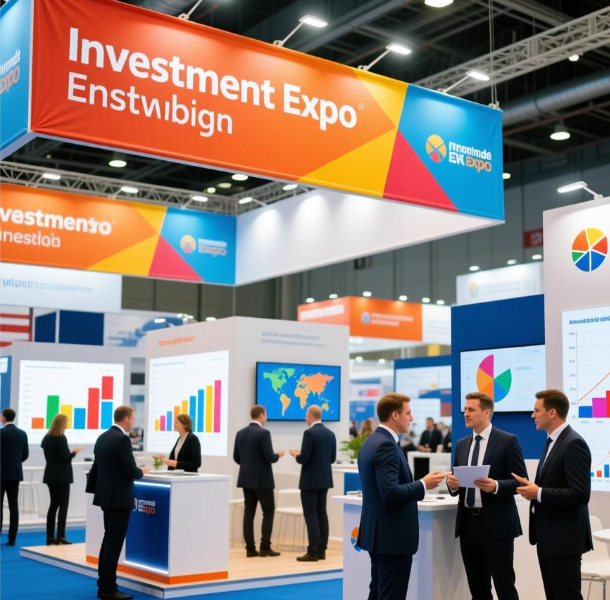 17/11/2025
For newcomers to the investment field, investment expos are like a treasure trove of opportunities and challenges. The dazzling array of projects, complex industry jargon, and bustling crowds can easily lead novice investors into a superficial “browsing” frenzy—failing to grasp core information and build effective connections, ultimately leaving empty-handed. How to overcome this? The key lies in advance planning, precise focus, and in-depth interaction, transforming the expo into a practical classroom for upgrading investment knowledge and accumulating resources. Define Your Goals: From “Blindly Sweeping the Show” to “Targeted Positioning” Investment expos often cover multiple fields, from cutting-edge technology to traditional industries, from equity investment to fixed income, with a diverse range of project types. Without clear goals, novice investors are easily overwhelmed by the sheer volume of information. Therefore, before attending, it’s essential to consider your own capital size, risk appetite, and investment horizon to identify key areas of focus. For example, if you have limited funds and a low risk tolerance, prioritize stable sectors like consumption upgrades and healthcare; if you’re seeking high returns and can withstand volatility, explore growth sectors like artificial intelligence and new energy. Simultaneously, research the exhibitors and projects beforehand. Use the organizer’s website, industry reports, and other channels to identify leading investment institutions, unicorn companies, or projects with innovative models, creating a “must-visit list.” For instance, a health technology company’s smart wearable device, if its core technology is patented and has received positive market feedback, should be included in your key investigation scope. This “targeted” strategy helps novice investors grasp high-value information within a limited time, avoiding wasted effort. Deep Learning: From “Surface Observation” to “Core Insight” At exhibitions, many projects showcase their highlights through display boards, videos, or presentations, but this information is often embellished and fails to reflect true risks. Novice investors…
 Number
Call Now:
139 1723 4508
 WeChat
 Form
FormBook Your Booth
Complete your information immediately and provide you with exclusive services!
Back to Top

