
Amidst the evolving global economic landscape, the rapid penetration of emerging technologies, and profound changes in consumption concepts, the investment field is undergoing an unprecedented structural adjustment. Traditional investment logic is gradually being broken, while emerging sectors such as technology-driven growth, green transformation, and essential consumer needs are rising to become the core focus of capital investment. The recently held Global Investment Expo brought together top global investment institutions, industry pioneers, and innovative projects, painting a clear picture of the future investment landscape for investors through case studies, trend analysis, and resource matching—from breakthrough technologies to sustainable industries, from consumption upgrades to the silver economy, diverse opportunities await discovery and investment.
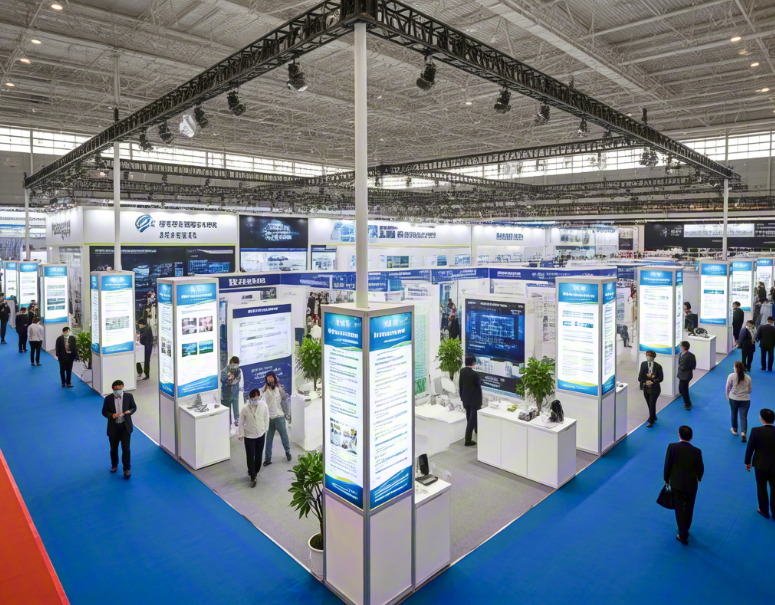
The technology sector has always been the most active battleground for capital, and the deep integration of artificial intelligence and biomedicine is generating the most explosive growth points. At the technology exhibition area of the Investment Expo, an AI pharmaceutical company’s “AI + multi-omics” technology attracted widespread attention: by analyzing gene, protein, and metabolite data through machine learning, it has increased the efficiency of cancer target discovery tenfold, raising the success rate of new drug development from less than 10% to 35%. Currently, the company has partnered with over 20 pharmaceutical companies globally, with three innovative drugs entering Phase III clinical trials and a valuation exceeding $4 billion. Meanwhile, cutting-edge technologies such as quantum computing and humanoid robots are approaching commercialization thresholds. An industrial-grade quantum chip launched by a quantum computing company demonstrates overwhelming advantages over traditional computing power in areas such as financial risk modeling and materials simulation. Its clients include five of the world’s top ten banks, with order volume growing by over 200% annually. These technology projects share common characteristics: high technological barriers, vast market potential, and strong policy support, making them suitable for investors with a high risk tolerance and seeking excess returns to participate through early-stage financing rounds or industry funds. The expo’s roadshow session showed that the average financing size for technology projects increased by 38% compared to last year, and over 65% of institutions indicated they would increase their allocation in this field, confirming capital’s long-term confidence in the hard technology sector.
The green economy, as a global consensus, is shifting from policy-driven to a dual-engine approach of market and policy, creating trillion-dollar investment opportunities. At the green energy exhibition area of the expo, a solid-state battery company’s prototype battery with an energy density of 450Wh/kg became a focal point: it can support electric vehicles with a range exceeding 800 kilometers, and the charging time is reduced to 12 minutes, while the cost is 40% lower than that of liquid batteries. This technology has already secured orders from several leading automakers and is expected to enter mass production within two years, with a market penetration rate projected to reach 25% within five years. Furthermore, sub-sectors such as the hydrogen energy industry chain and carbon capture and storage (CCUS) technology are also showing explosive growth. A hydrogen energy company, through an integrated solution for water electrolysis to produce hydrogen and liquid hydrogen storage and transportation, has reduced the cost of green hydrogen to $2.5/kg, approaching the price of hydrogen produced from fossil fuels. Its project has already achieved profitability in the European market and plans to expand to the Asia-Pacific region. The investment logic of the green economy lies in the fact that under the global carbon neutrality goal, policy subsidies, the carbon trading market, and consumer environmental awareness form a triple driving force. Related projects not only possess social value but also have clear commercialization paths and sustainable profit models. The “Green Investment Trends Report” released at the expo points out that the global green economy market has now exceeded $8 trillion, with a compound annual growth rate of over 12%. Clean energy, the circular economy, and smart cities account for over 70% of this market, providing investors with a wealth of choices.
Consumer upgrading and the silver economy offer stable investment options, characterized by inelastic demand, stable cash flow, and minimal impact from economic cycles. In the expo’s consumer exhibition area, a health management platform has built a full-cycle health management system encompassing prevention, intervention, and rehabilitation through AI health assessments, personalized nutrition plans, and online consultations. Its user repurchase rate reaches 65%, and its ARPU (average revenue per user) grows by 20% annually, making it a benchmark enterprise in the health industry. Meanwhile, the silver economy is extending from basic elderly care services to “active aging.” A company specializing in age-friendly home renovations has launched a smart home system that can monitor the elderly’s heart rate and fall risk in real time and provide assistance through AI voice interaction. Its products have entered 80,000 households, achieving a gross profit margin of 42%. Furthermore, numerous innovative projects have emerged in niche sectors such as senior education and health tourism. For example, an online senior university platform has attracted over 500,000 users and achieved annual revenue exceeding 100 million yuan through live-streaming courses and community operations. These projects share common advantages: they leverage changing demographics and evolving consumption patterns, resulting in continuously increasing demand, and they possess mature business models, making them suitable for investors seeking stable returns through equity investment or industry funds.
Faced with diverse investment opportunities, investors need to develop strategies based on their risk appetite and financial planning. For long-term investors, technological breakthroughs and industrial upgrading dividends in the technology and green economy sectors deserve focused attention. They can participate in early-stage project financing or industry-themed funds to share in the excess returns brought by industry growth. For conservative investors, consumption upgrades and the silver economy offer lower volatility and more certain returns. They can participate in the growth of high-quality companies through equity investment or M&A funds. Furthermore, through platforms such as investment expos, investors can not only directly connect with high-quality global projects but also reduce decision-making risks and improve investment efficiency through expert think tanks, data models, and case studies. From technological revolutions to green transformation, from consumption upgrades to changes in demographics, the transformation of the investment field is reshaping the logic of wealth growth. The Global Investment Expo is not only a grand event for projects and capital, but also a window to observe future trends. Here, every high-quality project can become the starting point for wealth growth, and investors who grasp the trends will eventually reap the rewards of the times.