
Driven by the wave of globalized education, studying abroad has become an important choice for many students to enhance their competitiveness and broaden their horizons. However, the economic situations of different families vary significantly, making it a focus for many students and parents to develop a scientific and reasonable study abroad plan based on their budget. Study Abroad Expos, as comprehensive platforms that gather global educational resources and financial services, not only offer a wide selection of institutions but also help families with different budgets find the most suitable study abroad path through professional consultation and case sharing, ensuring that educational dreams are not thwarted by financial constraints.
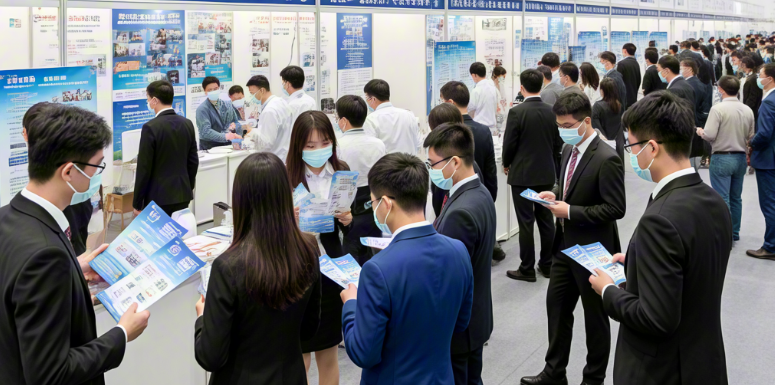
For families with limited budgets, study abroad programs in Southeast Asia and Eastern Europe are often a cost-effective option. Taking Malaysia as an example, tuition fees at public universities are approximately 20,000-40,000 RMB per year, and the cost of living is similar to that of a second-tier city in China, with overall annual expenses kept below 80,000 RMB. These institutions offer engineering and business programs with high international recognition, and some courses are taught in English, eliminating the need for additional language training fees. At study abroad expos, many Southeast Asian institutions offer “scholarship + part-time job” packages, such as scholarships that reduce tuition fees by 50% for outstanding students, while allowing students to legally work 20 hours per week, further alleviating financial pressure. In addition, Eastern European countries such as Poland and Hungary attract international students with their lower tuition fees and the advantage of EU degrees, with total annual costs around 100,000-120,000 RMB, suitable for students with tight budgets who wish to receive a European education.
Families with moderate budgets can typically focus on Japan, South Korea, certain regions of Australia, or smaller cities in Canada. Tuition fees at national universities in Japan are uniformly around 35,000 RMB per year, and with living expenses, the annual expenditure is approximately 150,000 RMB. Universities outside Seoul in South Korea are even cheaper, and both countries allow international students to work legally, earning 6,000-8,000 RMB per month through part-time jobs such as convenience stores or tutoring to supplement their expenses. In Australia, non-first-tier cities like Adelaide and Tasmania have a cost of living 20%-30% lower than Sydney and Melbourne, and some programs offer tuition installment payment services to alleviate the pressure of concentrated payments. Universities in provinces like Manitoba and Nova Scotia in Canada attract international students through immigration points policies; after graduation, students can apply for provincial nomination immigration after working for six months, saving on immigration costs in the long run and achieving an integrated “study + immigration” plan.
Families with higher budgets have more diverse options, with top universities in mainstream study abroad destinations like the UK, US, Australia, and Canada being their primary targets. The average annual cost of a private university in the US is approximately 400,000-600,000 RMB, but prestigious universities like the Ivy League offer generous scholarships and grants covering 30%-70% of tuition. While master’s programs at the UK’s G5 universities have higher tuition fees (approximately 250,000-350,000 RMB per year), their shorter study duration (one year) makes the overall cost manageable. At study abroad expos, high-end financial zones offer customized solutions for these families, such as “education trust funds” and “overseas asset allocation,” mitigating exchange rate risks and tax burdens through advance planning. For example, some banks offer “study abroad financial packages” that include foreign exchange hedging services, locking in tuition exchange rates for the next three years to avoid increased expenses due to currency fluctuations.
The value of study abroad expos lies not only in providing university information but also in building a closed-loop ecosystem of “education + finance + career.” From cost-effective Southeast Asian options for those with lower budgets, to balanced solutions in Japan, South Korea, Australia, and Canada for those with medium budgets, to customized services for top UK and US universities for those with higher budgets, suitable resources can be found for every budget range. Through in-depth dialogues with school representatives, financial advisors, and immigration experts, exhibitors can comprehensively assess the costs and benefits of studying abroad and develop a study plan that aligns with their financial capabilities and supports their future development. This one-stop service model is making the overseas education dreams of more and more families a reality.