
-
Whatsapp
+1 689 248 1956 -
Email
joannewong0817@gmail.com

 03/12/2025
Amidst the global wave of immigration, Canada’s Express Entry (EE) system has consistently held a central position. Its transparent and efficient scoring mechanism and diversified targeted invitation policies have made it a “golden path” for skilled immigrants, international students, and overseas workers seeking permanent residency. In 2025, as Canadian immigration policy further favors in-demand occupations, the competitive landscape and application strategies for EE will undergo significant changes. At a recent international immigration expo, a team of Canadian immigration experts revealed the core logic and score-boosting techniques for EE applications in 2025 through on-site Q&A and case analysis. The core adjustments to the 2025 EE policy focus on “targeted invitations” and “optimized scoring weights.” According to the latest data from the Immigration Bureau, six sectors—healthcare, STEM (science, technology, engineering, and mathematics), skilled trades, transportation, agri-food, and French language proficiency—have become priority invitation categories. Among these, the number of invitations for French-speaking talent exceeded 7,000 in a single round, with a minimum score of only 365 points, nearly 200 points lower than the overall invitation criteria. This change stems from Canada’s precise control over the labor market—for example, in healthcare, the country faces a shortage of 120,000 nurses, and targeted invitations directly fill the gaps in primary care positions. Simultaneously, the scoring logic of the Comprehensive Ranking System (CRS) for Express Entry has also undergone a subtle shift: points for domestic work experience have increased from a maximum of 100 to 120, while points for overseas work experience have been reduced to 60, highlighting Canada’s urgent need for “ready-to-work” talent. At the immigration expo, experts dissected practical strategies for improving CRS scores using real-life examples. A 32-year-old Chinese software engineer, with one year of Canadian work experience (80 points), a master’s degree (135 points), a CLB 9 English score (112 points), and…
 03/12/2025
In the wave of globalized investment, exchange rate fluctuations have become one of the core variables affecting asset allocation. Whether it’s the cross-border investment decisions of multinational corporations or the global asset allocation of individual investors, exchange rate fluctuations act like an invisible conductor, reshaping return curves and risk structures. At the 2025 Global Investment Expo, the display of exchange rate risk management tools and strategies became a focus, revealing profound changes in investment logic under exchange rate volatility, from foreign exchange derivatives to robo-advisory systems, from macroeconomic models to cross-border arbitrage cases. The impact of exchange rate fluctuations on investment returns is primarily reflected in the revaluation of cross-border assets. Taking overseas real estate investment as an example, when investors exchange their local currency for foreign currency to purchase overseas properties, exchange rate changes directly alter the RMB-denominated cost of the assets. If the target country’s currency depreciates during the investment period, even if the local property price remains unchanged, the asset value measured in local currency will shrink; conversely, currency appreciation may bring additional returns. This “dual pricing” effect is particularly pronounced in high-rent-yield cities like Dubai and Phnom Penh—while local properties are priced in US dollars or local currency, Chinese investors need to assess the actual return through currency conversion, and exchange rate fluctuations can cause expected returns to deviate by more than 5 percentage points. At the overseas property exhibition area of the investment expo, several institutions launched “currency hedging” investment products, locking in exchange costs through forward contracts to provide investors with more stable return expectations. The impact of exchange rate fluctuations on the investment value of import and export companies is even more direct. When the local currency depreciates, export-oriented companies’ products become more price-competitive in the international market, with order volumes and profit…
 03/12/2025
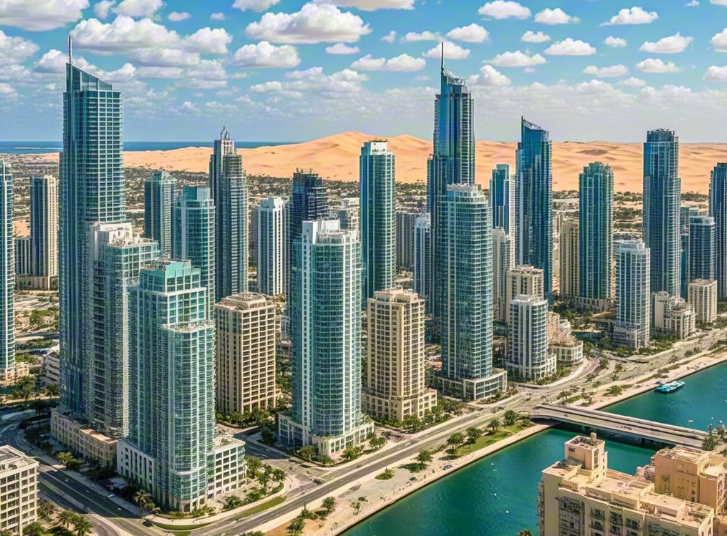
In the global real estate investment landscape, rental yield remains a core indicator for measuring asset value. While traditional investment hotspots are experiencing slower returns due to high housing prices, a number of emerging markets are rising rapidly, driven by policy dividends, industrial growth, and demographic dividends, becoming the focus of attention at overseas real estate exhibitions. These cities not only offer rental returns above the global average but also open new avenues for wealth appreciation for investors through diversified market structures and growth potential. Dubai leads the world with rental yields of 6%-8%, its tax-free policy and the dual drivers of tourism and finance creating a thriving ecosystem for its high-end rental market. In 2025, the local government relaxed the permanent ownership limit for foreigners to 999 years, directly stimulating long-term rental demand. Data shows that apartments near technology industry clusters such as Canary Wharf have seen annual rent increases of up to 18%, while the operating costs of smart apartments are 12% lower than traditional properties, further boosting net returns. At overseas real estate exhibitions, Dubai projects often attract investors with the combined advantages of “zero property tax + residency visa,” becoming a popular asset allocation option for high-net-worth individuals. Southeast Asian markets exhibit a distinct characteristic of “low cost, high return.” Phnom Penh, Cambodia, has become one of the cities with the highest rental yields globally, thanks to its open foreign investment policies and tourism recovery. For example, the City Center project, Yi Yuan, boasts an annual rental yield exceeding 10%, with some units even reaching 15%, far surpassing mature markets like Singapore (3.4%). Kuala Lumpur, Malaysia’s “Malaysia My Second Home” program has also proven highly effective, with strong supply and demand for high-end serviced apartments. Digital management tools have increased rental efficiency by 75%, driving vacancy…
 03/12/2025
Driven by the wave of globalized education, studying abroad has become an important choice for many students to enhance their competitiveness and broaden their horizons. However, the economic situations of different families vary significantly, making it a focus for many students and parents to develop a scientific and reasonable study abroad plan based on their budget. Study Abroad Expos, as comprehensive platforms that gather global educational resources and financial services, not only offer a wide selection of institutions but also help families with different budgets find the most suitable study abroad path through professional consultation and case sharing, ensuring that educational dreams are not thwarted by financial constraints. For families with limited budgets, study abroad programs in Southeast Asia and Eastern Europe are often a cost-effective option. Taking Malaysia as an example, tuition fees at public universities are approximately 20,000-40,000 RMB per year, and the cost of living is similar to that of a second-tier city in China, with overall annual expenses kept below 80,000 RMB. These institutions offer engineering and business programs with high international recognition, and some courses are taught in English, eliminating the need for additional language training fees. At study abroad expos, many Southeast Asian institutions offer “scholarship + part-time job” packages, such as scholarships that reduce tuition fees by 50% for outstanding students, while allowing students to legally work 20 hours per week, further alleviating financial pressure. In addition, Eastern European countries such as Poland and Hungary attract international students with their lower tuition fees and the advantage of EU degrees, with total annual costs around 100,000-120,000 RMB, suitable for students with tight budgets who wish to receive a European education. Families with moderate budgets can typically focus on Japan, South Korea, certain regions of Australia, or smaller cities in Canada. Tuition fees at national…
 02/12/2025
Over the past decade, an increasing number of high-net-worth families have viewed the “European Golden Visa Program” as a more flexible alternative to traditional US or Canadian immigration pathways when planning their overseas residency. The reason is simple: as global immigration policies tighten and scrutiny becomes more stringent, many are no longer willing to gamble their future entirely on a lengthy and uncertain immigration process. They prefer a more “controllable, low-risk, short-term, and multi-option” immigration path, which the European Golden Visa program precisely meets. However, the Golden Visa is not a panacea. It falls under the category of “residency status,” fundamentally different from traditional immigration types to settled countries (such as the US EB-5, Canadian skilled worker or investor immigration) in terms of rights, stability, and path certainty. The choice of which route to take essentially depends on each family’s different considerations regarding freedom of residence, residency stability, education planning, investment preferences, and time costs. Therefore, the real discussion should not be about “Europe vs. US/Canada: which is better,” but rather what the core differences between the two systems mean for you—what are the advantages of the European Golden Visa? What are the hidden risks? And which traditional immigration countries cannot be replaced by the Golden Visa? Advantage 1: More Flexible Thresholds, Faster Approval Compared to traditional immigration programs in the US and Canada, the biggest advantages of European Golden Visas are their predictability and shorter processing time. No language tests, educational background requirements, or business plans are needed, and there’s no strict scoring system. Most Golden Visas only require a compliant investment (such as real estate, funds, bank deposits, or company establishment) to enter the application process. Furthermore, because Golden Visas are for “investment residency” rather than “permanent immigration,” the focus of the review is on…
 02/12/2025
For many hoping to immigrate to Greece through the Golden Visa program, whether their entire family can obtain residency permits is a crucial factor in deciding whether to apply. Fortunately, Greece’s Golden Visa program allows the main applicant to apply with eligible family members, enabling the family to jointly enjoy residency rights, live in Greece, and even travel within the Schengen Area. However, this is not “automatically applicable to all relatives,” but rather has clearly defined legal definitions of “family members” and “eligibility conditions.” Understanding these conditions is crucial for assessing whether it is appropriate to apply with a spouse, children, or parents, and how to prepare the necessary documents. This article will guide you through understanding who qualifies as a “family member,” the conditions they must meet, and the application process and restrictions. Who qualifies as a “family member”? – Spouse or Registered Partner – The main applicant’s legally married spouse, or a partner who has legally signed a cohabitation agreement (civilunion/cohabitation agreement) in Greece, can also be considered a family member. – Children – The main applicant’s or their spouse’s/partner’s unmarried children can apply for residency permits as family members. Generally, this applies to children who are unmarried and under the maximum age limit. – Parents / Both Parents (Immediate Ascending Relatives) – In most cases, the principal applicant’s own parents, as well as the parents of their spouse/partner, can also be included in the category of dependents. – Independent Application vs. Subsequent Addition – It is not necessarily required that all dependents apply at the same time as the principal applicant. Dependents can apply for their own residence permits separately after the principal applicant has obtained their visa. Therefore, “dependents” has a broad scope: not only spouses and minors/children, but may also…
 02/12/2025
In recent years, with the rise in international investment immigration demand, Greece has made significant adjustments to its “Golden Visa” policy (i.e., obtaining residency through investment). In particular, starting in 2024, the government has categorized the minimum investment amount for obtaining a visa through real estate by region, significantly raising the investment standards for properties in popular areas. Understanding these latest requirements is crucial for investors intending to apply for residency through this program. This article will outline the main requirements and applicable conditions to help you clarify the current “entry fee.” Why are the requirements categorized? The Greek government aims to balance the real estate market, curb excessively rapid price increases in popular areas, and encourage capital inflows into less populated or less developed regions. The updated system sets different investment thresholds based on multiple dimensions: “geographical location + property type + purpose.” For applicants, this means that “obtaining a Golden Visa through real estate purchase” is no longer a “one-size-fits-all” option, but rather requires meeting different thresholds depending on the location and type of property you intend to purchase, thus affecting investment costs and expected returns. New Thresholds: Three Tiers High-End Popular Areas — €800,000 Threshold This tier has the highest threshold for high-demand, relatively expensive, and popular cities and islands—such as the capital city and tourist islands. The specific requirement is the purchase of a single property with a minimum area of 120 square meters. ([INC Capital][2]) Applicable areas include the capital region (e.g., Athens and its surrounding areas), as well as some islands or cities with high population and tourism demand, and highly sought after by overseas buyers. ([La Vida Golden Visas][3]) Regular Areas — €400,000 Threshold For those in less popular areas, specifically those in Greece with lower population and tourism pressure, the threshold…
 02/12/2025
The global real estate market is undergoing complex and profound changes, with significant divergence in housing price trends across different countries and regions. This divergence is the result of a complex interplay of factors, including economic fundamentals, demographic structure, policy adjustments, and international capital flows. Understanding these core drivers is crucial for seizing overseas real estate investment opportunities. The US real estate market is exhibiting characteristics of “high-level consolidation” between 2024 and 2025. Although mortgage rates have remained above 6% for an extended period, significantly suppressing housing demand, the high-end residential market in core cities remains resilient. For example, in New York City, sales of ultra-luxury apartments in Manhattan (priced over $20 million) reached a new high since 2019, and listing prices in areas like Central Park South have increased by nearly 90% year-on-year due to land scarcity. This stark contrast stems from the risk aversion needs of high-net-worth individuals and intergenerational wealth transfer—trillions of dollars in assets transferred from the baby boomer generation to the millennial generation have directly driven up asset prices in prime locations. Meanwhile, emerging areas like Brooklyn and Queens have become growth engines due to their cost-effectiveness. East Flushing, driven by new commercial complexes and excellent school districts, saw its median home price surge by 51% in a year, reflecting young families’ dual pursuit of quality living and convenient commuting. The logic behind rising house prices in Australia and Japan stems more from supply-demand imbalances and monetary factors. Australia has seen house prices rise for 18 consecutive months, with cities like Perth and Adelaide experiencing increases exceeding 14% over two years. The fundamental reason is the surge in housing demand driven by a surge in immigration. In 2023, the country’s net immigration exceeded 400,000, while the housing supply gap reached 2.1 million units, leading to…
 02/12/2025
Driven by globalization, studying abroad has become a crucial pathway for many students to broaden their horizons and enhance their competitiveness. However, the high cost of studying abroad often deters many families. In this context, student loans and sound financial planning become key to overcoming financial difficulties. These core issues are frequently the focus at various study abroad expos, offering attendees one-stop solutions. Student loans, as a dedicated educational funding tool, offer families flexible financial supplementation options. For example, institutions like MPOWER offer unsecured student loan products covering undergraduate and graduate studies, with loan amounts dynamically adjusted based on tuition shortfalls, reaching up to $100,000. This loan model breaks through the limitations of traditional mortgage loans, making it particularly suitable for families with insufficient assets but strong repayment capabilities. It’s important to note that loan applications must fully disclose the source of funds, including personal savings, scholarships, and sponsorships, to ensure accurate assessment of actual needs and prevent over-borrowing. For instance, if a student has already received partial scholarships or family savings, the lending institution will reduce the loan amount accordingly, ensuring precise and efficient use of funds. The depth and breadth of financial planning directly impact the sustainability of the study abroad experience. At study abroad expos, professional consultants often emphasize the principle of “budgeting in advance”: using the “Cost of Attendance” tool on the school’s official website, students can calculate fixed expenses such as tuition, accommodation, and insurance in advance, and create a dynamic budget based on the cost of living data of the target country. For example, in the United States, the average annual tuition for private universities is approximately $30,000 to $60,000, while living expenses can range from $15,000 to $30,000 per year depending on the region. A reasonable plan requires reserving 10%-15% as emergency funds…
 02/12/2025
Driven by globalization, immigration and property investment have become important options for many people planning their future lives. Immigration expos, as a core platform bringing together global real estate resources and immigration services, not only provide exhibitors with opportunities to access international projects but also serve as an efficient venue for acquiring key information and establishing industry connections. However, faced with a dazzling array of booths and a dense flow of information within the exhibition hall, how to efficiently navigate the expo and accurately capture core resources becomes crucial to the success of participation. This article systematically outlines strategies for navigating immigration expos, from pre-exhibition preparation and on-site execution to follow-up, helping exhibitors achieve the dual goals of information acquisition and resource conversion. Adequate preparation before attending the expo is the foundation for efficient participation. First, it’s essential to clarify your core objectives: are you looking for investment immigration projects in a specific country, focusing on supporting resources such as education and healthcare, or hoping to connect with immigration lawyers and tax experts? Once your objectives are clear, you can obtain the exhibitor directory, booth layout, and event schedule in advance through the expo’s official website or mini-program. For example, one immigration expo brought together over 200 real estate projects from more than 30 countries worldwide, covering residential, commercial, and land investment properties. Pre-screening booths that match your goals can prevent aimless wandering at the expo. Prepare two lists of materials: one for personal information, including passport copies, proof of assets, and other basic documents; the other for a list of questions, such as “project investment return cycle,” “immigration residency requirements,” and “tax planning solutions,” to ensure you can get straight to the point when communicating with exhibitors. Additionally, it’s recommended to print your personal WeChat QR code on a…
 01/12/2025
When discussing European investment immigration, many people’s first reaction is: “Do I actually have to move there? Is there a residency requirement?”Behind these questions are two core concerns: 1. Will it affect my career, family, and company operations in my home country? 2. Will the high residency requirements prevent me from maintaining my status?Especially for Chinese and Asian investors, the common model is “person in China, status in Europe”—hoping for global asset allocation, children’s education, and tax planning, but not intending to reside there immediately.However, policies vary greatly from country to country: some have almost no residency requirements, some only require a symbolic visit; and a few countries have strict requirements, even requiring long-term residency to maintain status or apply for permanent residency/passport. Therefore, residency requirements not only determine whether you can successfully maintain your status, but also whether you can actually obtain permanent residency or a passport in the future. Which countries almost don’t require residency? Which do? How much residency? Are there any hidden rules? Which type of person should choose which system? -Do I need to reside there? See National Policies -Minimal Residency Requirement (“0% Residency”) This type of policy is best suited for the “status + asset planning” model, where applicants don’t intend to relocate but simply want a legal residency pathway. Typical characteristics: No mandatory residency; Only one visit per year or maintaining basic investment is required; Easy visa renewal, not time-sensitive. Common programs: Portugal’s fund-based visas, Greece’s Golden Visa (real estate/funds), Maalta permanent residency, Cyprus residency, Italy’s investor visa, etc. As long as investments are maintained, health insurance is purchased, and there is no criminal record, visa renewal is stable. Requires Symbolic Visits (Low-Intensity Residency) Only one or two visits per year, or stays of a few days to…
 01/12/2025
In the ever-changing global investment immigration environment in recent years, regulations on “investment for residency” or “investment for citizenship” have become increasingly stringent in Europe, North America, and Asia, particularly regarding the real estate route. For investors from China and broader Asia, the motivations for obtaining overseas citizenship are often very clear—future planning, family education, diversified asset allocation, tax arrangements, and global mobility. However, in practice, the three most common investment pathways—property purchase, fund investment, and bank deposits/certificates of deposit—are confusing due to policy changes, differences in returns, risk structures, and approval logic. Property purchase seems the most straightforward, but it is no longer the mainstream channel in most countries; the fund route is on the rise, but compliance reviews are more stringent; bank deposits/certificates of deposit are low-cost and low-risk, but the application threshold and the value of the citizenship are often limited. Different methods not only determine the amount of investment and risk but also affect whether tax residency requirements can be met, children’s education planning, and the potential timeline for citizenship. Therefore, when choosing an investment channel, the key for Chinese/Asian investors is not “which is the most popular,” but rather the investment attributes, residency pathway, risk tolerance, timeline, stability in the face of regulatory changes, and whether it matches the actual needs of the family. The following analysis will examine the characteristics of three methods—property purchase, funds, and deposits—and finally provide overall advice suitable for Asian investors. Property Purchase: Visible, but with Rising Barriers For many Chinese and Asian investors, “overseas property purchase” is the most familiar and intuitive investment method—it provides tangible assets, controllable value, rental potential, and the possibility of appreciation. However, property purchase is undergoing significant changes in investment immigration policies, primarily in three aspects: First, regulations are tightening….
 Number
Call Now:
139 1723 4508
 WeChat
 Form
FormBook Your Booth
Complete your information immediately and provide you with exclusive services!
Back to Top

