-
Whatsapp
+1 689 248 1956 -
Email
joannewong0817@gmail.com

 05/12/2025
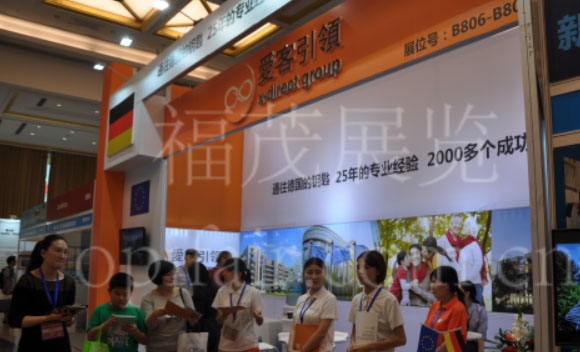
Whether it’s overseas real estate, investment immigration, or international education trade shows, the most pressing question for visitors is often not “Does the project sound good?” but rather, “Is it genuine and reliable?” With the increasing number of cross-border investment channels and the growing variety of projects, the information gap is widening. Without professional background, it’s easy to be overwhelmed by promotional slogans, discounts, and “limited-time offers” at a trade show, even neglecting the most crucial criterion: the authenticity and legality of the project. At trade shows, exhibitors may come from different countries and organizations, including developers, immigration lawyers, government promotion agencies, market intermediaries, and service providers. On the surface, everyone may seem knowledgeable, but the level of risk, legal basis, qualifications, feasibility, delivery capabilities, and regulatory status of their projects can vary drastically.Therefore, determining the authenticity of a project is not only about avoiding risk but also about providing a fundamental layer of protection for family wealth, immigration planning, and long-term international strategy. By mastering key judgment methods, even those without industry expertise can “understand clearly, ask professional questions, and see clearly” at trade shows. What to look for to verify authenticity? First, identify the organization. Before judging a project, judge the people involved. At trade shows, it’s crucial to understand the type of organization: Official promotional agency? Licensed lawyer or consultant? Developer? Investment platform? Intermediary/agent? Different roles offer varying levels of information depth and have different responsibilities. The more transparent the organization, the clearer its qualifications, and the stricter the oversight, the more reliable the project’s authenticity. Verify documents and qualifications Check licenses, permits, and registration information. Any cross-border service or investment project should have corresponding business licenses, professional licenses, immigration service licenses, development qualifications, or legal permits. At trade shows, you can directly request to…
 05/12/2025
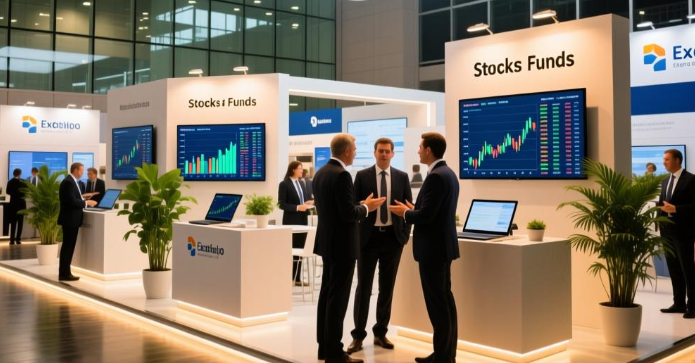
In the investment field, setting reasonable return expectations is a crucial cornerstone for wealth appreciation. Especially on investment expos, platforms that gather industry wisdom and resources, investors need to use scientific methods to anchor their goals and avoid blindly chasing high returns, which could lead to a vortex of risk. Whether it’s stocks, funds, real estate, or other investment categories, setting return expectations requires a comprehensive consideration of multiple factors, including personal financial situation, market environment, asset characteristics, and risk tolerance, to maintain rational decision-making in a dynamically changing market. The primary prerequisite for setting return expectations is a clear understanding of one’s own financial situation and investment goals. Investors need to analyze their income, expenses, asset and liability structure to clarify the amount of funds available for investment and their liquidity needs. For example, a 30-year-old professional with a stable annual income and no significant debt, planning to save for their children’s education 10 years from now, could set an annualized return target of 8%-12% and achieve asset appreciation through long-term fixed-investment in equity or mixed funds. An investor nearing retirement, with a lower risk tolerance, should focus on bond funds, money market funds, or low-risk financial products, aiming for an annualized return of 3%-5% to ensure principal safety and stable returns. Investment expos, with their diverse products showcased by numerous financial institutions, provide a key platform for matching tools to investors with different financial situations. Market environment and macroeconomic trends are the core variables affecting expected returns. During periods of strong economic growth and improved corporate profits, the stock market often shows an upward trend, making it appropriate to increase expected returns on equity assets. Conversely, during economic recessions or periods of policy tightening, increased market volatility necessitates lowering expected returns and increasing defensive asset allocation. Taking 2025…
 05/12/2025
In the investment field, constructing a scientifically sound investment portfolio is a core strategy for mitigating risk and achieving steady asset appreciation. Whether a novice investor or an experienced market participant, everyone needs to diversify across different asset classes and balance risk and return to cope with the uncertainties brought about by market volatility. The Investment Expo, as a platform that gathers cutting-edge industry information, high-quality products, and professional expertise, provides investors with an excellent opportunity to build their ideal investment portfolio. From defining investment goals to selecting high-quality assets, from dynamically adjusting proportions to utilizing professional tools, every step of the Investment Expo contains inspiration and opportunities for optimizing investment portfolios. The first step in building an investment portfolio is to clearly define investment goals and risk tolerance. Investment goals determine the direction and timeframe of asset allocation. For example, if the goal is to save money for children’s education within five years, a focus on stable returns is needed, and low-risk products such as bond funds and education insurance can be allocated. If the goal is to accumulate wealth for retirement and the investment period is longer than 20 years, the proportion of equity assets such as stock funds and index funds can be appropriately increased to pursue higher returns. Meanwhile, risk tolerance acts as a “safety cushion” for an investment portfolio. Aggressive investors can accept short-term volatility exceeding 20%, making a 70% stock + 30% bond allocation suitable. Conservative investors, on the other hand, need to control volatility within 10%, opting for a 50% bond + 30% money market fund + 20% stock allocation. At investment expos, financial institutions often offer risk assessment tools to help investors quickly determine their risk appetite, providing a basis for subsequent asset allocation. The choice of asset classes forms the framework…
 04/12/2025
Against the backdrop of continuous restructuring of global industrial chains, “where is the most cost-effective place to set up a factory” has become a key issue for companies expanding overseas. In the past, companies chose destinations primarily based on labor costs or logistical convenience. However, today, governments worldwide are increasingly intensifying their efforts to attract foreign direct investment (FDI). Tax incentives, investment subsidies, land support, talent incentives, and import equipment tax breaks have become crucial factors influencing factory establishment decisions. From a company’s perspective, setting up a factory is not simply about expanding production capacity, but a systematic optimization of cost structure, policy environment, and supply chain stability. The strength of tax incentives and subsidies is a key factor in whether a company can quickly establish itself overseas and accelerate large-scale production. Different countries have different focuses in their strategies for attracting foreign investment. Some offer tax breaks, some provide cash subsidies, some establish free economic zones, some emphasize supply chain integration, and some promote manufacturing exports through zero tariffs. If companies only judge the value of setting up a factory based on “low cost,” they may overlook the impact of policies on long-term profits. However, by deeply understanding the policy models of different countries, they can lock in higher policy dividends in advance, achieving the dual goals of globalized production and cost optimization. From an overseas investment perspective, setting up factories in suitable countries not only improves profit margins but also allows companies to secure a more stable position in international competition. Choosing Countries with Low Tax Burdens Many countries offer lower corporate tax rates for manufacturing companies to attract foreign investment, and even provide tiered tax breaks for specific industries and regions. For manufacturing companies, a lower tax burden means faster capital recovery, which helps shorten…
 04/12/2025
In an era of deepening cross-border investment, more and more investors are realizing that purchasing overseas real estate and allocating overseas assets is not the end of the process. What truly ensures the stability, security, and transferability of assets is the underlying legal structure and risk isolation mechanisms. However, this type of knowledge is often highly specialized, fragmented, and difficult to learn systematically, leading many to only access scattered information from different channels when preparing for cross-border investments. This is precisely why the 2026 Wise Shanghai Overseas Real Estate, Immigration, and Study Abroad Exhibition stands out. The exhibition brings together real estate agencies, immigration lawyers, family offices, cross-border tax advisors, and asset planning service providers from multiple countries, providing investors with a concentrated opportunity to understand overseas asset protection mechanisms. While the exhibition won’t complete your legal framework, it allows you to quickly connect with professionals from different countries and fields, enabling you to truly understand the underlying logic, common tools, and application scenarios behind “how to protect overseas assets through legal structures.” More importantly, the exhibition essentially provides a “highly professional information environment.” Through one-on-one consultations, keynote speeches, forum discussions, and real project demonstrations, investors not only hear about the latest policy changes but also gain a comprehensive understanding of which legal structures are suitable for offshore real estate, cross-border shareholdings, overseas income, family wealth succession, and even post-immigration asset management. This multi-dimensional knowledge exchange is almost impossible to obtain through ordinary online information channels. For those looking to invest in overseas assets long-term, the exhibition helps establish a systematic judgment framework, which is precisely the key starting point for asset protection. How to Choose a Legal Structure? The first issue to address with cross-border assets is identifying the risks. At the exhibition, tax advisors and lawyers will introduce…
 03/12/2025
In today’s increasingly diversified global asset allocation landscape, “Which country’s real estate is the most worthwhile investment?” has become an unavoidable question for many investors. In the past, real estate was considered a sure-fire, low-risk asset; however, today, with changes in interest rates, urban migration, policy tightening or loosening, and the fluctuating rental and sales markets across different countries, property returns have become significantly more differentiated. Without prior research, it’s easy to focus only on the superficial logic of “buying a property and collecting rent,” ignoring the significant differences between countries in terms of taxes, holding costs, vacancy rates, and future population trends. From an investment perspective, property returns primarily come from two dimensions: rental yield (cash flow) and property appreciation (capital gains). Different countries’ economic structures, exchange rate trends, legal systems, urbanization rates, and supply changes all alter the combination of these two types of returns. To achieve higher returns, the key is not to focus on which country’s yield figures are more impressive, but rather to assess whether the country you’re interested in can sustain these returns, rather than just maintaining them for one or two years. Stable Economy vs Rapid Growth Real estate markets in different countries can be broadly categorized into two types: stable and growth-oriented. Stable countries (such as parts of Western Europe, Japan, and Australia) offer more stable rental returns, but slower appreciation. Their advantage lies in predictability and limited risk. Growth-oriented countries (such as parts of Southeast Asia, the Middle East, and Latin America) offer greater appreciation potential, and rental yields may be even more attractive, but they experience greater volatility and more frequent policy changes. Choosing which offers “higher returns” depends on whether you prioritize stability or future growth. High returns often imply high volatility, while low risk…
 03/12/2025
As global real estate investment shifts from “chasing famous cities” to “looking at actual value,” second-tier overseas cities are becoming increasingly favored by professional investors. In the past, overseas investment was generally associated with capital cities, financial centers, or international gateway cities, with the belief that only these cities were considered “safe” and “reliable.” However, with persistently high housing prices, tightening policies, declining rent-to-price ratios, and rising holding costs in major first-tier cities worldwide, market returns are undergoing structural changes. Simultaneously, many second-tier cities are in a phase of rapid expansion, with continuous industrial development, upgraded urban infrastructure, and stable population inflows, creating a more balanced, healthier, and growth-oriented investment environment. For overseas investors, second-tier cities are not “alternative options” but rather high-quality markets offering better value, higher rental returns, and longer-term appreciation potential with a more reasonable budget. In other words, those who truly understand the logic of real estate investment don’t just look at fame but at the future growth potential of a city, and this potential is gradually being realized in second-tier cities. Higher Cost-Effectiveness First-tier cities suffer from high housing prices, high taxes, and fierce competition, resulting in generally low rental yields. Second-tier cities, on the other hand, offer the opposite: Housing prices are relatively affordable, allowing for better locations and higher property quality within the same budget. Rentals are relatively stable and offer higher returns because rent increases haven’t lost their elasticity like housing price increases. For investors, lower barriers to entry mean higher capital efficiency and easier portfolio diversification, preventing cash flow from being tied up in a single property. High Rental Demand Many overseas second-tier cities are experiencing significant population migration: Young workers are moving to medium-sized cities; Industry expansion in technology, logistics, pharmaceuticals, and education; Government…
 03/12/2025
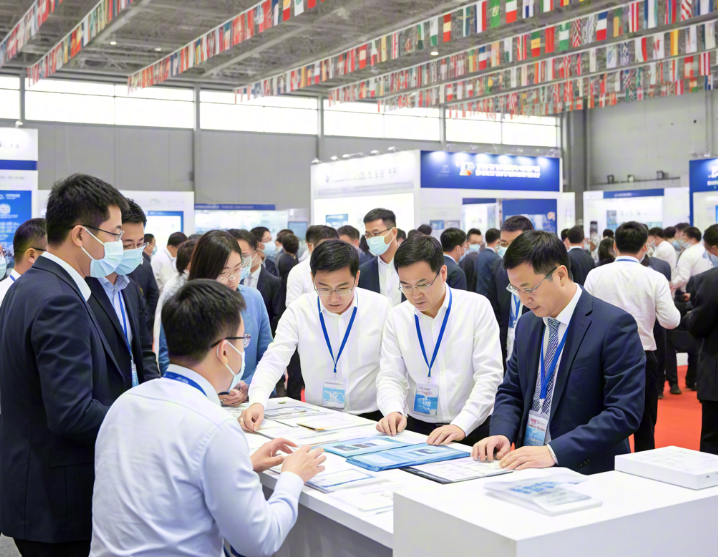
In the wave of globalized investment, exchange rate fluctuations have become one of the core variables affecting asset allocation. Whether it’s the cross-border investment decisions of multinational corporations or the global asset allocation of individual investors, exchange rate fluctuations act like an invisible conductor, reshaping return curves and risk structures. At the 2025 Global Investment Expo, the display of exchange rate risk management tools and strategies became a focus, revealing profound changes in investment logic under exchange rate volatility, from foreign exchange derivatives to robo-advisory systems, from macroeconomic models to cross-border arbitrage cases. The impact of exchange rate fluctuations on investment returns is primarily reflected in the revaluation of cross-border assets. Taking overseas real estate investment as an example, when investors exchange their local currency for foreign currency to purchase overseas properties, exchange rate changes directly alter the RMB-denominated cost of the assets. If the target country’s currency depreciates during the investment period, even if the local property price remains unchanged, the asset value measured in local currency will shrink; conversely, currency appreciation may bring additional returns. This “dual pricing” effect is particularly pronounced in high-rent-yield cities like Dubai and Phnom Penh—while local properties are priced in US dollars or local currency, Chinese investors need to assess the actual return through currency conversion, and exchange rate fluctuations can cause expected returns to deviate by more than 5 percentage points. At the overseas property exhibition area of the investment expo, several institutions launched “currency hedging” investment products, locking in exchange costs through forward contracts to provide investors with more stable return expectations. The impact of exchange rate fluctuations on the investment value of import and export companies is even more direct. When the local currency depreciates, export-oriented companies’ products become more price-competitive in the international market, with order volumes and profit…
 01/12/2025
When discussing European investment immigration, many people’s first reaction is: “Do I actually have to move there? Is there a residency requirement?”Behind these questions are two core concerns: 1. Will it affect my career, family, and company operations in my home country? 2. Will the high residency requirements prevent me from maintaining my status?Especially for Chinese and Asian investors, the common model is “person in China, status in Europe”—hoping for global asset allocation, children’s education, and tax planning, but not intending to reside there immediately.However, policies vary greatly from country to country: some have almost no residency requirements, some only require a symbolic visit; and a few countries have strict requirements, even requiring long-term residency to maintain status or apply for permanent residency/passport. Therefore, residency requirements not only determine whether you can successfully maintain your status, but also whether you can actually obtain permanent residency or a passport in the future. Which countries almost don’t require residency? Which do? How much residency? Are there any hidden rules? Which type of person should choose which system? -Do I need to reside there? See National Policies -Minimal Residency Requirement (“0% Residency”) This type of policy is best suited for the “status + asset planning” model, where applicants don’t intend to relocate but simply want a legal residency pathway. Typical characteristics: No mandatory residency; Only one visit per year or maintaining basic investment is required; Easy visa renewal, not time-sensitive. Common programs: Portugal’s fund-based visas, Greece’s Golden Visa (real estate/funds), Maalta permanent residency, Cyprus residency, Italy’s investor visa, etc. As long as investments are maintained, health insurance is purchased, and there is no criminal record, visa renewal is stable. Requires Symbolic Visits (Low-Intensity Residency) Only one or two visits per year, or stays of a few days to…
 01/12/2025
In the ever-changing global investment immigration environment in recent years, regulations on “investment for residency” or “investment for citizenship” have become increasingly stringent in Europe, North America, and Asia, particularly regarding the real estate route. For investors from China and broader Asia, the motivations for obtaining overseas citizenship are often very clear—future planning, family education, diversified asset allocation, tax arrangements, and global mobility. However, in practice, the three most common investment pathways—property purchase, fund investment, and bank deposits/certificates of deposit—are confusing due to policy changes, differences in returns, risk structures, and approval logic. Property purchase seems the most straightforward, but it is no longer the mainstream channel in most countries; the fund route is on the rise, but compliance reviews are more stringent; bank deposits/certificates of deposit are low-cost and low-risk, but the application threshold and the value of the citizenship are often limited. Different methods not only determine the amount of investment and risk but also affect whether tax residency requirements can be met, children’s education planning, and the potential timeline for citizenship. Therefore, when choosing an investment channel, the key for Chinese/Asian investors is not “which is the most popular,” but rather the investment attributes, residency pathway, risk tolerance, timeline, stability in the face of regulatory changes, and whether it matches the actual needs of the family. The following analysis will examine the characteristics of three methods—property purchase, funds, and deposits—and finally provide overall advice suitable for Asian investors. Property Purchase: Visible, but with Rising Barriers For many Chinese and Asian investors, “overseas property purchase” is the most familiar and intuitive investment method—it provides tangible assets, controllable value, rental potential, and the possibility of appreciation. However, property purchase is undergoing significant changes in investment immigration policies, primarily in three aspects: First, regulations are tightening….
 Number
Call Now:
139 1723 4508
 WeChat
 Form
FormBook Your Booth
Complete your information immediately and provide you with exclusive services!
Back to Top

