
-
Whatsapp
+1 689 248 1956 -
Email
joannewong0817@gmail.com

 21/11/2025
For professionals, expanding your network through trade shows needs to be analyzed from multiple perspectives. Some see trade shows as simply handing out business cards and scanning QR codes, with no follow-up contact expected; others see them as “social accelerators,” delivering the equivalent of three months’ worth of networking in just three days. So, is it effective? It depends on how you use it. Let’s start with the characteristics of trade shows themselves. A decent trade show, such as the Wise Shanghai Overseas Property, Immigration & Study Abroad Exhibition held in Shanghai from March 29th to 31st, 2026, can gather a large number of people: business owners looking to expand their overseas businesses, families interested in studying abroad and immigration, real estate agents, and upstream and downstream service providers. These people might normally be scattered across various industries and cities, but at the trade show, they all come together. In this scenario, connections aren’t “waited for,” but rather “stumbled upon”—you might bump into colleagues while browsing booths, sit next to potential clients at lectures, or even chat with the person at the next table during lunch. But simply “bumping into” someone isn’t enough; you need to know how to “react.” For example, when you meet someone you’re interested in, don’t just say, “Let’s add each other on WeChat.” First, chat about something they’re interested in—is it immigration policy? Study abroad planning? Or overseas real estate investment? Only exchange contact information if you hit it off; this way, they’ll remember you. Also, many booths at trade shows offer interactive activities like raffles, Q&A sessions, and experience zones. Actively participating demonstrates your expertise and naturally starts a conversation with strangers. Another benefit of trade shows is their high information density. Normally, if you want to learn about overseas real estate, you have…
 21/11/2025
In today’s ever-changing global economic landscape, the enormous potential of the Chinese market has become a “golden opportunity” that multinational corporations cannot ignore. Shanghai, as a “bridgehead” of the Chinese economy, provides multinational corporations with an excellent platform to directly connect with the Chinese market through its annual large-scale expo. For multinational corporations, actively integrating into the Shanghai Expo can not only expand their brand influence in the short term but also lay a solid foundation for long-term development in the Chinese market. The Shanghai Expo has become a “must-win” for multinational corporations because of the underlying benefits of China’s consumption upgrade and open policies. With the increase in Chinese residents’ income levels, consumers’ demand for high-quality goods and services continues to grow. For example, in the fields of food, daily necessities, and healthcare, multinational corporations can quickly reach their target customer groups by showcasing innovative products at the expo. At the same time, China has been continuously deepening its opening-up in recent years, introducing a series of favorable policies in areas such as cross-border e-commerce, finance, and education. The Shanghai Expo is the “first window” for multinational corporations to understand policy trends and capture policy dividends. So, how should multinational corporations take concrete actions? First, they need to do their homework on “localization.” Chinese consumers value both cost-effectiveness and emotional resonance, requiring multinational corporations to align their product development and marketing strategies with Chinese needs. For example, an international beauty brand launched a limited-edition Chinese-style packaging at an expo, retaining core product technology while incorporating traditional cultural elements, quickly generating buzz. This combination of “global quality + Chinese elements” often resonates with consumers emotionally. Secondly, it’s crucial to leverage the “ecosystem” built by expos. The Shanghai Expo is not only a product showcase but also a resource-matching platform. Multinational…
 20/11/2025
In today’s deeply integrated globalized economy, policy trends in the investment field constantly resonate with the market. A series of recent investment policies have injected new vitality into the investment market, and investment expos, as a crucial bridge connecting investment opportunities and capital, are playing an increasingly vital role. Recently released investment policies focus on stimulating private investment, opening up broader investment opportunities for private capital. The policies explicitly state that for key projects in sectors such as railways, nuclear power, and hydropower that require approval from specific departments and have certain profitability, a special feasibility study on private capital participation must be conducted, and this must be specifically explained in relevant reports. This means that private capital has more opportunities to participate in these sectors traditionally dominated by large enterprises. Furthermore, based on the actual situation of the project, the willingness of private enterprises to participate, and relevant policy requirements, specific shareholding ratios for each project can be determined, with private capital holding more than 10% in eligible projects. This measure not only provides private capital with opportunities to share in the development dividends of key sectors but also helps to enhance the status and role of private capital in economic development. In addition to key sectors, the policies also encourage private capital to participate in the construction and operation of new urban infrastructure projects that are smaller in scale but have profit potential. This policy direction enables private capital to delve into the minutiae of urban development, participating in the improvement and upgrading of urban infrastructure. This not only meets the city’s demand for capital and resources but also provides private capital with a stable channel for investment returns. In the service sector, the policy also sends a positive signal. It eliminates unreasonable restrictions on service industry operators,…
 20/11/2025
Driven by both technological innovation and economic restructuring, the investment landscape is undergoing profound changes over the next decade. From artificial intelligence to green energy, from the silver economy to the low-altitude economy, emerging fields are reshaping investment logic with disruptive power. Investment expos, as a core platform connecting cutting-edge trends and capital, are becoming crucial windows for investors to identify opportunities and make precise strategic investments. Technology Empowerment: AI and Automation Lead an Efficiency Revolution The deep integration of artificial intelligence and industrial automation is reshaping the efficiency boundaries of countless industries. In industrial settings, construction robots can dynamically adjust construction plans based on weather conditions, while home robots can perform sophisticated tasks such as laundry and pet care. McKinsey predicts that by 2035, AI and robotics technologies will cover nearly 50 industries, including healthcare, logistics, and home services, creating a market value exceeding $10 trillion. This trend is particularly evident at investment expos: exhibitors showcased smart factory solutions, AI-driven supply chain optimization systems, and interactive robots for elderly care, providing investors with opportunities across the entire chain, from hardware manufacturing to application implementation. Green Transition: Low-Carbon Technologies Fuel a Trillion-Dollar Market Under the global goal of carbon neutrality, new energy power generation, energy storage technology, and the circular economy have become the focus of capital investment. Leading companies in the photovoltaic industry chain are continuously reducing the cost per kilowatt-hour through technological iteration, while power battery companies are seizing the high ground in next-generation technology through solid-state battery research and development. In the green zone of the investment expo, circular economy projects such as straw-to-energy conversion, plastic substitutes, and car dismantling attracted significant attention. Taking straw as an example, it can be converted into clean energy through biomass power generation technology, while simultaneously producing environmentally friendly building materials,…
 20/11/2025
In the ever-changing investment world, every decision is like navigating a turbulent sea; a slight misstep can lead to storms and asset losses. Therefore, accurately assessing investment risk has become a core skill that investors must master. Investment expos, as important platforms for gathering industry wisdom and showcasing cutting-edge trends, provide investors with an excellent opportunity to assess risk and seize opportunities. Assessing investment risk begins with a thorough understanding of the investment project itself. Different investment projects have drastically different risk characteristics. Take stock investment as an example: its price fluctuates frequently and significantly, influenced by a combination of factors such as company performance, industry competition, and the macroeconomic environment. Before entering the stock market, investors need to carefully study the target company’s financial situation, business strategy, industry position, and other key information, analyzing its future development potential and potential risks. While bond investment is relatively stable, it’s still necessary to pay attention to the issuer’s creditworthiness and interest rate trends to avoid losses due to defaults or interest rate fluctuations. At investment expos, numerous exhibits and expert sharing sessions allow investors to more intuitively understand the characteristics of different investment projects, providing abundant material for risk assessment. The market environment is also a crucial factor that cannot be ignored in assessing investment risk. The state of the macroeconomy directly impacts the performance of various investment products. During periods of economic prosperity, strong market demand and increased corporate profits often lead to outstanding performance for investment products such as stocks and real estate. Conversely, during economic recessions, shrinking market demand and operational difficulties for businesses significantly increase investment risk. Furthermore, changes in policies and regulations also have a profound impact on the investment market. For example, government support policies for a particular industry may drive its rapid development, bringing…
 19/11/2025
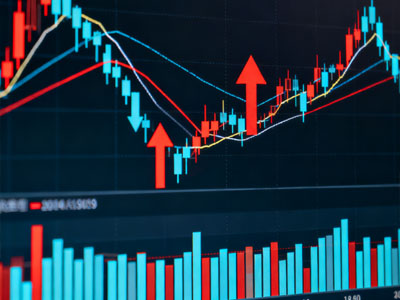
From March 29th to 31st, 2026, the 2026 Wise Shanghai Overseas Property, Immigration and Study Abroad Exhibition will be held. This exhibition brings together high-quality resources from around the world and is an excellent platform to understand overseas investment procedures and obtain professional advice. It’s well worth the attention and participation of interested individuals. Overseas investment sounds glamorous, but before actually doing it, you need to understand “how to get started.” First, how to transfer money out of the country is the first step. China has strict foreign exchange controls, with each person having a convenience quota of $50,000 per year. Exceeding this amount requires providing supporting documents, such as contracts and invoices, to prove the legal purpose, such as buying property, studying abroad, or medical treatment. This step cannot be ambiguous; you must understand the policies in advance and prepare all the necessary materials, otherwise, it will be awkward if your money is stuck in the bank. Next is choosing the type of investment. There are many ways to invest overseas, such as real estate, stocks, funds, and trusts, each with different procedures. For example, when buying overseas real estate, you need to find a reliable agent or developer first. Before signing the contract, you must check whether the property title is clear and whether there are any mortgages or disputes. If you’re buying stocks or funds, you need to open an account through legal channels, such as QDII funds or a Hong Kong account. You also need to consider exchange rate risks and tax issues. Different countries have different regulations for different types of investments. For example, some countries restrict the areas where foreigners can buy property, or they tax rental income. You need to find out all of this beforehand. Then there are legal and tax issues….
 19/11/2025
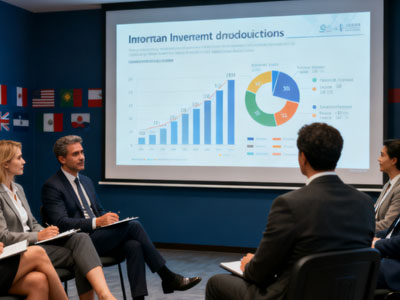
From March 29th to 31st, 2026, Shanghai will host the Wise Overseas Property, Immigration, and Study Abroad Exhibition. Those interested in exploring overseas investment are encouraged to attend and learn about the latest trends and opportunities. There’s no standard answer to the question of whether to choose developed or developing countries for overseas investment; it depends on individual needs and risk tolerance. Some prioritize stability, while others crave adventure. The key is to clearly understand your own needs. Developed countries are like established department stores: comprehensive offerings, transparent regulations, and peace of mind when making purchases. For example, buying a house offers clear property rights, robust legal protection, and stable rental income—even if prices don’t rise, they won’t plummet. However, the downsides are also obvious—high prices and slow returns make making big money unrealistic. Developed countries have slower economic growth and limited asset appreciation potential, making them more suitable for those seeking stability, such as those wanting a fixed income after retirement or a reliable asset for their children. Developing countries are like newly opened night markets: bustling and full of opportunities, but caution is advised to avoid pitfalls. For instance, some countries are rapidly developing, with large populations and high demand; buying land or opening a shop in one of these countries could potentially double in value within a few years. However, the risks are also significant. Policies can change suddenly, exchange rates can fluctuate wildly, and economic turmoil could even wipe out investments overnight. Therefore, choosing developing countries requires a strong heart; one must be able to withstand volatility and be willing to invest time in researching local conditions. The choice of location also depends on the investment objective. If the goal is passive income, developed countries are less stressful; if the aim is high returns, developing countries…
 19/11/2025
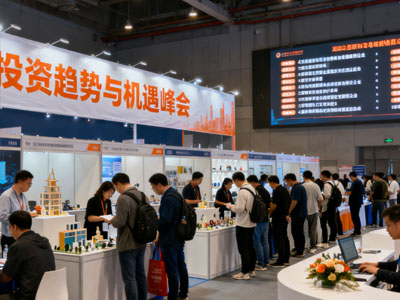
The 2026 Wise Shanghai Overseas Property, Immigration & Study Abroad Exhibition will be held from March 29th to 31st, 2026. This exhibition brings together high-quality resources from around the world and is an excellent opportunity to meet potential investors and understand investment trends. It’s definitely worth the attention and participation of interested individuals. To find investors, you first need to clearly understand what makes your project unique. Investors review countless projects daily; if your project is similar to others, it’s unlikely to be remembered. Therefore, you must first clarify your project’s advantages—is it more advanced technology, lower costs, or solving a problem that others haven’t solved? Once you understand this, you can effectively present your project to others. Next, leverage your network. Friends, colleagues, and acquaintances in the industry can all help introduce you to investors. Don’t be shy about asking; many investment opportunities are introduced through acquaintances. Attending industry gatherings, startup seminars, and exhibitions can also help you meet many people, and you might even encounter investors who are interested in your project. The Shanghai Overseas Property, Immigration, and Study Abroad Exhibition, mentioned earlier, is a great place to meet investors from different fields; it’s worth paying attention to in advance. Once you have target investors, you need to prepare a simple and clear plan. It doesn’t need to be overly complicated; just clearly state what the project will do, why it can succeed, how much money it requires, and how much profit it can generate. The key is to make the project’s value quickly understandable to investors, avoiding jargon or roundabout language. If you’re not good at writing, you can ask an experienced friend for help or refer to some simple templates, but don’t copy others directly. There are many online platforms available now, such as startup forums,…
 19/11/2025
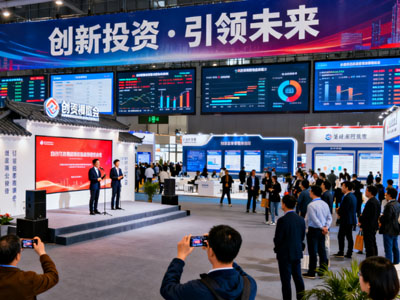
From March 29th to 31st, 2026, Shanghai will host the Wise Shanghai Overseas Property, Immigration and Study Abroad Exhibition. This is an excellent opportunity to understand global investment trends and broaden your international perspective. Consider planning your trip in advance and visiting the event to explore more possibilities. Choosing between a red ocean market and a blue ocean product when investing is like opening a shop on a familiar street versus starting a business in an undeveloped town. A red ocean market is a place where everyone is scrambling to get business, like the ubiquitous milk tea shops, supermarkets, and clothing stores. Competition is fierce, but the advantage is a large customer base and clear demand. For example, everyone knows milk tea is delicious; as long as the location is good and the taste is consistent, business will be good. However, the problem is also obvious—profit margins are low because all the surrounding shops are similar; if you offer discounts, I offer discounts too, and in the end, everyone is just making a meager living. A blue ocean product, on the other hand, is like discovering a previously unexplored area, such as starting a shared bicycle business ten years ago or a live-streaming e-commerce business five years ago. Initially, people didn’t quite understand what this was all about, but once accepted, it could quickly capture the market and generate huge profits. However, the risks were also high. For example, when shared bikes first appeared, many wondered, “Who would ride these?” They ended up everywhere. On the other hand, some blue ocean products, such as certain high-tech products, might fail because the technology was too advanced or user habits hadn’t caught up, ultimately resulting in huge losses. So how should investors choose? There’s no fixed answer; it depends on your financial…
 18/11/2025
Before investing in a company, you need to “look, examine, and listen” like choosing a watermelon—first, see if the company is doing something that “makes money”; second, examine whether the management team is reliable; and finally, listen to whether the market sentiment is positive. From March 29th to 31st, 2026, the 2026 Wise·Shanghai Overseas Property, Immigration, and Study Abroad Exhibition will be held in Shanghai, providing investors with diversified information channels. To judge whether a company is worth investing in, you must first look at “what it does.” Just like opening a restaurant requires choosing a location with high customer traffic, a company needs a clear “path to making money.” If a company’s business is something people need daily, such as selling daily necessities, providing educational services, or solving people’s practical needs for housing, immigration, or studying abroad, then its existence has a foundation. Conversely, if the business is so niche that even those around it don’t understand it, or if it’s like a “castle in the air” detached from real needs, you should be wary—after all, making money requires people to first “understand and use” it. The management team is the “operator,” and their ability directly determines whether the company can go far. Just as choosing experienced farmers is crucial for farming, investing requires assessing the reliability of the team. A reliable team typically possesses several characteristics: clear goals and plans, such as “how many branches to open in the next three years”; practical capabilities, such as producing high-quality products and providing excellent service; and a good reputation, with past clients and employees recommending them. If a team is always making grand promises but failing to deliver, or if there is internal chaos and frequent personnel changes, then such a company should be approached with caution. The market environment…
 Number
Call Now:
139 1723 4508
 WeChat
 Form
FormBook Your Booth
Complete your information immediately and provide you with exclusive services!
Back to Top

