
-
Whatsapp
+1 689 248 1956 -
Email
joannewong0817@gmail.com

 23/06/2026
Studying abroad has become an important part of educational planning for many families. However, when it comes to actual preparation, cost is always one of the most critical factors. Depending on the country, tuition fees, living expenses, and city costs vary significantly. Overall, the annual cost of studying abroad generally ranges from 100,000 RMB to over 600,000 RMB, and in some high-cost destinations it can exceed 800,000 RMB. The exact amount depends on the country, university ranking, major, and lifestyle choices. Tuition Differences: Significant Cost Gaps Between Countries Tuition is usually the largest part of study abroad expenses. Different education systems and pricing models lead to large variations across countries, and even within the same country, universities and majors can differ significantly. In the United States, annual tuition is typically around 200,000–450,000 RMB, with top universities and business majors costing even more In the UK, one-year master’s programs are more concentrated, with annual tuition around 150,000–350,000 RMB, and up to 400,000+ RMB for competitive majors Canada and Australia generally range from 120,000–300,000 RMB per year, with medicine and business programs costing more In countries like Germany and France, public universities may charge 0–50,000 RMB per year, but living costs are relatively higher Art and medical-related majors are often 30%–50% more expensive than general programs Tuition structure largely determines the baseline budget for studying abroad. Living Costs: City Differences Create Major Variations Living expenses account for a significant portion of total costs, and differences between cities can be dramatic, sometimes several times higher depending on location. Major cities such as London, New York, and Sydney typically cost around 100,000–250,000 RMB per year, with housing being the largest expense Canadian cities like Toronto and Vancouver range from 80,000–180,000 RMB per year, relatively balanced overall UK cities outside London, such as Birmingham…
 22/06/2026
Investment immigration has become an important pathway for many families seeking global mobility and asset diversification. However, in practice, applicants often face challenges such as complex project structures, frequent policy changes, and information asymmetry. These issues can lead to delays or even failures. Reducing risks is not about choosing the “cheapest” or “fastest” option, but about building a structured evaluation system that covers project selection, fund compliance, and policy understanding. Identifying False or Overstated Marketing Projects The investment immigration market contains a wide range of information sources. Some projects exaggerate success rates or downplay risks during promotion. Without proper judgment, applicants may make poor decisions early in the process, affecting the entire application outcome. Be cautious of claims such as “guaranteed approval,” “fast residency,” or “zero rejection,” as they rarely align with official immigration policies Verify whether the project is officially approved or authorized by government-related institutions rather than relying on unofficial channels Be careful with “high return + low entry threshold” combinations, which often hide significant risks Accurate information verification is the first line of defense in avoiding investment immigration pitfalls. Fund Structure and Compliance Risk Control The legality and traceability of funds is a core requirement in most countries. If the financial structure is unclear, the application may face delays or rejection during review. Prepare complete proof of fund sources, including salary income, business records, or asset sale documentation Avoid using funds with unclear origins, as this may directly result in visa refusal Cross-border transfers must comply with local financial and foreign exchange regulations to ensure traceability Build a clear explanation chain so that every fund flow has a verifiable source The more transparent the funds, the smoother the approval process tends to be. Choosing Legitimate Projects and Official Pathways There are many investment immigration programs…
 18/06/2026
As global asset allocation continues to grow, overseas real estate has become an important part of long-term investment planning for many families. However, in practice, legal systems, ownership structures, and taxation frameworks vary significantly across countries. Whether property can truly be held long-term is not a simple yes-or-no question, but depends on multiple factors such as ownership rights, policy environment, and ongoing holding costs. Property Ownership Systems Determine Holding Periods The ability to hold overseas property long-term depends fundamentally on the ownership structure, as different countries define land and property rights in very different ways. In most developed markets in Europe and North America, freehold or near-permanent ownership is common, allowing long-term holding, inheritance, and resale Some countries use leasehold systems, such as 50-year or 99-year usage rights, which may require renewal or return upon expiration Certain countries impose restrictions on foreign buyers, limiting ownership to specific property types or designated areas These differences in ownership systems directly determine whether property can function as a true long-term asset. Taxes and Holding Costs Affect Long-Term Viability Even when long-term ownership is legally allowed, ongoing costs and tax structures can significantly influence investment decisions and overall feasibility. Property taxes in some countries are annual fixed expenses and may increase as property value rises Management fees, maintenance funds, and insurance costs contribute to long-term holding expenses Rental income is often subject to taxation, with rates varying widely across jurisdictions Currency fluctuations can impact cross-border returns and cash flow stability When combined, these costs can significantly affect long-term profitability. Policy Stability and Foreign Ownership Restrictions Policy environments play a crucial role in long-term overseas property ownership, especially regulations targeting foreign investors. Some countries adjust foreign ownership rules based on housing market conditions Certain regions restrict non-residents from purchasing properties in specific zones…
 17/06/2026
As global asset allocation becomes increasingly common, more investors are turning their attention to overseas real estate markets. However, before entering this field, many people ask the same question: is the investment threshold actually high? In reality, there is no single answer, as the “entry barrier” is not only reflected in property prices, but also in taxes, financing conditions, legal requirements, and long-term holding costs. Different countries show significant variation across all these factors. Basic Investment Threshold Differences Across Countries From a global perspective, the entry cost for overseas real estate varies widely. Some countries allow relatively low-cost entry, while others require substantial capital, mainly due to market maturity and policy openness. In countries such as Greece, property prices are relatively low, making the entry threshold more accessible for investors with limited budgets Spain and Portugal still offer residency-linked programs, but prime city properties come with higher prices and stricter source-of-funds checks The United States and Canada have mature markets with significantly higher costs, especially in major cities and premium school districts These differences create a clearly tiered global real estate investment structure. Hidden Costs Are Often More Important Than Property Price Many investors initially focus on listed prices, but the real barrier often comes from additional transaction costs and ongoing ownership expenses, which are frequently underestimated. Multiple types of taxes are involved, including stamp duty, purchase tax, and one-time transaction taxes that vary significantly by country Legal, notary, and agency fees may be fixed in some countries or percentage-based in others Ongoing costs such as property management fees, maintenance funds, and community charges affect long-term holding expenses Exchange rate fluctuations during cross-border payments can significantly change the final investment amount These hidden costs can substantially increase the overall investment threshold. The Impact of Financing Policies on Investment…
 16/06/2026
As global mobility continues to increase, more families are exploring immigration planning to achieve residency changes, educational upgrades, or asset diversification. However, different countries offer very different immigration systems—some focus on investment, some on skilled labor, and others provide relatively simple residency programs. There is no single “easiest country to immigrate to”; the answer depends largely on individual financial capacity, background, and long-term goals. European Countries: Lower Thresholds and Flexible Residency Options Several European countries attract applicants with relatively lower investment requirements and clearer residency pathways, making them popular among those seeking faster access to overseas residency. Greece offers residency through property purchase with relatively low investment requirements, suitable for those with limited budgets seeking access to Europe Portugal previously had a popular Golden Visa program and still provides alternative routes such as fund-based investment options Spain requires higher real estate investment but offers strong lifestyle quality and educational resources While procedures are relatively straightforward, strict compliance and source-of-funds checks still apply. American Countries: Investment-Driven Immigration Routes Immigration systems in the Americas are generally tied closely to financial investment, making them more suitable for individuals with stronger financial capacity and long-term planning goals. The U.S. EB-5 program requires significant investment but offers a pathway to a green card Some Canadian Provincial Nominee Programs require investment experience or business operation backgrounds Mexico offers relatively lower-barrier residency options, often used as a transitional choice This region is generally structured around economic contribution-based immigration models, with varying timelines and investment levels. Asia and Oceania: Flexible Yet Structured Systems Countries in Asia and Oceania offer diverse immigration pathways, including skilled migration, investment options, and residency programs suitable for long-term living and education planning. Australia has a well-developed skilled migration system with clear language and occupation requirements New Zealand provides both skilled and…
 15/06/2026
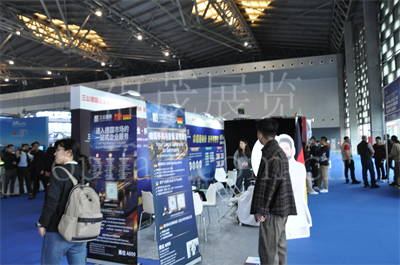
As international education continues to expand, more students are choosing to study abroad to access higher-quality academic resources and broader career opportunities. However, once the application process begins, many discover that it involves multiple stages, including country selection, exam preparation, document submission, and visa processing. Each step requires careful planning and structured execution. Understanding the full process can significantly improve success rates and reduce both time and financial costs. Choosing Study Abroad Goals and Destination Countries Before starting the formal application process, the most important step is not preparing documents, but defining a clear direction. Different countries vary greatly in education systems, admission difficulty, tuition costs, and future opportunities, making proper selection essential. Choose countries based on major strengths—for example, business, engineering, computer science, or arts programs differ by destination and should align with career goals Evaluate overall costs, including tuition, living expenses, accommodation, and scholarship opportunities, rather than focusing on a single expense Consider language environment and future development plans, such as whether you intend to work or continue studying after graduation This stage determines the clarity of your application direction and serves as the starting point of the entire plan. Language Exams and Academic Preparation Language proficiency and academic performance are core requirements for studying abroad, and standards vary widely across countries and universities, making early preparation essential. English-speaking countries typically require IELTS or TOEFL scores, with different institutions setting different score requirements Some postgraduate programs also require GRE or GMAT, which assess analytical and academic abilities Improving GPA, research experience, or internships during preparation strengthens overall competitiveness Planning exam schedules in advance helps avoid repeated test attempts that may delay applications Language and academic preparation form the foundation of admission decisions. School Selection and Application Strategy Choosing schools is not just about rankings but about…
 13/06/2026
As global asset allocation continues to grow, more investors are turning their attention to overseas real estate markets. However, the requirements for foreign property buyers vary significantly from country to country. From financial proof and legal eligibility to financing and taxation rules, many factors can influence the final transaction. Understanding the basic requirements in advance can help reduce risks and improve the success rate of purchasing property abroad. Basic Eligibility and Identity Requirements The first step in buying property overseas is not viewing listings, but confirming whether you are legally allowed to purchase property, as different countries have different restrictions for foreign buyers. Most countries allow foreigners to purchase property, but must comply with local laws Some countries restrict foreign ownership of land or properties in specific areas Certain regions require a valid visa or long-term residency status for purchase This stage focuses on determining whether you are eligible to buy in the first place. Financial Capacity and Proof of Funds Overseas property transactions usually require strict financial verification to ensure that funds are legal and sufficient. Bank statements or asset proof are required to confirm purchasing ability Some countries require explanations of fund sources such as salary or investment income Large cross-border transfers must comply with foreign exchange and banking regulations The budget must include taxes, legal fees, and maintenance costs Financial preparation is not only about amount, but also compliance and transparency. Mortgage Conditions and Credit Requirements Not all buyers need to pay in full; some countries allow mortgages for foreign buyers, but the requirements are usually stricter. Foreign buyers typically need a higher down payment ratio Banks review credit history and income stability Mortgage interest rates may be higher than those for local residents Some countries require domestic or international credit documentation Mortgage policies directly…
 12/06/2026
As global mobility and cross-border asset allocation continue to grow, more families are exploring pathways to obtain overseas residency through financial means. Among these options, “investment immigration” has become one of the most common approaches. However, many people still interpret it simply as “buying residency with money.” In reality, it involves policy requirements, investment structures, and compliance checks, with significant differences across countries. Basic Definition of Investment Immigration Investment immigration is a pathway where applicants obtain residency or long-term status by meeting a country’s policy requirements through capital investment. The core idea is a combination of “investment + regulatory approval.” Applicants are usually required to invest in designated projects such as real estate, funds, or businesses The investment amount must meet the government’s minimum threshold and pass official review Successful applicants may obtain residency permits or long-term residence rights This option is generally suitable for individuals with sufficient financial resources who seek global asset and residency planning. Common Types of Investment Immigration Different countries design various investment immigration programs based on their economic structure and policy goals. Each type has different capital requirements and risk profiles. Real estate investment immigration through purchasing qualifying properties Business investment immigration by creating or investing in enterprises Government fund investment by contributing to approved national projects Each pathway suits different budgets and risk preferences. Differences Between Investment Immigration and Other Immigration Types Investment immigration differs significantly from skilled migration or family reunification programs in both logic and requirements. Investment immigration is capital-based rather than skill- or education-based Skilled migration relies more on professional background and language ability Investment programs often have faster processing but higher financial thresholds Some programs have minimal residency requirements, offering greater flexibility Therefore, it is primarily a capital-driven immigration pathway. Key Advantages of Investment Immigration Investment immigration…
 11/06/2026
In recent years, as global asset allocation and residency planning continue to grow in popularity, “property-based immigration” has become an attractive option for many families. However, the most common question remains: how much does it actually cost? In reality, the required investment varies significantly by country and policy. Beyond the property price itself, additional costs such as taxes, legal fees, and long-term maintenance expenses must also be considered. Understanding the full cost structure is far more important than focusing only on the listed property price. Basic Investment Thresholds in Different Countries The core of property-based immigration lies in the required real estate investment amount, which varies widely from tens of thousands of euros to over one million US dollars depending on the country. Portugal’s Golden Visa previously required around €280,000–€500,000 in real estate investment (now mainly shifted to fund-based options under policy changes). Greece currently offers one of the lowest thresholds in Europe, starting at around €250,000 for residency eligibility. Spain generally requires a real estate investment of €500,000 or more, making it suitable for mid-to-high budget investors. The United States does not directly offer immigration through property purchase, but the EB-5 program typically requires $800,000–$1,050,000 in investment funds. As shown, entry-level costs vary significantly, making country selection the first and most important budgeting decision. Hidden Costs Beyond Property Prices Many investors focus only on the purchase price, but in reality, the total cost includes several additional expenses that can significantly increase the budget. Property taxes and transaction taxes, which vary widely by country and can be substantial in some regions. Legal and notary fees required to ensure property ownership legitimacy and transaction security. Agency or developer service fees, which may be fixed or percentage-based depending on the market. Currency exchange costs and exchange rate fluctuations, which can affect…
03/06/2026
As global asset allocation continues to grow, overseas real estate has become an increasingly popular investment option. However, compared with domestic property purchases, buying real estate abroad involves legal systems, fund compliance, taxation structures, and ownership regulations across multiple stages, making the process more complex. Without a clear understanding of each step, buyers may encounter issues during property selection, contract signing, or ownership transfer. A structured process is therefore essential for a smooth overseas purchase. Early Planning and Market Selection Before entering the overseas property market, the most important step is not viewing listings, but clearly defining direction, budget, and risk boundaries, as different countries’ policies will directly affect all subsequent decisions. Define the purpose of purchase—investment rental, personal residence, or long-term asset allocation, as each goal affects location and property type When selecting countries and cities, consider economic growth, rental demand, property pricing structure, and policy openness Establish a full budget including purchase price, taxes, legal fees, exchange rate fluctuations, and long-term holding costs This stage determines the overall investment direction and is the most critical starting point of the entire process. Property Selection and On-Site Inspection After confirming the target country and budget, the process moves to property selection, which directly determines asset quality and requires thorough comparison and verification. Obtain property information through reliable channels such as developer websites, licensed agents, or international real estate exhibition resources Compare different projects based on location, transportation, amenities, and long-term appreciation potential rather than price alone Conduct on-site visits when possible; if not feasible, use video tours or third-party inspection reports for evaluation Analyze local rental demand to assess whether the property can generate stable cash flow and long-term rental income The core of this stage is information verification rather than making quick decisions. Legal Review and Contract…
 02/06/2026
With the global expansion of educational resources, more families hope to provide their children with high-quality academic and career opportunities through studying abroad. However, choosing a country for study is not just about rankings or popularity; it requires a comprehensive assessment of language environment, academic strengths, living conditions, and future career prospects. Understanding the advantages of each country and the student profile they suit helps plan applications more effectively and reduces unnecessary preparation costs. Studying in the U.S.: Abundant Academic Resources and Diverse Opportunities The United States has a world-leading university system and a wealth of academic resources, making it a top choice for many families. Studying in the U.S. requires consideration of academic ability, language proficiency, and financial resources. Universities excel in research, engineering, business, and other fields, providing world-class education and opportunities to develop comprehensive skills. The teaching approach emphasizes innovation and independent thinking, focusing on project-based learning to build international perspectives and practical skills. Admissions are flexible, especially at the graduate level, which values research experience and holistic background rather than just grades, suitable for students with practical experience. Living costs are high, but scholarships and financial aid are abundant, making it feasible for many families. Overall, studying in the U.S. offers strong academic and practical support and is ideal for students seeking diverse future career opportunities. Studying in the U.K.: Short Programs and Specialized Focus The U.K.’s education system is known for academic rigor and internationalization, making it suitable for students who want to complete their studies in a shorter period. Undergraduate programs typically take three years, and master’s programs one year, saving time and partially reducing tuition and living expenses. Teaching emphasizes academic depth and research skills, enhancing students’ professional expertise and scholarly competence. English is the primary language of instruction, with clear language…
 01/06/2026
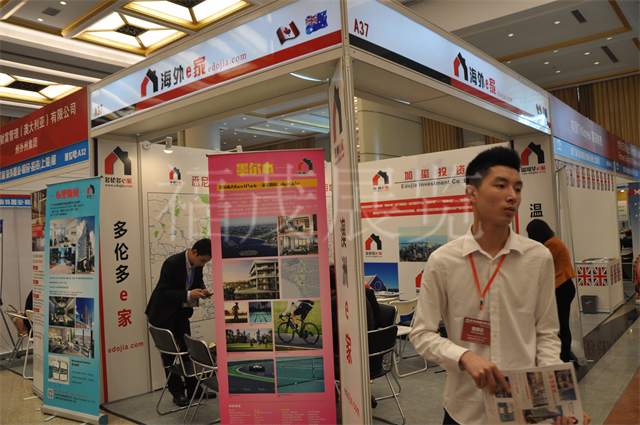
In the context of accelerating global asset allocation, real estate remains one of the most familiar and important investment options for many people. However, what truly determines success is not simply “buying property,” but “choosing the right project.” Different cities, developers, and policy environments can significantly affect both returns and risks. Therefore, learning how to select high-quality real estate projects is a crucial step toward successful investment. What Is the Core Logic Behind Choosing Real Estate Projects? Selecting real estate is not just about price levels; it requires a comprehensive evaluation of location, demand, policy, and long-term growth potential, all of which determine the asset’s future performance. Location determines long-term value; core cities or emerging growth areas usually offer stronger stability. Population inflow affects rental demand; areas with growing populations tend to generate stable cash flow. Infrastructure development such as transport and commercial facilities directly enhances property appreciation potential. Policy stability is critical; regions with frequent policy changes carry higher investment risks. High-quality projects are not necessarily the cheapest ones, but those supported by sustained demand and long-term growth logic. How to Choose Different Types of Real Estate Projects? Real estate comes in various forms, and different investment goals require different selection strategies. Without a clear direction, investors can easily choose the wrong type. Residential properties are suitable for long-term holding, focusing on rental yield and demographic structure. Commercial properties such as offices and retail spaces depend heavily on economic conditions but offer higher return flexibility. Vacation properties are ideal for short-term rental or personal use, but are affected by seasonal demand fluctuations. New development projects are cheaper but riskier, suitable for investors with higher risk tolerance. Second-hand mature properties are more stable but may offer limited appreciation potential. There is no absolute best option—what matters is matching the…
 Number
Call Now:
139 1723 4508
 WeChat
 Form
FormBook Your Booth
Complete your information immediately and provide you with exclusive services!
Back to Top

