
-
Whatsapp
+1 689 248 1956 -
Email
joannewong0817@gmail.com

 19/01/2026
In the wave of globalization, more and more Chinese families are turning their attention overseas, attempting to pave a smoother path for their children’s growth by purchasing property. Can overseas real estate truly become a “secret weapon” for children to win at the starting line? The answer lies in the synergistic effect of educational resources, living environment, and asset allocation. A “Golden Springboard” to Quality Educational Resources The core value of overseas real estate lies in its deep connection with quality educational resources. Take the UK as an example. London, as a global educational hub, boasts top universities such as the G5 super-elite universities. The “zoned schooling” system for public schools makes school district housing a focal point of competition among families. Data shows that property prices around the top 50 public schools in the UK are, on average, 16% higher than in the same area, with premiums near top London primary schools reaching as high as £80,000. Behind this premium is parents’ pursuit of educational equity—locking in school enrollment through property and avoiding the risks of school selection due to renting or moving to a different zone. The situation is similar in the United States. Despite the “equal rights for renters and owners” policy for public schools, properties in top-tier school districts remain highly sought after due to factors such as community safety and stable teaching staff. In Irvine, California, Chinese buyers typically pay 10-15% more for school district properties than for ordinary properties, willing to pay the higher cost to secure the certainty of their children’s enrollment in a nearby school. This logic is similar to the school district housing craze in China, but overseas properties offer richer added value—they are not only a guarantee of enrollment but also a long-term asset that can appreciate in value with…
 17/01/2026
When you purchase property abroad, property insurance is not only a legal requirement but also a crucial safeguard for your overseas assets. From North America to Europe, from Australia to Asia, insurance systems vary across countries, but the core logic always revolves around risk coverage and asset preservation. This article will outline the selection logic for overseas property insurance, helping you mitigate potential risks from a professional perspective. Precisely Matching Insurance Types: Comprehensive Coverage from Building Structure to Living Environment The core of overseas property insurance lies in “tailored coverage.” For detached houses (such as Single Family Houses in the US or Freehold properties in the UK), you need to purchase “comprehensive building insurance” covering the main structure and ancillary facilities. This type of insurance typically covers natural disasters such as fire, floods, and hurricanes, as well as accidents such as burst pipes and roof collapses. In the UK, for example, if the property is located in a flood-prone area, you need to purchase additional “flood rider” insurance; otherwise, the basic policy may refuse to pay out. The insurance logic for apartment properties (such as Strata Title apartments in Australia) is different. Owners typically only need to purchase “interior insurance” to cover indoor belongings, while the main building insurance is purchased by the owners’ committee. However, please note: If you intend to use your apartment for short-term rentals, you must confirm whether the policy includes a “commercial use” clause; otherwise, claims may be denied due to business operations. Unlocking Regional Differences: From Natural Disasters to Legal Environments The geographical characteristics and legal systems of different countries directly determine the complexity of insurance terms. In earthquake-prone Japan, standard building insurance excludes earthquake losses by default, requiring the purchase of separate “earthquake insurance.” In Australia, if a property is located in a…
 16/01/2026
Amid the global asset allocation trend, overseas real estate has become a highly sought-after asset for high-net-worth individuals due to its advantages in risk diversification and inflation hedging. “Freehold ownership,” a core selling point of overseas real estate, is often packaged as a “one-and-done” wealth-building secret, attracting countless investors. However, property rights systems, holding costs, and legal risks vary significantly across countries. Blindly pursuing the “freehold” label can lead to investment traps. Unveiling the truth about the duration of overseas property ownership is the first step towards sound investment. Freehold Ownership: Not a “Safe Haven” Many believe that “freehold ownership” of overseas real estate means that the land and house can be passed down indefinitely, but this concept needs to be interpreted within the specific legal framework of each country. While there are no time limits for the use of real estate in the United States, owners are required to pay property taxes annually (usually 0.5%-2% of the assessed value). If taxes are overdue, the government has the right to auction the property to offset the taxes. For example, an investor who purchased a villa in California suffered significant losses because he failed to pay property taxes on time, resulting in the property being auctioned off by the government at 60% of the market value. Japan practices private land ownership, with both houses and land having permanent ownership rights. However, buildings themselves have “lifespan limitations”—while ordinary residential properties have no time limit, they require regular renovations due to earthquakes, aging, and other issues; otherwise, they may be deemed “dangerous” and forcibly demolished. Land ownership is retained, but the house’s value becomes zero. The UK divides ownership into “freehold” and “leasehold.” Freehold, such as detached houses, allows for permanent ownership of the land and house, while leasehold, such as apartments, typically…
 15/01/2026
Amid the global asset allocation boom, overseas off-plan properties have become a top choice for many investors due to their price advantages, payment flexibility, and potential appreciation. However, unlike domestic property purchases, overseas off-plan properties involve multiple risks, including cross-border legal issues, exchange rate fluctuations, and developer qualifications. A slight misstep can lead to losing both money and property. How can one mitigate risks and maximize returns in overseas off-plan property investment? The key lies in grasping the core aspects, from developer qualifications to contract terms, from fund security to delivery and acceptance—each step requires careful attention. Developer qualifications are the primary consideration in overseas off-plan property investment. The maturity of overseas real estate markets varies greatly, and some emerging markets face the risk of developers experiencing cash flow problems and projects becoming unfinished. For example, in some Southeast Asian countries, developers have faced difficulties in financing, leading to the suspension of off-plan construction. Investors not only lose their down payment but also bear the subsequent costs of pursuing legal action. Therefore, when selecting a developer, it is crucial to examine their historical project delivery record, financial strength, and industry reputation. This can be achieved by checking local land bureau registration information, contacting owners of completed projects, or commissioning professional agencies to conduct due diligence to ensure the developer has legal development qualifications and a strong ability to fulfill contractual obligations. Furthermore, prioritize projects developed by listed companies or large real estate developers, as these companies typically have more abundant funds and stronger risk resistance. Contract terms are the core basis for protecting your rights. Overseas property purchase contracts are mostly in local legal texts, with complex language and detailed clauses. Investors need to review them word by word, paying close attention to key aspects such as payment methods, handover…
 14/01/2026
In the wave of globalization, residency planning has become a crucial issue for many high-net-worth individuals and families. Real estate investment immigration, as an innovative model combining asset allocation and residency acquisition, is attracting increasing attention from investors. By purchasing property in specific countries, investors can not only achieve global asset allocation but also obtain permanent residency or citizenship for family members, opening new pathways for children’s education, career development, and improved quality of life. Europe, as the birthplace of real estate investment immigration policies, has seen several countries become popular choices due to their policy flexibility and welfare advantages. Greece’s “Golden Visa” program allows investors to apply for permanent residency for three generations of their family by purchasing property with a relatively low threshold. This policy not only eliminates complex requirements such as language and educational qualifications but also grants holders freedom to travel within the Schengen Area, provides children with a pure British education environment, and lowers the entry threshold for prestigious domestic universities through the Joint Entrance Examination for Overseas Chinese Students. Portugal’s real estate investment immigration policy is also highly favored. Investors who purchase property in core cities such as Lisbon and Porto can obtain a five-year residency permit with flexible renewal options and the ability to work and start a business. After five years, meeting residency requirements allows them to apply for citizenship and enjoy the full range of benefits of EU citizens. The Mediterranean island nation of Cyprus attracts business owners and investors with its status as a “tax haven.” Permanent residency can be obtained by purchasing real estate worth €300,000, with corporate income tax as low as 12.5%, and no inheritance or gift tax. Double taxation avoidance agreements with over 60 countries further reduce cross-border trade costs. For families with overseas businesses, Cypriot…
 13/01/2026
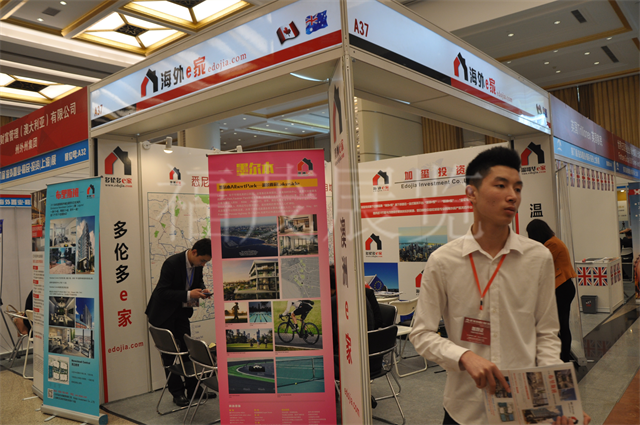
Attending a real estate expo is a shortcut for ordinary homebuyers, investors, and industry professionals to understand the market and a great opportunity to compare products and services. A good expo will present elements such as buying a house, viewing properties, financial services, policy consultation, interior design, and smart home technology, allowing you to see and compare all the information that would normally require visiting many places in one or several days. For ordinary people, visiting a real estate expo not only allows them to see new developments and model homes, but also provides on-site consultations on practical issues such as mortgages, taxes, floor plan modifications, and property management. For developers and real estate agents, it is an important window for launching new products, gathering clients, and closing deals. Exhibition Theme and Overall Layout Each expo will have a clear theme (e.g., residential, commercial, senior living, long-term rental apartments, or regional development), and the exhibition areas will be divided accordingly. The overall layout generally includes the developer exhibition area in the main exhibition hall, the theme exhibition area, the forum area, the experience area, and the supporting service area. First, checking the theme can help you quickly determine if the expo is relevant to your needs: is it primarily for upgrading your home, or focused on investment or commercial properties? New Property Showcase Area This is the most attractive part of the property expo. Developers will bring the latest property information, model rooms, floor plans, and renderings. Staff will be on-site to explain the property’s positioning, unit advantages and disadvantages, amenities, and sales policies. Viewing model rooms allows you to visually assess lighting, circulation, and decoration style, while the floor plan helps you understand the community layout and access points. Pre-owned and Exchange Area Many expos have dedicated…
 13/01/2026
For many families dreaming of overseas property investment, preparing the initial capital is often the first and most crucial step. Whether for children’s education, asset allocation, or immigration, the initial capital for overseas property purchase involves not only the price of the property itself but also covers taxes, agent fees, legal fees, and other expenses. So, how much initial capital is needed for overseas property purchase? This article will provide a detailed analysis from the perspectives of market characteristics, funding sources, and potential costs in different countries. The initial capital for overseas property purchase primarily depends on the property price level of the target country. Taking Southeast Asia as an example, the price of small apartments in the core area of Phnom Penh, Cambodia, is generally between $1,500 and $2,500 per square meter, with a 50-80 square meter apartment costing approximately $75,000 to $200,000. In Greece, the minimum investment threshold for “commercial-to-residential conversion” projects under the property investment immigration policy is €250,000, and permanent residency can be enjoyed for three generations of the family. In contrast, some regions of the United States’ EB-5 investment immigration program require an investment of at least $800,000 and additional conditions such as job creation. These data indicate that the initial capital required for overseas property purchases varies depending on the country, city, and project type, requiring precise allocation based on individual needs and budget. Besides the property price itself, sufficient funds must be allocated for taxes and fees when purchasing overseas property. For example, in Cambodia, foreign buyers must pay a 4% property transaction tax, along with additional expenses such as legal fees and agent fees, which typically account for 5% to 8% of the total property price. In Greece, property purchase immigration requires payment of property transfer tax, municipal tax, and legal fees,…
 12/01/2026
For many families, overseas property purchases are not only an asset allocation choice but also a long-term plan for their children’s education and retirement. However, unlike the simple “one-time payment” model of domestic property purchases, overseas property purchases involve a full-cycle tax system from transaction to holding, and even slight missteps can significantly reduce investment returns. Understanding the differences in taxation across countries has become an “invisible hurdle” that overseas property buyers must overcome. Tax differences during the property purchase stage are often reflected in the transaction process. In the UK, for example, stamp duty is the first hurdle buyers must face: no stamp duty is required for properties valued below £125,000, while the excess is taxed at a tiered rate, reaching a maximum of 12%. This “higher price, higher tax” design directly increases the transaction costs of high-end properties. In Australia, different states have different stamp duty rates. New South Wales typically charges 4%-5%, with an additional 8% surcharge for overseas buyers, further increasing the cost of purchasing property for non-residents. It’s worth noting that some countries lower the threshold through preferential policies. For example, Cyprus exempts overseas buyers of properties worth over €300,000 from VAT and directly grants them permanent residency. This “tax-for-status” model has attracted a large number of immigrant investors. However, the tax burden during the holding period is more persistent. The US property tax mechanism is a typical example: tax rates vary from 0.2% to 3% across states, with some areas in New Jersey exceeding 2%. A $500,000 property would incur over $10,000 in property taxes annually. This characteristic of “the higher the property price, the heavier the tax burden” forces investors to carefully assess the balance between rental income and holding costs. Canada, on the other hand, uses a “vacancy tax” to incentivize efficient…
 10/01/2026
For investors with overseas properties, refinancing is becoming a key strategy for unlocking the potential value of assets and optimizing financial structure. It breaks through the limitations of traditional property holding models, transforming fixed assets into liquid capital through innovative applications of financial instruments while retaining the right to capital gains. This “win-win” approach is triggering a new round of asset allocation changes among high-net-worth individuals globally. The core value of overseas property refinancing lies in activating dormant assets. For example, in a popular tourist city in Southeast Asia, a holiday villa purchased five years ago has seen its market value increase by 40% compared to the purchase price. Through refinancing, the owner can withdraw a certain percentage of the increased value as cash, obtaining financial support without selling the property. This “value realization without transferring ownership” model preserves the long-term appreciation potential of the property while addressing short-term funding needs. A British investor used refinancing to withdraw £200,000 to renovate another investment property, resulting in a 35% increase in rental income and creating a virtuous cycle of asset appreciation. Interest rate advantages are the direct economic driver of refinancing. In a low-interest-rate environment in major economies, overseas mortgage costs are significantly lower than in China. A European bank offered refinancing rates to its high-quality clients that were 1.8 percentage points lower than the initial loan. For a loan balance of €1.5 million, this translates to annual interest savings of €27,000. More flexibly, some financial institutions allow borrowers to switch from fixed to floating rates, automatically enjoying lower costs when market interest rates decline. This dynamic interest rate adjustment mechanism optimizes the cost of funds in sync with market conditions, making it particularly suitable for interest rate-sensitive investors. The diversification of fund usage is an implicit value of refinancing. The…
 09/01/2026
With economic globalization and the convenience of international travel, more and more people are paying attention to overseas real estate investment. For many investors, overseas real estate is not only a way to allocate wealth, but may also be part of their children’s education, family vacations, or even future immigration. Compared to domestic real estate, overseas real estate investment offers more opportunities, but it also comes with complex laws and regulations, tax policies, exchange rate fluctuations, and cultural differences. Many newcomers to the overseas market are often attracted by high-return advertisements, but ignore the potential risks. Investing in overseas real estate is not simply “buying a house and waiting for returns”; it requires advance planning, understanding the local market, familiarity with policies and regulations, and clear expectations regarding capital, management, and returns. Understanding Local Laws and Titles When buying property overseas, title and legal issues are the primary considerations. Real estate laws vary greatly from country to country: some countries allow foreigners to buy freely, while others have restrictions or require additional approvals; some properties are freehold, while others are limited or leasehold. Furthermore, land use, building use, and building restrictions will also affect investment returns and usage. Investors need to understand the local buying and selling procedures, title registration methods, transfer taxes and fees, and legal risks. Consulting local lawyers or registration agents beforehand can help avoid disputes or financial losses due to unfamiliarity with the law. Conducting Tax and Cost Accounting The tax systems for overseas real estate differ significantly from those in China, including purchase tax, property tax, rental tax, and capital gains tax. Tax rates, reporting rules, and deduction policies vary from country to country; ignoring these costs can significantly reduce investment returns. Furthermore, maintenance costs are a substantial expense, including property management fees, repair…
 09/01/2026
With the advancement of globalization, more and more people are paying attention to the topic of “overseas real estate”: some for personal residence, some for asset allocation, and others choose to generate income through real estate development and sales. For ordinary investors, hearing “buying a house overseas” often brings both excitement and confusion—excitement at owning assets in a foreign country and enjoying a different lifestyle; confusion due to the complexity and volatility of legal, tax, rental management, and currency exchange rate issues. To grasp the risks and opportunities, the first step is to clarify “what is your purpose for buying a house?” Overseas real estate can be broadly divided into three categories: purchase for personal use, investment for rental, and development. Each type has different goals, timeframes, sources of income, and risks, and is suitable for different groups of people. Purchase for Personal Use This type of purchase is primarily for “use”: common scenarios include long-term relocation, short-term vacation homes, work assignments, or housing needs during children’s studies abroad. The advantages are that it meets quality of life and emotional needs, can be used directly when needed, and is not too affected by short-term market fluctuations; some countries also offer visa or residency facilitation for residential property purchases. The disadvantages are relatively poor liquidity and the need to bear holding costs (property fees, taxes, maintenance); if future liquidation is required, it is significantly affected by local market, legal, and foreign exchange restrictions. Before purchasing, it is important to pay attention to the type of property rights in the host country (freehold vs. leasehold), transaction taxes, mortgage policies, and community management regulations; if it is an overseas vacation home, management, security, and other issues must also be considered. Investment Rental Type This type focuses on generating rental income. Buyers typically…
 09/01/2026
In the wave of global asset allocation, overseas property purchases have become an important option for high-net-worth individuals to diversify risk and obtain long-term returns. However, cross-border capital flows involve multiple risks, including foreign exchange controls, tax compliance, and exchange rate fluctuations. Even slight missteps can lead to financial losses or legal disputes. Ensuring capital security requires building a protective network across three dimensions: policy compliance, channel selection, and risk hedging, throughout the entire property purchase process. Policy compliance is the primary prerequisite for capital security. Different countries have significantly different levels of stringency in foreign exchange controls and verification of the source of funds. For example, Chinese residents are limited to a convenient foreign exchange purchase quota of only US$50,000 per year; amounts exceeding this require proof of tax payment and documentation explaining the source of funds. Australia requires homebuyers to declare the legality of their funds and undergo anti-money laundering audits. While the United States has no strict foreign exchange restrictions, it requires the declaration of large cash transactions. Homebuyers should consult professional institutions in advance to clarify the foreign exchange policies of their target country and avoid violating anti-money laundering regulations by splitting remittances into smaller, manageable amounts. One Chinese investor was found guilty of “splitting foreign exchange transactions” by using relatives’ accounts for multiple remittances, resulting in frozen funds and potential fines. Such cases underscore the importance of compliant operations. The choice of fund transfer channels directly impacts security and cost. Bank wire transfers are the mainstream method, offering advantages such as traceable fund flows and regulatory protection, but they come with high fees and long processing times. For example, transferring $100,000 from China to the United States typically incurs fees between 200-500 RMB, and takes 3-5 business days to arrive. While third-party payment platforms are…
 Number
Call Now:
139 1723 4508
 WeChat
 Form
FormBook Your Booth
Complete your information immediately and provide you with exclusive services!
Back to Top

